

Ready & Packaged Foods
All →Vegetables & Legumes
All →Desserts & Confectionery
All →Meat & Protein
All →Grains & Bakery
All →Beverages
All →Milk & Dairy
All →

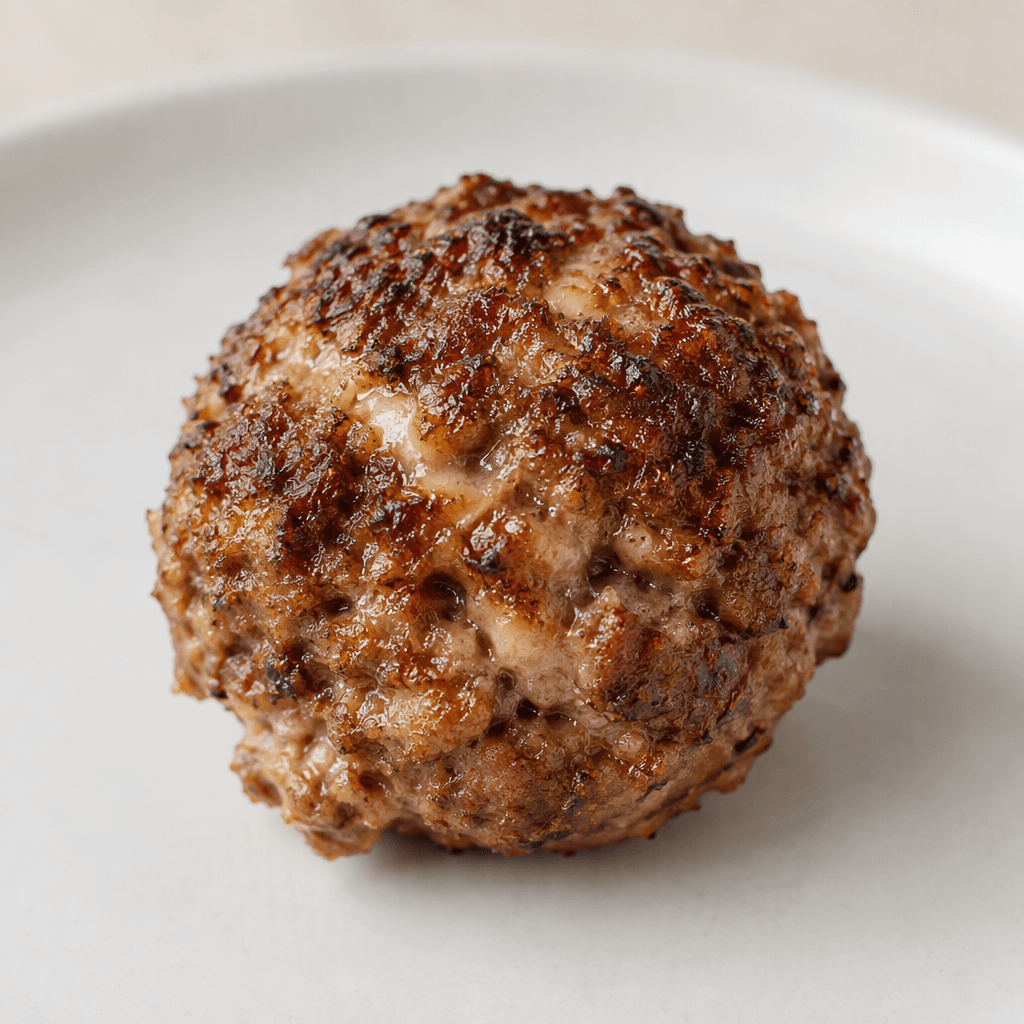
Fatty meatball Calories
Fatty meatballs made from high-fat ground beef or lamb, rich in protein and fat.
In season: Spring · Summer · Autumn · Winter
CALORIES
GI
POTASSIUM
FIBER
Quick answer
3 piece (medium) of Fatty meatball (120 g) has 312 calories. That works out to 260 calories per 100 g. It contains 6 g of carbs, 19.2 g of protein, 22.8 g of fat and 0.8 g of fiber. Its 1.9 µg of B12 covers 80% of the Daily Value. Its glycemic index is 35 (low), so it raises blood sugar slowly.
What is Fatty meatball?
A fatty meatball is made from ground beef or lamb with a relatively generous amount of fat, usually shaped into small patties or balls and seasoned before cooking. The fat helps keep the coarse mince moist as it browns, giving the outside a deeply savoury crust and the centre a tender texture.
It can be grilled, pan-fried or baked, and is often served with rice, flatbread, salad or roasted vegetables; accompaniments vary from one cuisine and household to another. It provides protein, but is also rich in fat: a 100 g portion has 19 g of fat. For a lighter meal, serve a smaller portion with plenty of fresh vegetables, or grill it so excess fat can drip away.
Fatty meatball Nutrition Facts
Selected: 100 g
260
KCAL / 100G
Carbs
5g
· 2% DV
Protein
16g
· 32% DV
Fat
19g
· 24% DV
Fiber
0.7g
· 3% DV
DV is the share of the daily value covered, on a 2,000 kcal reference diet.
Calories come from: Carbs 8% · Protein 25% · Fat 67%
Fatty meatball Vitamins & Minerals
Vitamins
B12
1.6µg · 67% DV
B3
3.7mg · 23% DV
B2
0.19mg · 15% DV
B5
0.7mg · 14% DV
Minerals
Zinc
4mg · 36% DV
Selenium
13µg · 24% DV
Phosphorus
170mg · 24% DV
Sodium
420mg · 18% DV
How Nutritious Is Fatty meatball?
Nutrient density
High
How many vitamins, minerals and how much fiber this food carries per calorie. A high score means a lot of nutrition for few calories.
Satiety score
Medium
An EatBetter score computed from fiber, protein and calorie density. A high score means staying full longer on the same calories.
Both scores are calculated per 100 g and do not change with the selected portion. The satiety score is EatBetter's own calculation, not a clinical measure.
Fatty meatball Glycemic Index
GLYCEMIC INDEX
GLYCEMIC LOAD
Accounts for portion size — a more realistic measure than GI alone.
How to Burn Off Fatty meatball
To burn the 260 calories in 100 g:
🚶
Walking (5 km/h)
🏃
Running (8 km/h)
🚴
Cycling
🏊
Swimming
Times are calculated with the MET equation for a 70 kg adult. Actual burn varies with your weight, age and pace.
Is Fatty meatball Processed?
NOVA 2
Minimally Processed
1. Unprocessed
2. Minimally Processed
3. Processed
4. Ultra-Processed
NOVA classifies foods into 4 groups by industrial processing. NOVA 1 (unprocessed) is the healthiest.
Does Fatty meatball Contain Allergens?
No known major allergens
Which Diets Is Fatty meatball Good For?
Vegan
— Not suitable
Vegetarian
— Not suitable
Gluten-Free
✓ Suitable
Dairy-Free
— Not suitable
Mediterranean
✓ Suitable
Paleo
✓ Suitable
Whole30
— Not suitable
DASH
— Not suitable
Keto
✓ Suitable
Low FODMAP
— Not suitable
Fatty meatball Fat Profile
SATURATED
7.5g
MONOUNSATURATED
8.2g
POLYUNSATURATED
1.2g
Omega 6:3 ratio 2.8:1
Below the ideal 4:1 — a good omega balance.
Compare Fatty meatball
Foods Similar to Fatty meatball
Frequently Asked Questions About Fatty meatball
What meat works best for fatty meatballs?
Ground beef or lamb with enough fat works well for fatty meatballs, keeping them moist as they cook. A medium grind gives the mixture a cohesive texture without making the cooked meatballs overly dense.
How do you stop fatty meatballs from falling apart?
Mix the fatty meatball mixture thoroughly, shape it firmly, and chill it before cooking. If it still feels loose, add a small amount of breadcrumbs or soaked bread; too much can make the texture bready.
Why do fatty meatballs shrink when cooked?
Fatty meatballs shrink because heat tightens the meat proteins and melts some of the fat. Shaping them evenly and avoiding excessive heat can reduce uneven shrinkage, but some size loss is normal.
Should you brown fatty meatballs before baking them?
Browning fatty meatballs before baking is optional. Searing them in a hot pan creates a browned exterior, while baking them directly is simpler and avoids extra pan handling; either way, cook them through.
Can you cook fatty meatballs in an air fryer?
Yes, fatty meatballs can be cooked in an air fryer. Arrange them in a single layer with space between each piece so hot air can circulate, and check that the centers are fully cooked before serving.
What temperature should fatty meatballs reach?
Fatty meatballs made with ground beef or lamb should reach 71°C (160°F) at the center. Use a food thermometer in the thickest part; color alone is not a reliable way to judge whether ground meat is safely cooked.
Can you freeze raw fatty meatballs?
Yes, freeze raw fatty meatballs on a tray first, then transfer them to a sealed freezer-safe container once firm. Thaw them in the refrigerator before cooking, rather than leaving raw ground meat at room temperature.
How long do cooked fatty meatballs keep in the fridge?
Cooked fatty meatballs keep for 3–4 days in a covered container in the refrigerator. Refrigerate them promptly after cooking, and reheat until hot throughout before eating.
Why are fatty meatballs greasy after cooking?
Fatty meatballs can seem greasy when the ground meat contains more fat than the mixture can retain during cooking. Drain excess fat from the pan, or serve the meatballs with a crisp salad or a tangy sauce.
What sauce goes well with fatty meatballs?
Tomato sauce, yogurt-based sauces, and bright herb sauces all pair well with fatty meatballs. A slightly acidic sauce helps balance their rich flavor; serve it alongside rather than covering the browned exterior if you want to keep it crisp.
Have another question about Fatty meatball?
Ask the AI nutrition coach — calories, portions, alternatives and more, answered in seconds in the app.

Scan calories with your camera
Instant AI nutrition analysis

Nutrition data compiled from USDA FoodData Central and scientific sources.