

Ready & Packaged Foods
All →Vegetables & Legumes
All →Desserts & Confectionery
All →Meat & Protein
All →Grains & Bakery
All →Beverages
All →Milk & Dairy
All →

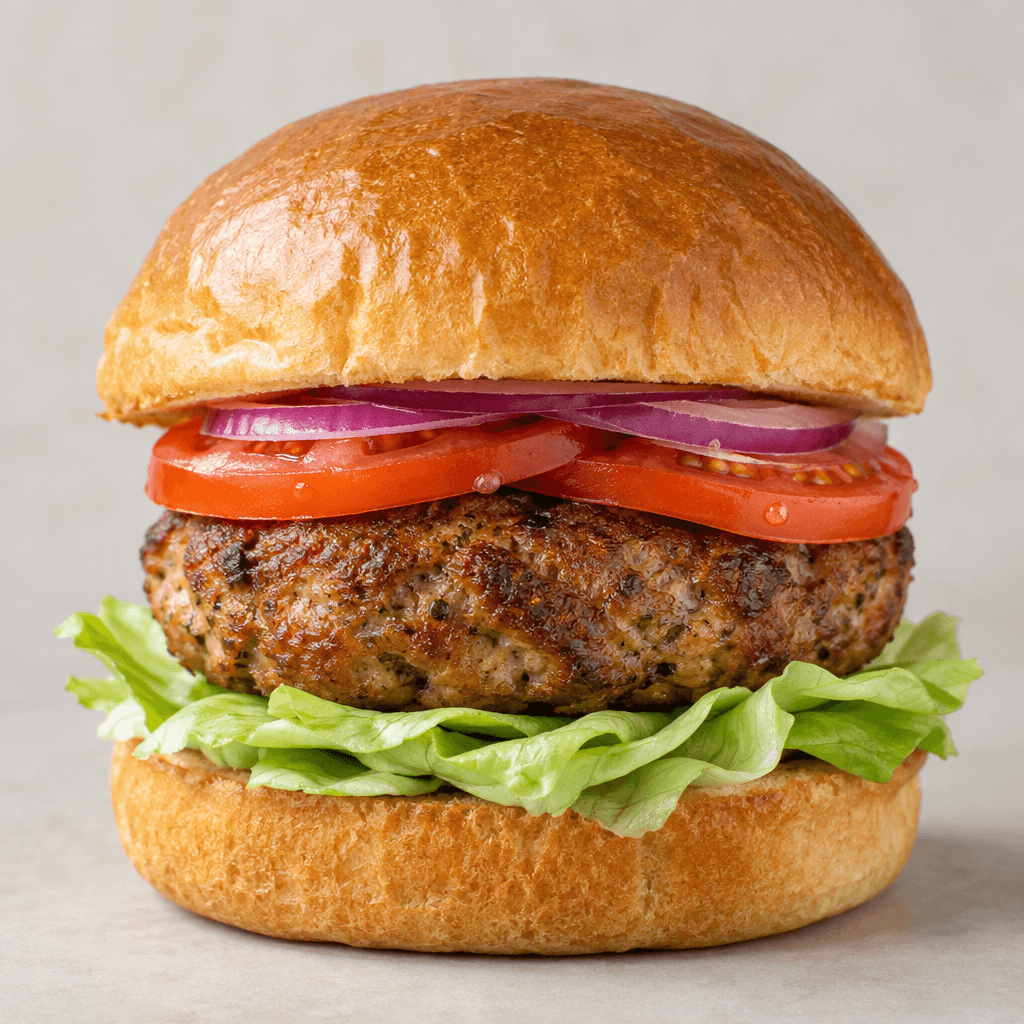
Meatball Burger Calories
Meatball burger is a protein- and iron-rich, hearty sandwich.
In season: Spring · Summer · Autumn · Winter
CALORIES
GI
POTASSIUM
FIBER
Quick answer
1 piece (medium) of Meatball Burger (180 g) has 450 calories. That works out to 250 calories per 100 g. It contains 39.6 g of carbs, 25.2 g of protein, 19.8 g of fat and 3.6 g of fiber. Its 2 µg of B12 covers 83% of the Daily Value. Its glycemic index is 65 (medium), so it raises blood sugar at a moderate pace.
What is Meatball Burger?
A Meatball Burger puts a seasoned ground-meat patty, shaped in the style of köfte, inside a burger bun. It brings Turkish köfte traditions together with the widely familiar burger format; recipes vary, but the meat is commonly shaped with herbs and spices before cooking.
It is often served in a toasted bun with lettuce, tomato and onion, with pickles or a tangy sauce alongside. Across the English-speaking world, it makes a filling lunch or casual dinner, usually with chips, salad or roasted vegetables. The meat provides protein, while the bun makes this a hearty sandwich. For a lighter meal, add plenty of salad and go easy on rich sauces.
Meatball Burger Nutrition Facts
Selected: 100 g
250
KCAL / 100G
Carbs
22g
· 8% DV
Protein
14g
· 28% DV
Fat
11g
· 14% DV
Fiber
2g
· 7% DV
DV is the share of the daily value covered, on a 2,000 kcal reference diet.
Calories come from: Carbs 36% · Protein 23% · Fat 41%
Meatball Burger Vitamins & Minerals
Vitamins
B12
1.1µg · 46% DV
B3
3.2mg · 20% DV
B2
0.18mg · 14% DV
B5
0.7mg · 14% DV
Minerals
Zinc
3mg · 27% DV
Sodium
480mg · 21% DV
Selenium
11µg · 20% DV
Phosphorus
120mg · 17% DV
How Nutritious Is Meatball Burger?
Nutrient density
Medium
How many vitamins, minerals and how much fiber this food carries per calorie. A high score means a lot of nutrition for few calories.
Satiety score
Medium
An EatBetter score computed from fiber, protein and calorie density. A high score means staying full longer on the same calories.
Both scores are calculated per 100 g and do not change with the selected portion. The satiety score is EatBetter's own calculation, not a clinical measure.
Meatball Burger Glycemic Index
GLYCEMIC INDEX
GLYCEMIC LOAD
Accounts for portion size — a more realistic measure than GI alone.
How to Burn Off Meatball Burger
To burn the 250 calories in 100 g:
🚶
Walking (5 km/h)
🏃
Running (8 km/h)
🚴
Cycling
🏊
Swimming
Times are calculated with the MET equation for a 70 kg adult. Actual burn varies with your weight, age and pace.
Is Meatball Burger Processed?
NOVA 3
Processed
1. Unprocessed
2. Minimally Processed
3. Processed
4. Ultra-Processed
NOVA classifies foods into 4 groups by industrial processing. NOVA 1 (unprocessed) is the healthiest.
Does Meatball Burger Contain Allergens?
Contains these allergens:
Which Diets Is Meatball Burger Good For?
Vegan
— Not suitable
Vegetarian
— Not suitable
Gluten-Free
— Not suitable
Dairy-Free
— Not suitable
Mediterranean
✓ Suitable
Paleo
— Not suitable
Whole30
— Not suitable
DASH
— Not suitable
Keto
— Not suitable
Low FODMAP
— Not suitable
Meatball Burger Fat Profile
SATURATED
4.2g
MONOUNSATURATED
4.6g
POLYUNSATURATED
1.1g
Omega 6:3 ratio 2.3:1
Below the ideal 4:1 — a good omega balance.
Compare Meatball Burger
Foods Similar to Meatball Burger
Frequently Asked Questions About Meatball Burger
What is a Meatball Burger made of?
A Meatball Burger has a seasoned meat patty served in a burger bun, often with lettuce, tomato, onion, pickles, or sauce. Recipes vary, and some use a meatball-style mixture rather than a standard burger patty.
How do you make a Meatball Burger at home?
Shape seasoned ground meat into a patty, cook it thoroughly in a pan or on a grill, then serve it in a toasted bun with your preferred toppings. Avoid pressing the patty while it cooks, since that releases its juices.
Is a Meatball Burger the same as a hamburger?
Not necessarily. A Meatball Burger usually features meat seasoned and shaped in a meatball style, while a hamburger patty is often more simply seasoned. The names and recipes can overlap, so the ingredient list determines the difference.
Why does a Meatball Burger patty fall apart?
A Meatball Burger patty may fall apart if its mixture is too loose, has not been mixed evenly, or is turned before it has browned. Shape it firmly, chill it before cooking, and flip it carefully only once it holds together.
What toppings go well on a Meatball Burger?
Lettuce, tomato, onion, pickles, and melted cheese all work well on a Meatball Burger. Marinara and mozzarella give it an Italian-inspired flavor, while mustard or a tangy sauce suits a more classic burger-style version.
How do you know when a Meatball Burger is safely cooked?
A Meatball Burger made with ground meat should be cooked all the way through, not left raw in the center. A food thermometer is the most reliable way to check doneness, especially for thicker patties.
Can you prepare Meatball Burgers ahead of time?
Yes, you can shape the Meatball Burger patties ahead and keep them covered in the refrigerator until cooking. Store the buns and toppings separately so the bread stays fresh and the vegetables remain crisp.
Can you freeze a Meatball Burger?
You can freeze cooked Meatball Burger patties, but the assembled sandwich is best made fresh because lettuce, tomato, and buns can turn soggy after thawing. Wrap patties airtight and thaw them safely before reheating.
How should you reheat a leftover Meatball Burger?
For the best texture, separate the Meatball Burger patty from the bun and toppings before reheating. Warm the patty until hot throughout, toast the bun briefly, and add fresh lettuce or tomato afterward.
Is a Meatball Burger a filling meal?
Yes, a Meatball Burger can be filling because it combines a meat patty with bread and toppings. Pairing it with vegetables or a salad makes the meal more balanced without relying on extra sauces or sides.
Have another question about Meatball Burger?
Ask the AI nutrition coach — calories, portions, alternatives and more, answered in seconds in the app.

Scan calories with your camera
Instant AI nutrition analysis

Nutrition data compiled from USDA FoodData Central and scientific sources.