

Ready & Packaged Foods
All →Vegetables & Legumes
All →Desserts & Confectionery
All →Meat & Protein
All →Grains & Bakery
All →Beverages
All →Milk & Dairy
All →

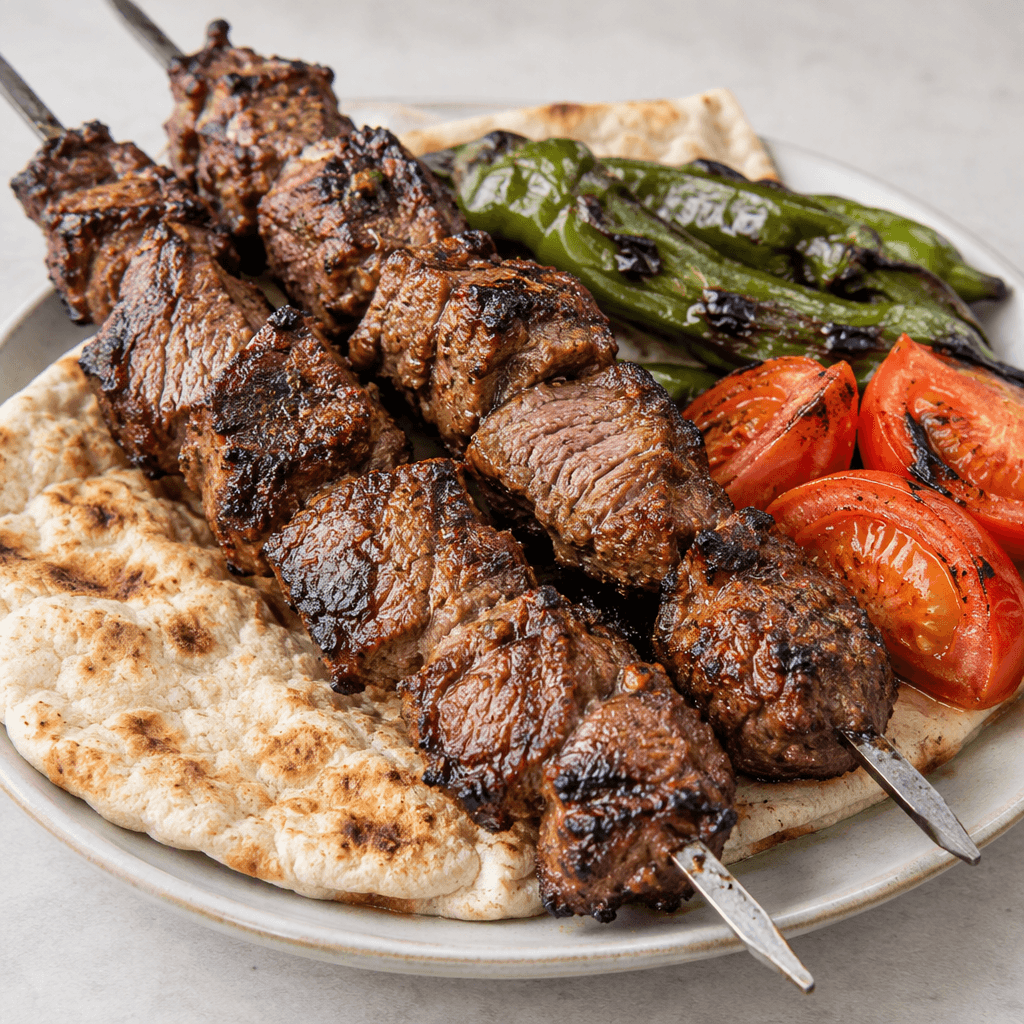
Meat kebab Calories
Grilled meat, protein source, traditional kebab
In season: Spring · Summer · Autumn · Winter
CALORIES
GI
POTASSIUM
FIBER
Quick answer
1 piece (medium) of Meat kebab (120 g) has 252 calories. That works out to 210 calories per 100 g. It contains 2.4 g of carbs, 24 g of protein, 16.8 g of fat and 0.4 g of fiber. Its 2.5 µg of B12 covers 105% of the Daily Value. Its glycemic index is 0 (low), so it raises blood sugar slowly.
What is Meat kebab?
Meat kebab is a broad name for pieces of meat seasoned, threaded onto skewers and grilled, with many regional styles across Turkey and neighbouring areas. The cut of meat and seasoning vary by cook and locality; the browned, sometimes charred exterior contrasts with a tender, juicy centre.
In Turkey, it is commonly served as a main meal with grilled peppers and tomatoes, flatbread, salad and often ayran. Elsewhere, it may come with rice, bread or fresh vegetables, depending on local kebab traditions. It is protein-rich and very low in carbohydrates: a 100 g portion provides 20 g of protein. For a lighter plate, choose a leaner cut and pair it with salad rather than adding extra bread or rich sides.
Meat kebab Nutrition Facts
Selected: 100 g
210
KCAL / 100G
Carbs
2g
· 1% DV
Protein
20g
· 40% DV
Fat
14g
· 18% DV
Fiber
0.3g
· 1% DV
DV is the share of the daily value covered, on a 2,000 kcal reference diet.
Calories come from: Carbs 4% · Protein 37% · Fat 59%
Meat kebab Vitamins & Minerals
Vitamins
B12
2.1µg · 88% DV
B3
4.5mg · 28% DV
B6
0.25mg · 15% DV
B2
0.18mg · 14% DV
Minerals
Zinc
5mg · 45% DV
Phosphorus
180mg · 26% DV
Selenium
10µg · 18% DV
Sodium
350mg · 15% DV
How Nutritious Is Meat kebab?
Nutrient density
High
How many vitamins, minerals and how much fiber this food carries per calorie. A high score means a lot of nutrition for few calories.
Satiety score
Medium
An EatBetter score computed from fiber, protein and calorie density. A high score means staying full longer on the same calories.
Both scores are calculated per 100 g and do not change with the selected portion. The satiety score is EatBetter's own calculation, not a clinical measure.
Meat kebab Glycemic Index
GLYCEMIC INDEX
GLYCEMIC LOAD
Accounts for portion size — a more realistic measure than GI alone.
How to Burn Off Meat kebab
To burn the 210 calories in 100 g:
🚶
Walking (5 km/h)
🏃
Running (8 km/h)
🚴
Cycling
🏊
Swimming
Times are calculated with the MET equation for a 70 kg adult. Actual burn varies with your weight, age and pace.
Is Meat kebab Processed?
NOVA 2
Minimally Processed
1. Unprocessed
2. Minimally Processed
3. Processed
4. Ultra-Processed
NOVA classifies foods into 4 groups by industrial processing. NOVA 1 (unprocessed) is the healthiest.
Does Meat kebab Contain Allergens?
No known major allergens
Which Diets Is Meat kebab Good For?
Vegan
— Not suitable
Vegetarian
— Not suitable
Gluten-Free
✓ Suitable
Dairy-Free
— Not suitable
Mediterranean
✓ Suitable
Paleo
✓ Suitable
Whole30
— Not suitable
DASH
— Not suitable
Keto
✓ Suitable
Low FODMAP
— Not suitable
Meat kebab Fat Profile
SATURATED
5.5g
MONOUNSATURATED
6.2g
POLYUNSATURATED
0.4g
Omega 6:3 ratio 2.8:1
Below the ideal 4:1 — a good omega balance.
Compare Meat kebab
Foods Similar to Meat kebab
Frequently Asked Questions About Meat kebab
What is meat kebab made of?
Meat kebab is made from seasoned pieces of meat cooked on skewers, usually over a grill. Recipes commonly use lamb or beef, and some versions add vegetables between the pieces or serve them alongside.
Where did meat kebab originate?
Meat kebab has roots in West Asian and Middle Eastern cooking traditions, where meat was cooked over open fires. The name covers many regional styles, so there is no single recipe or place of origin for every meat kebab.
What is the best meat for meat kebab?
Lamb shoulder and tender, well-trimmed cuts of beef are popular choices for meat kebab. A little marbling helps the pieces stay juicy on the grill, while large amounts of gristle make skewered meat harder to chew.
How do you keep meat kebab tender?
For tender meat kebab, cut the meat evenly across the grain and avoid leaving it over high heat after it has browned. Choose a suitable cut, and let the cooked skewers rest briefly before serving so the juices settle.
How do you grill meat kebab?
Grill meat kebab over hot coals or a hot grill, turning the skewers so the pieces brown on all sides. Keep the meat above glowing coals rather than tall flames, which can burn the outside before the center cooks.
Can you cook meat kebab in the oven?
Yes, meat kebab can be cooked in the oven. Arrange the skewers on a rack over a tray and use a hot oven or grill setting, turning them once or twice so the meat browns evenly instead of stewing in its juices.
Should you marinate meat kebab?
Marinating meat kebab is optional, but a simple mixture of oil, herbs, and spices adds flavor. Keep the meat covered in the refrigerator while it marinates, and avoid relying on a marinade to make a tough cut tender.
What should you serve with meat kebab?
Meat kebab is often served with flatbread, grilled vegetables, rice, or a fresh salad. Yogurt-based sauces and pickled vegetables also work well, especially when the kebab is smoky or strongly seasoned.
Can you freeze cooked meat kebab?
Yes, cooked meat kebab can be frozen in an airtight container once it has cooled. Separate portions before freezing for easier reheating, and thaw them in the refrigerator rather than leaving them on the counter.
Is meat kebab healthy?
Meat kebab can be part of a balanced meal, particularly when served with vegetables, but fatty cuts and heavily charred surfaces are less desirable choices. Pair it with salad or grilled vegetables and trim visible fat if you prefer a lighter plate.
Have another question about Meat kebab?
Ask the AI nutrition coach — calories, portions, alternatives and more, answered in seconds in the app.

Scan calories with your camera
Instant AI nutrition analysis

Nutrition data compiled from USDA FoodData Central and scientific sources.