

Ready & Packaged Foods
All →Vegetables & Legumes
All →Desserts & Confectionery
All →Meat & Protein
All →Grains & Bakery
All →Beverages
All →Milk & Dairy
All →

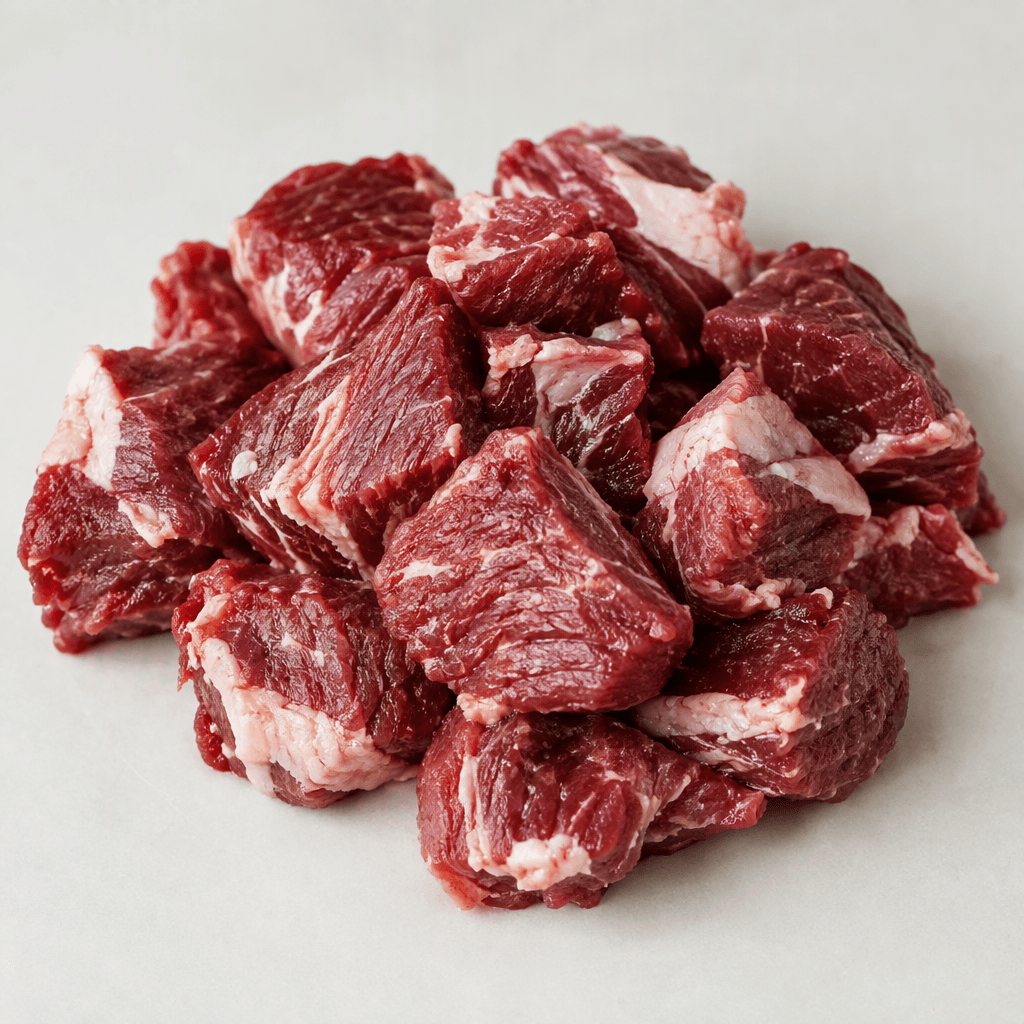
Meat Calories
High in protein, rich in iron and vitamin B12
In season: Spring · Summer · Autumn · Winter
CALORIES
GI
POTASSIUM
FIBER
Quick answer
1 piece (medium) of Meat (120 g) has 300 calories. That works out to 250 calories per 100 g. It contains 0 g of carbs, 31.2 g of protein, 20.4 g of fat and 0 g of fiber. Its 3 µg of B12 covers 125% of the Daily Value. Its glycemic index is 0 (low), so it raises blood sugar slowly.
What is Meat?
Meat is the edible muscle tissue of an animal. No particular animal or cut is specified here, so its flavour, texture and fat content can vary widely. Across the English-speaking world, it may be roasted, grilled, pan-fried or simmered in stews; the choice of cut and cooking method matters as much as the recipe. It is commonly served as a main course with vegetables, potatoes, rice or bread, and minced meat is used in dishes such as burgers, meatballs and pasta sauces.
Depending on the cut and how it is cooked, meat can be tender and mild or chewy and richly flavoured. It is a protein-rich food and a source of iron and vitamin B12; the figures provided list 26 grams of protein per 100 grams. For a lighter meal, choose a leaner cut, trim visible fat, and pair it with vegetables.
Meat Nutrition Facts
Selected: 100 g
250
KCAL / 100G
Carbs
0g
· 0% DV
Protein
26g
· 52% DV
Fat
17g
· 22% DV
Fiber
0g
· 0% DV
DV is the share of the daily value covered, on a 2,000 kcal reference diet.
Calories come from: Carbs 0% · Protein 40% · Fat 60%
Meat Vitamins & Minerals
Vitamins
B12
2.5µg · 104% DV
B3
4.5mg · 28% DV
B6
0.4mg · 24% DV
B2
0.2mg · 15% DV
Minerals
Zinc
5mg · 45% DV
Phosphorus
180mg · 26% DV
Selenium
12µg · 22% DV
Iron
3mg · 17% DV
How Nutritious Is Meat?
Nutrient density
High
How many vitamins, minerals and how much fiber this food carries per calorie. A high score means a lot of nutrition for few calories.
Satiety score
Medium
An EatBetter score computed from fiber, protein and calorie density. A high score means staying full longer on the same calories.
Both scores are calculated per 100 g and do not change with the selected portion. The satiety score is EatBetter's own calculation, not a clinical measure.
Meat Glycemic Index
GLYCEMIC INDEX
GLYCEMIC LOAD
Accounts for portion size — a more realistic measure than GI alone.
How to Burn Off Meat
To burn the 250 calories in 100 g:
🚶
Walking (5 km/h)
🏃
Running (8 km/h)
🚴
Cycling
🏊
Swimming
Times are calculated with the MET equation for a 70 kg adult. Actual burn varies with your weight, age and pace.
Is Meat Processed?
NOVA 1
Unprocessed
1. Unprocessed
2. Minimally Processed
3. Processed
4. Ultra-Processed
NOVA classifies foods into 4 groups by industrial processing. NOVA 1 (unprocessed) is the healthiest.
Does Meat Contain Allergens?
No known major allergens
Which Diets Is Meat Good For?
Vegan
— Not suitable
Vegetarian
— Not suitable
Gluten-Free
✓ Suitable
Dairy-Free
— Not suitable
Mediterranean
✓ Suitable
Paleo
✓ Suitable
Whole30
— Not suitable
DASH
— Not suitable
Keto
✓ Suitable
Low FODMAP
— Not suitable
Meat Fat Profile
SATURATED
7.2g
MONOUNSATURATED
7.8g
POLYUNSATURATED
0.8g
Omega 6:3 ratio 2.1:1
Below the ideal 4:1 — a good omega balance.
Compare Meat
Foods Similar to Meat
Frequently Asked Questions About Meat
How long does raw meat last in the fridge?
Raw meat keeps for different lengths of time depending on the type and cut. Keep it at 40°F (4°C) or colder, follow the package guidance, and freeze it if you will not use it soon.
Is it safe to thaw meat on the counter?
No, thawing meat on the counter is not safe. The surface can warm into a range where bacteria multiply while the centre is still frozen; thaw it in the refrigerator instead.
Should you wash meat before cooking it?
No, washing raw meat can spread bacteria through splashes onto your sink, counters, and nearby food. Cooking the meat thoroughly is the safer way to reduce harmful bacteria.
Can you freeze meat?
Yes, meat can be frozen. Wrap it tightly or use a sealed freezer-safe package to limit air exposure, and divide large amounts into portions so you only thaw what you need.
Why does meat turn brown in the fridge?
Meat can turn brown when its pigments react with oxygen or when less oxygen reaches the surface. Color alone does not show whether it is spoiled, so also consider its smell, texture, and storage.
Why does meat shrink when cooked?
Meat shrinks during cooking because heat makes its muscle fibres contract and drives out moisture; some fat also melts away. Higher heat and longer cooking can make the shrinkage more noticeable.
How can you make tough meat tender?
Choose a method suited to the cut: slow, moist cooking softens tougher pieces, while quick-cooking cuts can become tough if overcooked. Slicing cooked meat across the grain also makes it easier to chew.
Does meat need to rest after cooking?
Yes, resting meat briefly after cooking helps it retain more juices when sliced. Keep it loosely covered while it rests, and remember that resting does not replace cooking it to a safe temperature.
Can you eat meat rare?
Rare meat is not safe for every type or preparation. A rare whole cut of beef is different from ground meat, poultry, or meat that has been pierced or tenderized; those need more thorough cooking.
Is eating meat every day unhealthy?
Eating meat every day is not necessary for a nutritious diet. Frequent processed-meat intake is linked with health risks, and it is sensible to vary protein sources rather than make red meat the default at every meal.
Have another question about Meat?
Ask the AI nutrition coach — calories, portions, alternatives and more, answered in seconds in the app.

Scan calories with your camera
Instant AI nutrition analysis

Nutrition data compiled from USDA FoodData Central and scientific sources.