

Ready & Packaged Foods
All →Vegetables & Legumes
All →Desserts & Confectionery
All →Meat & Protein
All →Grains & Bakery
All →Beverages
All →Milk & Dairy
All →

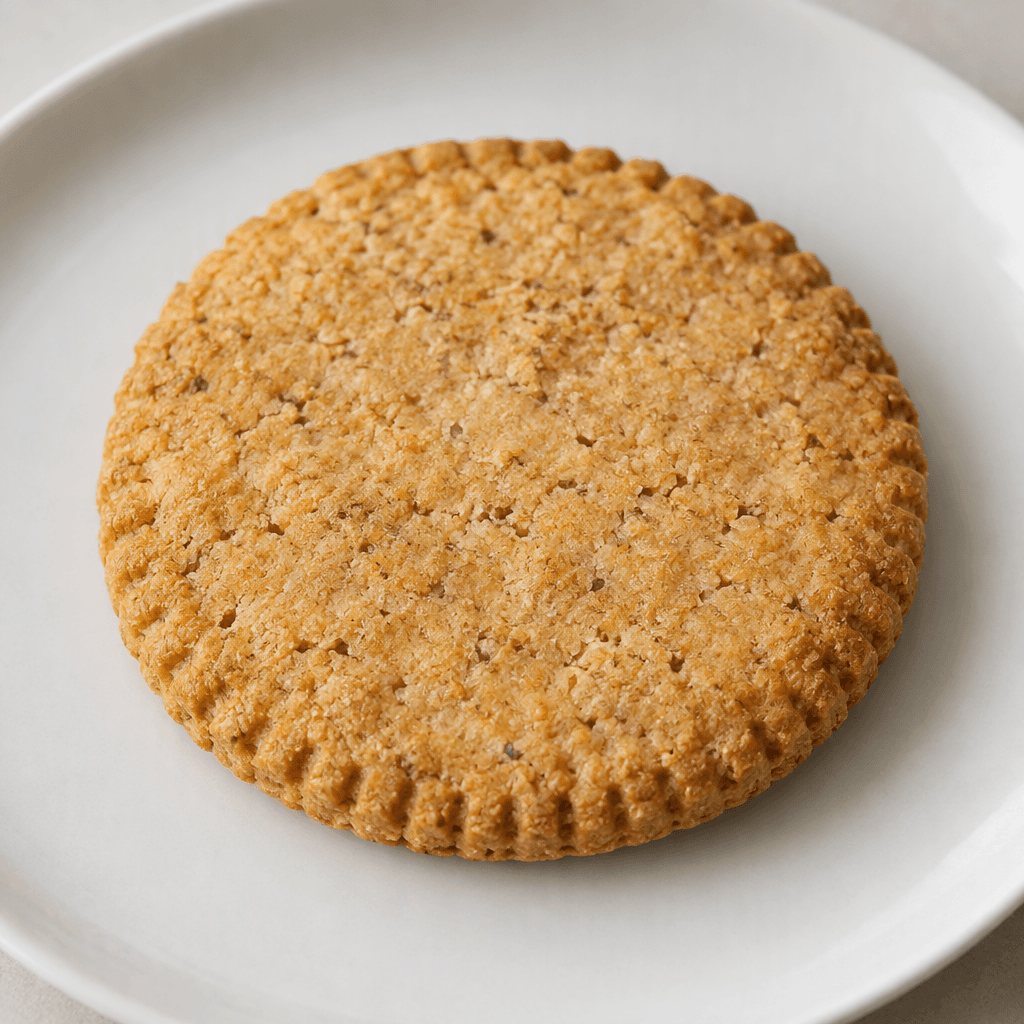
McVities biscuit Calories
Popular British biscuit, often enjoyed with tea
In season: Spring · Summer · Autumn · Winter
CALORIES
GI
POTASSIUM
FIBER
Quick answer
2 piece (medium) of McVities biscuit (29 g) has 136 calories. That works out to 470 calories per 100 g. It contains 19.6 g of carbs, 1.9 g of protein, 5.4 g of fat and 0.7 g of fiber. Its glycemic index is 65 (high), so it raises blood sugar quickly.
What is McVities biscuit?
McVities biscuit is a packaged British biscuit, commonly made with wheat flour, sugar and fat. It is round and fairly flat, with a lightly coarse surface and a crisp, crumbly bite.
In Britain, it is a familiar companion to a cup of tea, whether served during an afternoon break or offered to guests. You can enjoy it plain or briefly dip it into tea for a softer texture. It is an energy-dense snack, providing mostly carbohydrates and fat, with a little fibre; 100 g contains 470 calories. For a more balanced snack, have a couple with fruit or plain yoghurt rather than eating them straight from the packet.
McVities biscuit Nutrition Facts
Selected: 100 g
470
KCAL / 100G
Carbs
67.5g
· 25% DV
Protein
6.5g
· 13% DV
Fat
18.5g
· 24% DV
Fiber
2.5g
· 9% DV
DV is the share of the daily value covered, on a 2,000 kcal reference diet.
Calories come from: Carbs 58% · Protein 6% · Fat 36%
McVities biscuit Vitamins & Minerals
Vitamins
B1
0.08mg · 7% DV
B2
0.05mg · 4% DV
B3
0.6mg · 4% DV
Biotin
1.2µg · 4% DV
Minerals
Sodium
320mg · 14% DV
Phosphorus
60mg · 9% DV
Selenium
4µg · 7% DV
Iron
1mg · 6% DV
How Nutritious Is McVities biscuit?
Nutrient density
Low
How many vitamins, minerals and how much fiber this food carries per calorie. A high score means a lot of nutrition for few calories.
Satiety score
Low
An EatBetter score computed from fiber, protein and calorie density. A high score means staying full longer on the same calories.
Both scores are calculated per 100 g and do not change with the selected portion. The satiety score is EatBetter's own calculation, not a clinical measure.
McVities biscuit Glycemic Index
GLYCEMIC INDEX
GLYCEMIC LOAD
Accounts for portion size — a more realistic measure than GI alone.
How to Burn Off McVities biscuit
To burn the 470 calories in 100 g:
🚶
Walking (5 km/h)
🏃
Running (8 km/h)
🚴
Cycling
🏊
Swimming
Times are calculated with the MET equation for a 70 kg adult. Actual burn varies with your weight, age and pace.
Is McVities biscuit Processed?
NOVA 3
Processed
1. Unprocessed
2. Minimally Processed
3. Processed
4. Ultra-Processed
NOVA classifies foods into 4 groups by industrial processing. NOVA 1 (unprocessed) is the healthiest.
Does McVities biscuit Contain Allergens?
Contains these allergens:
Which Diets Is McVities biscuit Good For?
Vegan
— Not suitable
Vegetarian
— Not suitable
Gluten-Free
— Not suitable
Dairy-Free
— Not suitable
Mediterranean
— Not suitable
Paleo
— Not suitable
Whole30
— Not suitable
DASH
— Not suitable
Keto
— Not suitable
Low FODMAP
— Not suitable
McVities biscuit Fat Profile
SATURATED
7.2g
MONOUNSATURATED
6.5g
POLYUNSATURATED
2.1g
Omega 6:3 ratio 90:1
Above the ideal 4:1 (90:1).
Compare McVities biscuit
Foods Similar to McVities biscuit
Frequently Asked Questions About McVities biscuit
What is a McVities biscuit?
A McVities biscuit is a packaged biscuit from a well-known British brand, often eaten with tea. The round, grain-flecked biscuit shown here resembles a classic digestive, though McVities sells several types with different recipes and coatings.
Are McVities biscuits digestive biscuits?
The pictured McVities biscuit looks like a digestive biscuit, but the brand makes more than one kind. Check the product name on the pack to tell whether a particular McVities biscuit is a digestive, Rich Tea, chocolate-coated, or another variety.
Why are McVities biscuits called digestives?
The word “digestive” on a McVities biscuit does not mean it has a proven digestive-health benefit. The name reflects a 19th-century belief that bicarbonate of soda in some biscuits could aid digestion; it is not a medical claim.
Do people dunk McVities biscuits in tea?
Yes, McVities biscuits are commonly enjoyed with tea, and dunking is a familiar way to eat them. Digestive-style biscuits soften quickly, so a brief dip helps keep the biscuit from breaking apart in the cup.
What are McVities biscuits made of?
A plain digestive-style McVities biscuit typically contains wheat flour, sugar, vegetable oil, raising agents, and salt. Ingredients differ across varieties, especially chocolate-coated ones, so the ingredient list on the specific pack is the best guide.
Where did McVities biscuits originate?
McVities biscuits trace their brand origins to Edinburgh, Scotland, where the company was founded in the 1830s. The biscuits are now sold internationally, and the manufacturing location can vary by product and market.
What is the difference between McVities Digestives and Rich Tea biscuits?
McVities Digestives are typically coarser and more crumbly, while Rich Tea biscuits are lighter and crisper with a plainer taste. They are distinct products, so they may behave differently when dunked or used in a dessert base.
Can you use McVities biscuits for a cheesecake crust?
Yes, crushed McVities biscuits make a convenient cheesecake base. Mix the crumbs with melted butter, press them firmly into a tin, and chill or bake according to the recipe; chocolate-coated varieties make a sweeter, richer crust.
How should you store McVities biscuits after opening?
Keep opened McVities biscuits in an airtight container in a cool, dry cupboard. Exposure to humid air makes them lose their crisp texture, so reseal the packet or transfer the biscuits to a container soon after opening.
Are McVities biscuits healthy to eat every day?
McVities biscuits can fit as an occasional snack, but they are not a substitute for a more filling, nutrient-rich meal. If you eat them often, keep the portion modest and pair them with something more sustaining, such as fruit or yogurt.
Have another question about McVities biscuit?
Ask the AI nutrition coach — calories, portions, alternatives and more, answered in seconds in the app.

Scan calories with your camera
Instant AI nutrition analysis

Nutrition data compiled from USDA FoodData Central and scientific sources.