

Ready & Packaged Foods
All →Vegetables & Legumes
All →Desserts & Confectionery
All →Meat & Protein
All →Grains & Bakery
All →Beverages
All →Milk & Dairy
All →

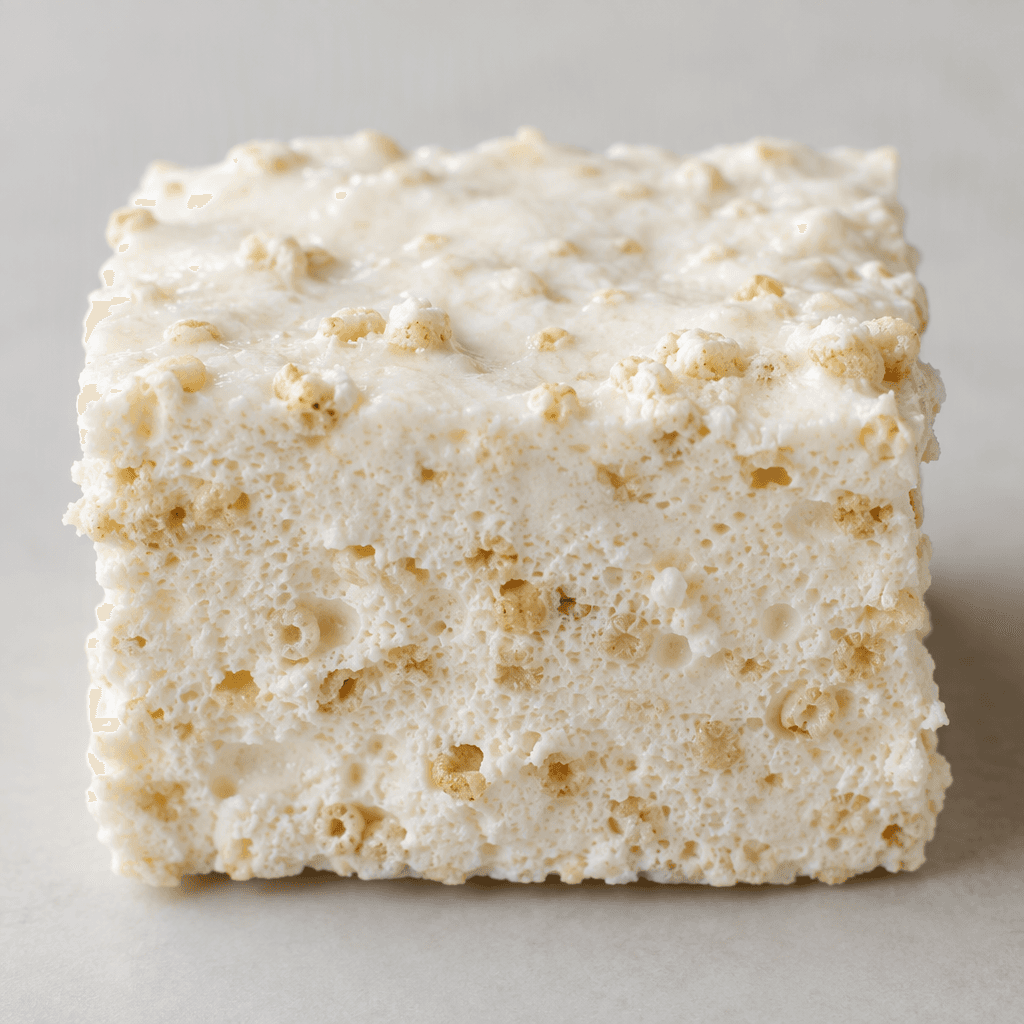
Marshmallow Bar Calories
Soft, sweet, sugary bar
In season: Winter · Autumn
CALORIES
GI
POTASSIUM
FIBER
Quick answer
1 piece (medium) of Marshmallow Bar (35 g) has 115 calories. That works out to 330 calories per 100 g. It contains 28 g of carbs, 0.8 g of protein, 0.1 g of fat and 0 g of fiber. Its glycemic index is 80 (high), so it raises blood sugar quickly.
What is Marshmallow Bar?
A Marshmallow Bar is a sweet confection made by shaping marshmallow into a convenient bar. It has a soft, airy, slightly springy texture and a pronounced sugary taste; some versions may have additional coatings or inclusions, but the plain bar is simple and sweet.
It is usually eaten as a ready-to-eat treat, packed as a snack or enjoyed with tea, coffee or cocoa. In places where marshmallows are popular around campfires, marshmallow bars also fit naturally among casual sweets, though the bar itself need not be toasted. Its nutrition is dominated by carbohydrates, with 80 g per 100 g, and very little fat. If you prefer a less sugary snack, share a piece or pair it with fruit or nuts.
Marshmallow Bar Nutrition Facts
Selected: 100 g
330
KCAL / 100G
Carbs
80g
· 29% DV
Protein
2.2g
· 4% DV
Fat
0.3g
· 0% DV
Fiber
0g
· 0% DV
DV is the share of the daily value covered, on a 2,000 kcal reference diet.
Calories come from: Carbs 97% · Protein 3% · Fat 0%
Marshmallow Bar Vitamins & Minerals
Vitamins
B2
0.02mg · 2% DV
B1
0.01mg · 1% DV
B6
0.01mg · 1% DV
Vitamin A
0µg · 0% DV
Minerals
Sodium
40mg · 2% DV
Calcium
5mg · 1% DV
Phosphorus
6mg · 1% DV
Iron
0mg · 0% DV
How Nutritious Is Marshmallow Bar?
Nutrient density
Low
How many vitamins, minerals and how much fiber this food carries per calorie. A high score means a lot of nutrition for few calories.
Satiety score
Low
An EatBetter score computed from fiber, protein and calorie density. A high score means staying full longer on the same calories.
Both scores are calculated per 100 g and do not change with the selected portion. The satiety score is EatBetter's own calculation, not a clinical measure.
Marshmallow Bar Glycemic Index
GLYCEMIC INDEX
GLYCEMIC LOAD
Accounts for portion size — a more realistic measure than GI alone.
How to Burn Off Marshmallow Bar
To burn the 330 calories in 100 g:
🚶
Walking (5 km/h)
🏃
Running (8 km/h)
🚴
Cycling
🏊
Swimming
Times are calculated with the MET equation for a 70 kg adult. Actual burn varies with your weight, age and pace.
Is Marshmallow Bar Processed?
NOVA 4
Ultra-Processed
1. Unprocessed
2. Minimally Processed
3. Processed
4. Ultra-Processed
NOVA classifies foods into 4 groups by industrial processing. NOVA 1 (unprocessed) is the healthiest.
Does Marshmallow Bar Contain Allergens?
Contains these allergens:
Which Diets Is Marshmallow Bar Good For?
Vegan
— Not suitable
Vegetarian
— Not suitable
Gluten-Free
— Not suitable
Dairy-Free
— Not suitable
Mediterranean
— Not suitable
Paleo
— Not suitable
Whole30
— Not suitable
DASH
— Not suitable
Keto
— Not suitable
Low FODMAP
— Not suitable
Marshmallow Bar Fat Profile
SATURATED
0.1g
MONOUNSATURATED
0.1g
POLYUNSATURATED
0.05g
Compare Marshmallow Bar
Foods Similar to Marshmallow Bar
Frequently Asked Questions About Marshmallow Bar
What are marshmallow bars made of?
Marshmallow bars usually feature a sweet, soft marshmallow layer or center. Depending on the variety, they may also include cereal, biscuit, or chocolate, so the exact ingredients and texture differ from one bar to another.
Do marshmallow bars contain gelatin?
Some marshmallow bars contain gelatin, while others use different ingredients to create their soft, springy texture. The recipe varies by product, so gelatin is not a defining ingredient in every marshmallow bar.
How do you make marshmallow bars at home?
For a crispy cereal-style marshmallow bar, melt marshmallows gently, stir in puffed cereal, then press the mixture into a lined pan and let it set. Other marshmallow bars have different layers, so this method does not reproduce every variety.
Can you roast a marshmallow bar over a fire?
You can toast the marshmallow part, but a whole marshmallow bar may not hold up over a fire. Chocolate can melt and biscuit or cereal layers can fall apart, so use a skewer and toast it over the embers rather than in the flames.
Can you melt a marshmallow bar in the microwave?
Yes, but heat a marshmallow bar in short bursts in a large microwave-safe bowl. Marshmallow expands quickly and can overflow; pause to stir and check its texture rather than heating it continuously.
How should marshmallow bars be stored?
Keep marshmallow bars in a sealed, airtight container in a cool, dry place. Humidity can make them sticky, while exposure to air can dry them out and change their soft texture.
Can marshmallow bars be frozen?
Yes, marshmallow bars can be frozen in airtight wrapping, although thawing may change their texture. Let them thaw at room temperature while still wrapped to reduce condensation on the surface.
Why do marshmallow bars get hard?
Marshmallow bars can harden when they lose moisture through exposure to air or are kept in cold, dry conditions. Storing them in an airtight container helps preserve their soft texture.
Do marshmallow bars raise blood sugar?
Yes, the sugar in marshmallow bars can raise blood sugar, especially when eaten on their own. People managing diabetes should account for the portion in their eating plan.
Are marshmallow bars safe for dogs?
No, marshmallow bars are not a suitable treat for dogs. Their sugar offers no useful benefit, and sugar-free versions may contain xylitol, which is toxic to dogs; keep the bars out of reach.
Have another question about Marshmallow Bar?
Ask the AI nutrition coach — calories, portions, alternatives and more, answered in seconds in the app.

Scan calories with your camera
Instant AI nutrition analysis

Nutrition data compiled from USDA FoodData Central and scientific sources.