

Ready & Packaged Foods
All →Vegetables & Legumes
All →Desserts & Confectionery
All →Meat & Protein
All →Grains & Bakery
All →Beverages
All →Milk & Dairy
All →

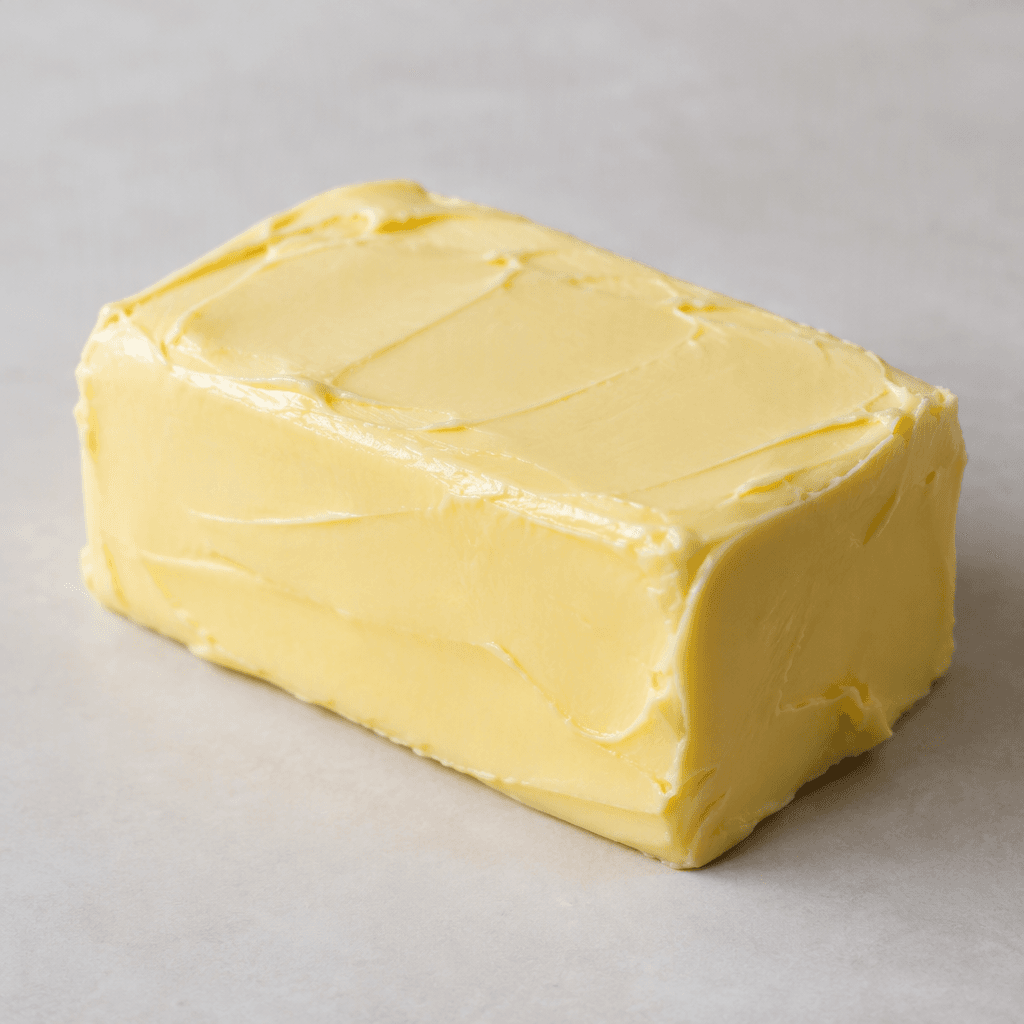
Margarine Calories
Plant-based fat, butter alternative, commonly spreadable
In season: Spring · Summer · Autumn · Winter
CALORIES
GI
POTASSIUM
FIBER
Quick answer
1 tablespoon (medium) of Margarine (14 g) has 101 calories. That works out to 720 calories per 100 g. It contains 0.1 g of carbs, 0 g of protein, 11.2 g of fat and 0 g of fiber. Its 2.1 mg of Vitamin E covers 14% of the Daily Value. Its glycemic index is 0 (low), so it raises blood sugar slowly.
What is Margarine?
Margarine is a butter alternative made mainly by combining vegetable oils with water. It originated in France and is sold in forms ranging from soft, spreadable tubs to firmer blocks; ingredients and texture vary by product.
It is commonly spread on toast or bread and used in baking and cooking, including in recipes that call for butter. Its flavour is usually mild, and softer varieties spread straight from the fridge more easily. Margarine is predominantly fat, with 80 g of fat per 100 g. For a lighter meal, use a thin layer on toast, or measure it into recipes rather than adding it by eye.
Margarine Nutrition Facts
Selected: 100 g
720
KCAL / 100G
Carbs
0.7g
· 0% DV
Protein
0.2g
· 0% DV
Fat
80g
· 103% DV
Fiber
0g
· 0% DV
DV is the share of the daily value covered, on a 2,000 kcal reference diet.
Calories come from: Carbs 0% · Protein 0% · Fat 100%
Margarine Vitamins & Minerals
Vitamins
Vitamin E
15mg · 100% DV
Vitamin A
800µg · 89% DV
Vitamin K
60µg · 50% DV
Vitamin D
7µg · 35% DV
Minerals
Sodium
800mg · 35% DV
Iodine
2µg · 1% DV
Selenium
0.5µg · 1% DV
Phosphorus
5mg · 1% DV
How Nutritious Is Margarine?
Nutrient density
Low
How many vitamins, minerals and how much fiber this food carries per calorie. A high score means a lot of nutrition for few calories.
Satiety score
Low
An EatBetter score computed from fiber, protein and calorie density. A high score means staying full longer on the same calories.
Both scores are calculated per 100 g and do not change with the selected portion. The satiety score is EatBetter's own calculation, not a clinical measure.
Margarine Glycemic Index
GLYCEMIC INDEX
GLYCEMIC LOAD
Accounts for portion size — a more realistic measure than GI alone.
How to Burn Off Margarine
To burn the 720 calories in 100 g:
🚶
Walking (5 km/h)
🏃
Running (8 km/h)
🚴
Cycling
🏊
Swimming
Times are calculated with the MET equation for a 70 kg adult. Actual burn varies with your weight, age and pace.
Is Margarine Processed?
NOVA 3
Processed
1. Unprocessed
2. Minimally Processed
3. Processed
4. Ultra-Processed
NOVA classifies foods into 4 groups by industrial processing. NOVA 1 (unprocessed) is the healthiest.
Does Margarine Contain Allergens?
No known major allergens
Which Diets Is Margarine Good For?
Vegan
✓ Suitable
Vegetarian
✓ Suitable
Gluten-Free
— Not suitable
Dairy-Free
— Not suitable
Mediterranean
✓ Suitable
Paleo
— Not suitable
Whole30
— Not suitable
DASH
— Not suitable
Keto
— Not suitable
Low FODMAP
— Not suitable
Margarine Fat Profile
SATURATED
18g
MONOUNSATURATED
22g
POLYUNSATURATED
38g
Omega 6:3 ratio 25.7:1
Above the ideal 4:1 (25.7:1).
Compare Margarine
Foods Similar to Margarine
Frequently Asked Questions About Margarine
Is margarine healthier than butter?
Not automatically. Many margarines made with unsaturated vegetable oils contain less saturated fat than butter, but recipes differ, and some products may contain more saturated fat or trans fat. Compare the types of fat, not just whether it is margarine or butter.
What is margarine made of?
Margarine is usually made by combining vegetable oils with water, then adding ingredients such as emulsifiers to keep the mixture stable. The oils and proportions vary between products, which is why margarines can differ in firmness, flavour and cooking performance.
Can you use margarine instead of butter in baking?
Yes, margarine works in many cakes, muffins and cookies as a butter substitute. Use the amount the recipe calls for, but expect some difference in flavour and texture because margarine can contain more water and less milk fat than butter.
Does margarine contain trans fat?
Some margarines can contain trans fat, but many modern products contain little or none. Trans fat can form when oils are partially hydrogenated, so check the ingredients for partially hydrogenated oils rather than assuming all margarine has the same formulation.
How should you store margarine after opening?
Keep margarine covered in the refrigerator after opening, away from foods with strong odours. A sealed tub or wrapper helps prevent it from drying out and picking up smells. Follow the package’s storage directions and use it while its quality is good.
Can you freeze margarine?
Yes, margarine can be frozen if it is wrapped tightly or kept in an airtight container. Thaw it in the refrigerator rather than on the counter. Freezing may change its texture slightly, so thawed margarine is often better for cooking or baking than spreading.
Can you fry with margarine?
Spreadable margarine is not ideal for deep-frying because its water can cause splattering and it may burn at high heat. For pan-cooking, use a product specifically intended for cooking and avoid heating it beyond the directions on its package.
Why does margarine separate when melted?
Margarine can separate when heated because it is an emulsion of water and fat, and high heat can break that mixture apart. Melt it gently over low heat and stir; for recipes that need a stable melted fat, use the type specified.
Does margarine go bad?
Yes. Over time, margarine can develop stale or rancid flavours as its fats oxidize. Discard it if it smells or tastes unpleasant or has an unusual change in colour or texture, and follow the date and storage guidance on its package.
Why is some margarine soft while other margarine is firm?
Margarine’s firmness depends mainly on which fats are used and how they are blended. Softer tub margarine is designed to spread straight from the refrigerator, while firmer block margarine holds its shape better in recipes that need a solid fat.
Have another question about Margarine?
Ask the AI nutrition coach — calories, portions, alternatives and more, answered in seconds in the app.

Scan calories with your camera
Instant AI nutrition analysis

Nutrition data compiled from USDA FoodData Central and scientific sources.