

Ready & Packaged Foods
All →Vegetables & Legumes
All →Desserts & Confectionery
All →Meat & Protein
All →Grains & Bakery
All →Beverages
All →Milk & Dairy
All →

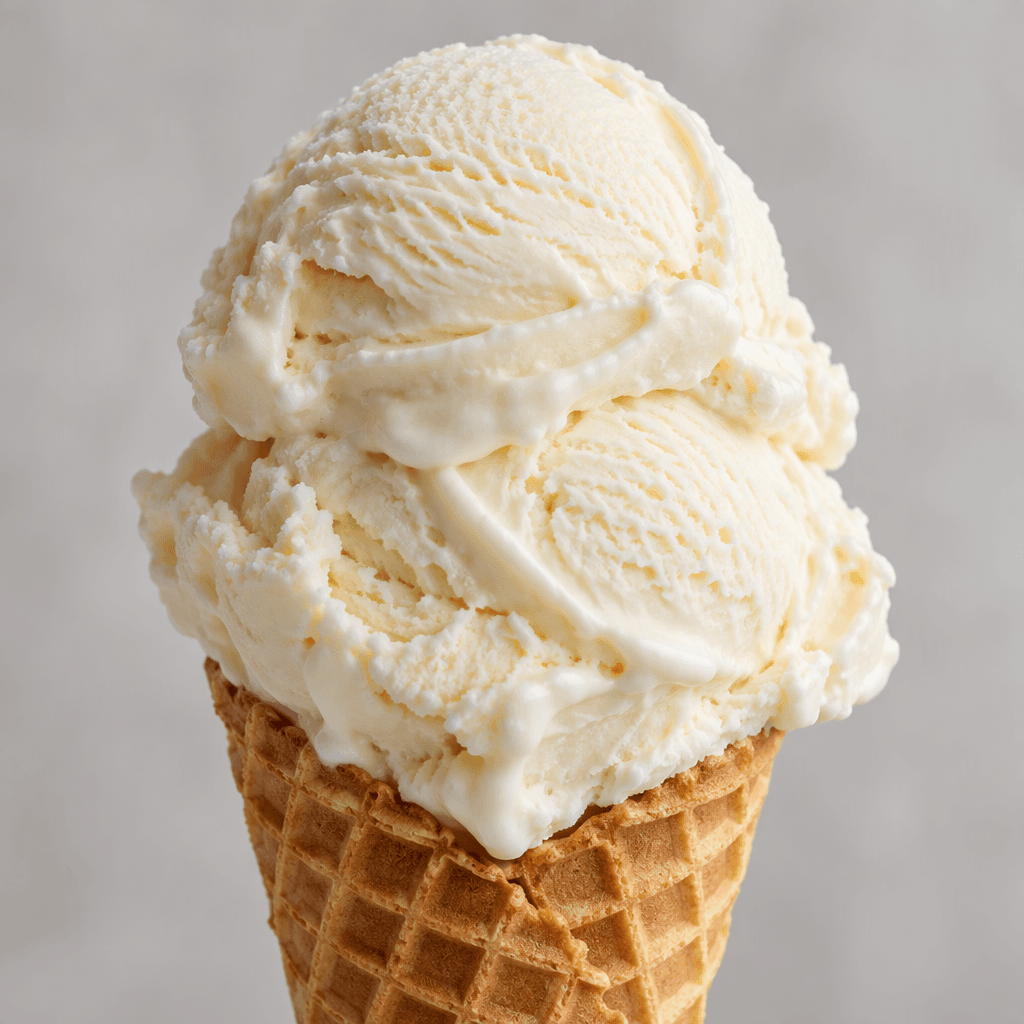
Maraş ice cream cone Calories
Dense, chewy milk ice cream served in a cone
In season: Spring · Summer · Autumn · Winter
CALORIES
GI
POTASSIUM
FIBER
Quick answer
1 piece (medium) of Maraş ice cream cone (110 g) has 259 calories. That works out to 235 calories per 100 g. It contains 33.9 g of carbs, 5.1 g of protein, 11.8 g of fat and 0.9 g of fiber. Its 134.2 mg of Phosphorus covers 19% of the Daily Value. Its glycemic index is 58 (medium), so it raises blood sugar at a moderate pace.
What is Maraş ice cream cone?
A Maraş ice cream cone brings the distinctive milk ice cream of Kahramanmaraş, in southern Türkiye, together with a crisp wafer cone. The ice cream is traditionally made with milk, sugar and salep, which gives it a dense, elastic texture that can stretch as it is served.
The contrast between the crunchy cone and the smooth, chewy ice cream is part of its appeal. In Türkiye it is commonly enjoyed as a street treat or a simple dessert, especially in warm weather; elsewhere, it fits naturally among ice-cream-cone choices at a Turkish café or dessert shop. It is a sweet, energy-dense treat, with 235 calories per 100 g. Choose a smaller cone if you want a lighter portion, or enjoy it after a meal rather than alongside another dessert.
Maraş ice cream cone Nutrition Facts
Selected: 100 g
235
KCAL / 100G
Carbs
30.8g
· 11% DV
Protein
4.6g
· 9% DV
Fat
10.7g
· 14% DV
Fiber
0.8g
· 3% DV
DV is the share of the daily value covered, on a 2,000 kcal reference diet.
Calories come from: Carbs 52% · Protein 8% · Fat 40%
Maraş ice cream cone Vitamins & Minerals
Vitamins
B12
0.38µg · 16% DV
B2
0.19mg · 15% DV
Vitamin A
92µg · 10% DV
B5
0.42mg · 8% DV
Minerals
Phosphorus
122mg · 17% DV
Calcium
148mg · 15% DV
Zinc
1mg · 9% DV
Iodine
11µg · 7% DV
How Nutritious Is Maraş ice cream cone?
Nutrient density
Low
How many vitamins, minerals and how much fiber this food carries per calorie. A high score means a lot of nutrition for few calories.
Satiety score
Low
An EatBetter score computed from fiber, protein and calorie density. A high score means staying full longer on the same calories.
Both scores are calculated per 100 g and do not change with the selected portion. The satiety score is EatBetter's own calculation, not a clinical measure.
Maraş ice cream cone Glycemic Index
GLYCEMIC INDEX
GLYCEMIC LOAD
Accounts for portion size — a more realistic measure than GI alone.
How to Burn Off Maraş ice cream cone
To burn the 235 calories in 100 g:
🚶
Walking (5 km/h)
🏃
Running (8 km/h)
🚴
Cycling
🏊
Swimming
Times are calculated with the MET equation for a 70 kg adult. Actual burn varies with your weight, age and pace.
Is Maraş ice cream cone Processed?
NOVA 3
Processed
1. Unprocessed
2. Minimally Processed
3. Processed
4. Ultra-Processed
NOVA classifies foods into 4 groups by industrial processing. NOVA 1 (unprocessed) is the healthiest.
Does Maraş ice cream cone Contain Allergens?
Contains these allergens:
Which Diets Is Maraş ice cream cone Good For?
Vegan
— Not suitable
Vegetarian
✓ Suitable
Gluten-Free
— Not suitable
Dairy-Free
— Not suitable
Mediterranean
— Not suitable
Paleo
— Not suitable
Whole30
— Not suitable
DASH
— Not suitable
Keto
— Not suitable
Low FODMAP
— Not suitable
Maraş ice cream cone Fat Profile
SATURATED
6.4g
MONOUNSATURATED
2.9g
POLYUNSATURATED
0.33g
Omega 6:3 ratio 5.6:1
Above the ideal 4:1 (5.6:1).
Compare Maraş ice cream cone
Foods Similar to Maraş ice cream cone
Frequently Asked Questions About Maraş ice cream cone
What makes a Maraş ice cream cone stretchy?
The ice cream in a Maraş ice cream cone gets its stretchy, chewy texture from salep and the traditional kneading and beating process. Salep thickens the milk mixture, giving it a consistency unlike ordinary scoopable ice cream.
Is a Maraş ice cream cone the same as Turkish dondurma?
Yes, a Maraş ice cream cone is Turkish dondurma served in a cone. Maraş-style dondurma is known for its dense, elastic texture; “cone” describes how it is served, not a separate kind of ice cream.
What is salep in a Maraş ice cream cone?
Salep is a flour made from the tubers of certain wild orchids, and it is traditionally used to thicken the ice cream in a Maraş ice cream cone. It helps create the characteristic stretchy texture.
Is a Maraş ice cream cone traditionally made with goat’s milk?
Traditionally, Maraş dondurma is closely associated with goat’s milk, along with salep. Modern versions may use other milk or a blend, so the name alone does not guarantee that a particular Maraş ice cream cone contains goat’s milk.
Why do vendors stretch Maraş ice cream before serving it in a cone?
Vendors stretch Maraş ice cream to show off its elastic texture and to work the dense mixture before serving. The familiar scooping and pulling routine is also part of the theatrical street-food experience, rather than a requirement for eating it.
Does a Maraş ice cream cone melt more slowly than regular ice cream?
Often, yes: the dense, stretchy ice cream in a Maraş ice cream cone tends to soften more slowly than lighter, softer ice cream. It still melts in warm conditions, and the wafer cone can lose its crispness as it sits.
Can you make a Maraş ice cream cone without salep?
You can make a frozen milk dessert without salep, but it will not have the characteristic stretchy texture of a Maraş ice cream cone. Salep is central to the traditional consistency; substitutes may thicken the mixture without reproducing the same chew.
What is the best way to eat a Maraş ice cream cone?
Eat a Maraş ice cream cone in small bites, holding it upright so the dense ice cream stays balanced on the wafer. Some vendors serve Maraş dondurma with a fork or knife because it can be too firm to scoop easily.
Can you refreeze a Maraş ice cream cone?
It is better not to refreeze a Maraş ice cream cone after it has softened or melted. Refreezing can make the ice cream icy and less stretchy, while the wafer cone may become soggy; store the ice cream separately if needed.
What goes well with a Maraş ice cream cone?
Turkish coffee or tea pairs well with a Maraş ice cream cone, balancing its rich milk flavor. Pistachios and fresh fruit also work as toppings, but add them just before serving so the cone stays crisp.
Have another question about Maraş ice cream cone?
Ask the AI nutrition coach — calories, portions, alternatives and more, answered in seconds in the app.

Scan calories with your camera
Instant AI nutrition analysis

Nutrition data compiled from USDA FoodData Central and scientific sources.