

Ready & Packaged Foods
All →Vegetables & Legumes
All →Desserts & Confectionery
All →Meat & Protein
All →Grains & Bakery
All →Beverages
All →Milk & Dairy
All →

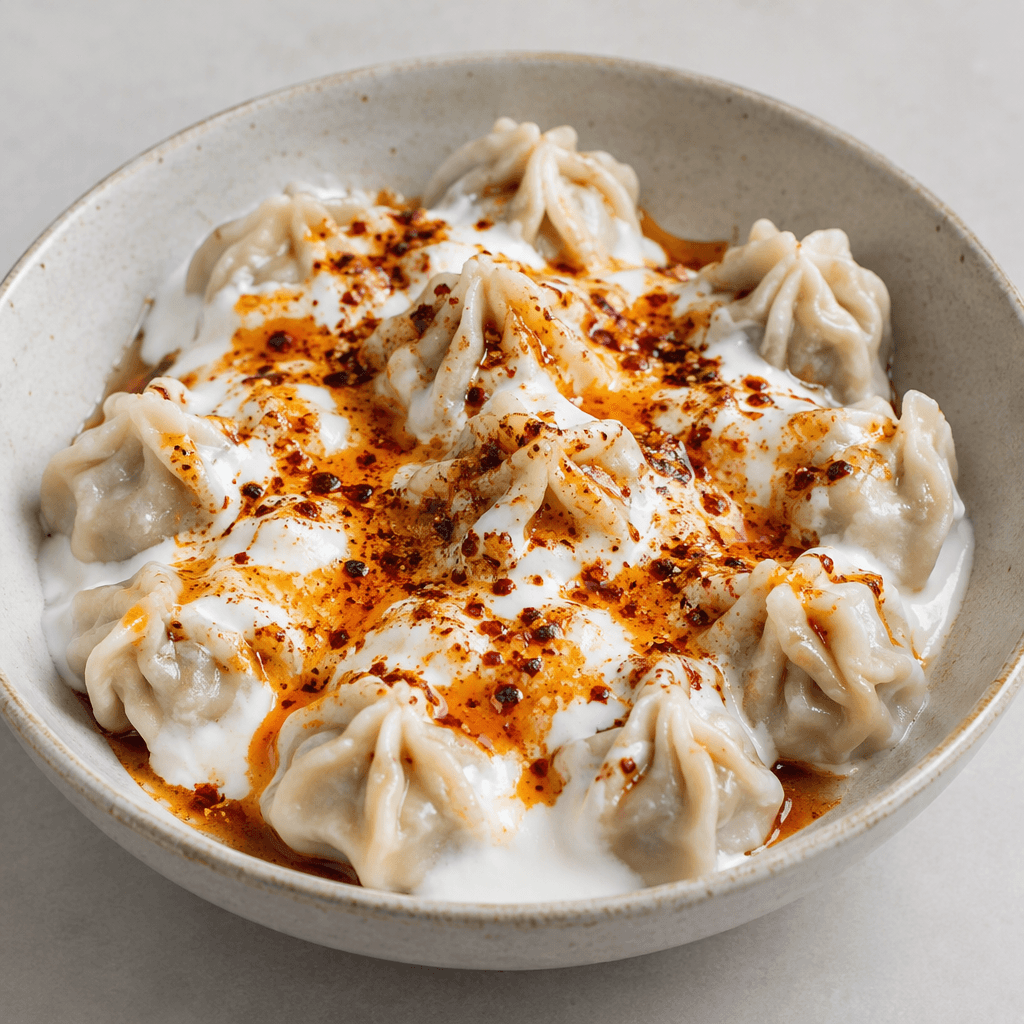
Manti with yogurt and butter Calories
Traditional Turkish dumplings served with yogurt and butter
In season: Spring · Summer · Autumn · Winter
CALORIES
GI
POTASSIUM
FIBER
Quick answer
1 serving (medium) of Manti with yogurt and butter (180 g) has 333 calories. That works out to 185 calories per 100 g. It contains 41 g of carbs, 13 g of protein, 12.8 g of fat and 2.9 g of fiber. Its 0.7 µg of B12 covers 29% of the Daily Value. Its glycemic index is 62 (medium), so it raises blood sugar at a moderate pace.
What is Manti with yogurt and butter?
Across Turkey, manti with yogurt and butter means small parcels of dough, commonly filled with minced meat, boiled until tender and finished with yogurt. The dish is particularly associated with Kayseri, where carefully folded, bite-sized manti are a point of local pride. Garlic is often stirred into the yogurt, while melted butter seasoned with red pepper is spooned over the top.
Served hot, it balances tangy, cool yogurt with rich butter and tender dumplings, and works well as a satisfying main meal. The dough contributes most of the carbohydrates, while the meat filling adds protein. For a lighter serving, use a little less butter and keep the yogurt generous.
Manti with yogurt and butter Nutrition Facts
Selected: 100 g
185
KCAL / 100G
Carbs
22.8g
· 8% DV
Protein
7.2g
· 14% DV
Fat
7.1g
· 9% DV
Fiber
1.6g
· 6% DV
DV is the share of the daily value covered, on a 2,000 kcal reference diet.
Calories come from: Carbs 50% · Protein 16% · Fat 34%
Manti with yogurt and butter Vitamins & Minerals
Vitamins
B12
0.38µg · 16% DV
B2
0.18mg · 14% DV
B1
0.12mg · 10% DV
B5
0.45mg · 9% DV
Minerals
Selenium
7.5µg · 14% DV
Sodium
285mg · 12% DV
Phosphorus
82mg · 12% DV
Zinc
1mg · 9% DV
How Nutritious Is Manti with yogurt and butter?
Nutrient density
Medium
How many vitamins, minerals and how much fiber this food carries per calorie. A high score means a lot of nutrition for few calories.
Satiety score
Medium
An EatBetter score computed from fiber, protein and calorie density. A high score means staying full longer on the same calories.
Both scores are calculated per 100 g and do not change with the selected portion. The satiety score is EatBetter's own calculation, not a clinical measure.
Manti with yogurt and butter Glycemic Index
GLYCEMIC INDEX
GLYCEMIC LOAD
Accounts for portion size — a more realistic measure than GI alone.
How to Burn Off Manti with yogurt and butter
To burn the 185 calories in 100 g:
🚶
Walking (5 km/h)
🏃
Running (8 km/h)
🚴
Cycling
🏊
Swimming
Times are calculated with the MET equation for a 70 kg adult. Actual burn varies with your weight, age and pace.
Is Manti with yogurt and butter Processed?
NOVA 3
Processed
1. Unprocessed
2. Minimally Processed
3. Processed
4. Ultra-Processed
NOVA classifies foods into 4 groups by industrial processing. NOVA 1 (unprocessed) is the healthiest.
Does Manti with yogurt and butter Contain Allergens?
Contains these allergens:
Which Diets Is Manti with yogurt and butter Good For?
Vegan
— Not suitable
Vegetarian
— Not suitable
Gluten-Free
— Not suitable
Dairy-Free
— Not suitable
Mediterranean
✓ Suitable
Paleo
— Not suitable
Whole30
— Not suitable
DASH
— Not suitable
Keto
— Not suitable
Low FODMAP
— Not suitable
Manti with yogurt and butter Fat Profile
SATURATED
3.2g
MONOUNSATURATED
2.1g
POLYUNSATURATED
0.4g
Omega 6:3 ratio 8:1
Above the ideal 4:1 (8:1).
Compare Manti with yogurt and butter
Foods Similar to Manti with yogurt and butter
Frequently Asked Questions About Manti with yogurt and butter
What is Manti with yogurt and butter?
Manti with yogurt and butter is a Turkish dish of small filled dumplings, usually topped with garlicky yogurt and melted butter seasoned with red pepper. The dumplings are typically boiled, then dressed just before serving.
How do you make Manti with yogurt and butter?
To make Manti with yogurt and butter, fill small pieces of dough with seasoned minced meat, fold them closed, and boil until cooked. Serve with yogurt, often mixed with garlic, and finish with melted butter and pepper.
Why is butter with red pepper poured over Manti with yogurt and butter?
The melted butter seasons Manti with yogurt and butter and adds the dish’s characteristic glossy, peppery topping. Red pepper flakes or paprika are warmed briefly in the butter; avoid overheating them, which can make the sauce taste burnt.
Is the yogurt on Manti with yogurt and butter supposed to contain garlic?
Often, yes: the yogurt served with Manti with yogurt and butter is mixed with crushed garlic in Turkish cooking. Garlic is optional, so you can leave it out or use less without changing how the dumplings are cooked.
What is the difference between Turkish manti and other dumplings?
Manti with yogurt and butter is a Turkish-style serving of small dumplings, distinguished by its yogurt topping and peppered butter. Other dumplings vary widely in size, fillings, and sauces; some are served in broth or with soy-based sauces instead.
Can you freeze Manti with yogurt and butter?
Yes, but freeze the dumplings before adding yogurt or butter sauce. Arrange uncooked manti separately until firm, then store them in a sealed freezer container. Cook them from frozen in boiling water rather than thawing first.
How do you reheat Manti with yogurt and butter without splitting the yogurt?
Warm the dumplings gently in a covered pan with a splash of water, and avoid boiling the yogurt topping. For the best texture, store the yogurt separately and add it after reheating; pour on freshly warmed butter just before serving.
What should you serve with Manti with yogurt and butter?
A crisp salad or a light soup pairs well with Manti with yogurt and butter. The dumplings already have a rich yogurt-and-butter topping, so a simple vegetable side balances the meal better than another heavy dish.
Can people with diabetes eat Manti with yogurt and butter?
They may be able to include it, but the dough supplies carbohydrates that can raise blood glucose. Portion size and the rest of the meal matter; anyone managing diabetes should follow their own meal plan or ask their dietitian.
Is Manti with yogurt and butter served with hot or cold yogurt?
Manti with yogurt and butter is generally served with cool or room-temperature yogurt spooned over hot dumplings. Avoid boiling the yogurt in the pan, since high heat can make it separate; the hot dumplings warm it as the dish is assembled.
Have another question about Manti with yogurt and butter?
Ask the AI nutrition coach — calories, portions, alternatives and more, answered in seconds in the app.

Scan calories with your camera
Instant AI nutrition analysis

Nutrition data compiled from USDA FoodData Central and scientific sources.