

Ready & Packaged Foods
All →Vegetables & Legumes
All →Desserts & Confectionery
All →Meat & Protein
All →Grains & Bakery
All →Beverages
All →Milk & Dairy
All →

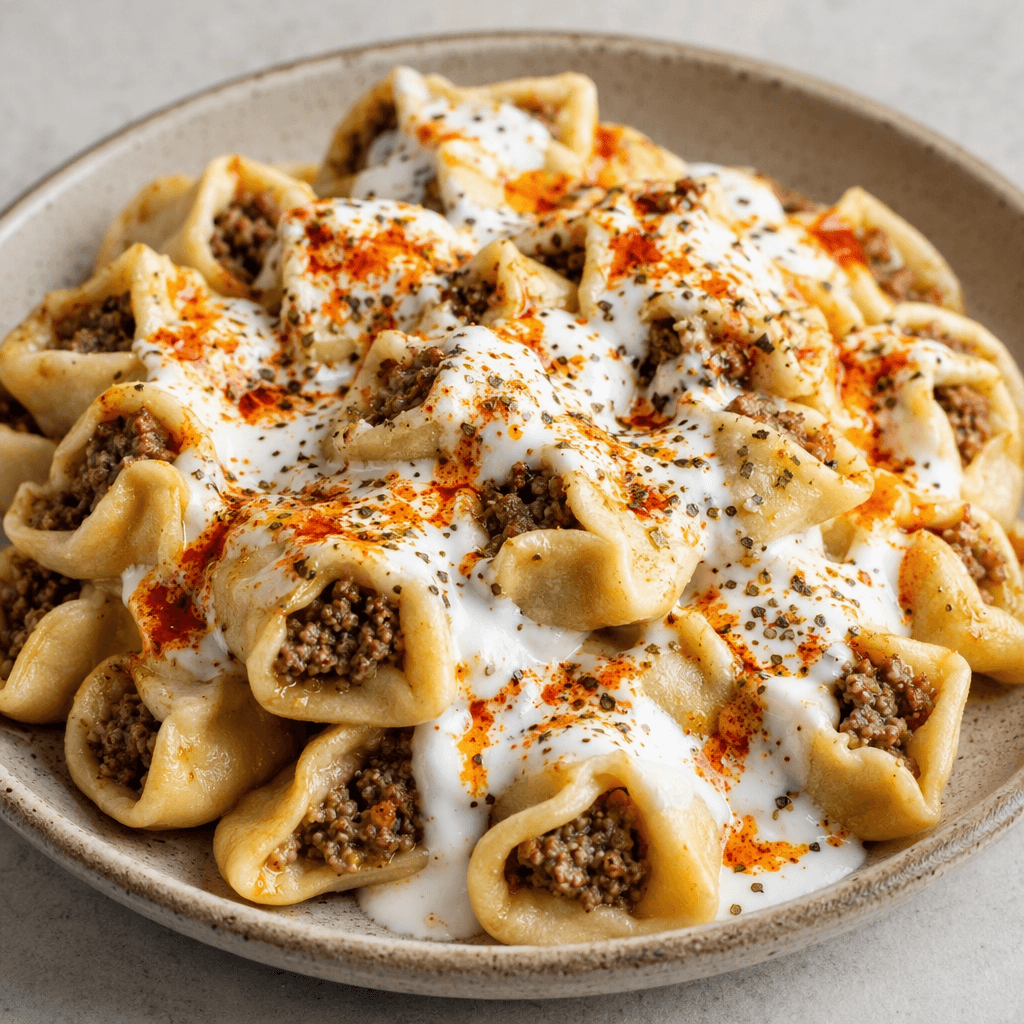
Manti Calories
Traditional Turkish dumplings with ground meat filling, served with yogurt sauce.
In season: Autumn · Winter
CALORIES
GI
POTASSIUM
FIBER
Quick answer
1 serving (medium) of Manti (150 g) has 315 calories. That works out to 210 calories per 100 g. It contains 42 g of carbs, 12.8 g of protein, 11.3 g of fat and 3 g of fiber. Its 0.5 µg of B12 covers 22% of the Daily Value. Its glycemic index is 65 (medium), so it raises blood sugar at a moderate pace.
What is Manti?
Manti are small Turkish dumplings made by wrapping seasoned ground meat in thin dough, then boiling the parcels until tender. They are a familiar home-cooked dish across Turkey, with regional styles such as Kayseri’s especially small dumplings. A classic serving is finished with yoghurt, often garlicked, and melted butter or oil scented with red pepper.
The soft, chewy dough contrasts with the savoury filling and cool, tangy yoghurt. Manti are usually served as a filling main meal, rather than as a snack. They are dough-forward, with protein from the meat and yoghurt; for a lighter plate, use less butter and serve with a crisp salad.
Manti Nutrition Facts
Selected: 100 g
210
KCAL / 100G
Carbs
28g
· 10% DV
Protein
8.5g
· 17% DV
Fat
7.5g
· 10% DV
Fiber
2g
· 7% DV
DV is the share of the daily value covered, on a 2,000 kcal reference diet.
Calories come from: Carbs 52% · Protein 16% · Fat 32%
Manti Vitamins & Minerals
Vitamins
B12
0.35µg · 15% DV
B1
0.12mg · 10% DV
B3
1.5mg · 9% DV
Biotin
2.5µg · 8% DV
Minerals
Sodium
320mg · 14% DV
Selenium
7.5µg · 14% DV
Phosphorus
85mg · 12% DV
Zinc
1mg · 9% DV
How Nutritious Is Manti?
Nutrient density
Medium
How many vitamins, minerals and how much fiber this food carries per calorie. A high score means a lot of nutrition for few calories.
Satiety score
Medium
An EatBetter score computed from fiber, protein and calorie density. A high score means staying full longer on the same calories.
Both scores are calculated per 100 g and do not change with the selected portion. The satiety score is EatBetter's own calculation, not a clinical measure.
Manti Glycemic Index
GLYCEMIC INDEX
GLYCEMIC LOAD
Accounts for portion size — a more realistic measure than GI alone.
How to Burn Off Manti
To burn the 210 calories in 100 g:
🚶
Walking (5 km/h)
🏃
Running (8 km/h)
🚴
Cycling
🏊
Swimming
Times are calculated with the MET equation for a 70 kg adult. Actual burn varies with your weight, age and pace.
Is Manti Processed?
NOVA 3
Processed
1. Unprocessed
2. Minimally Processed
3. Processed
4. Ultra-Processed
NOVA classifies foods into 4 groups by industrial processing. NOVA 1 (unprocessed) is the healthiest.
Does Manti Contain Allergens?
Contains these allergens:
Which Diets Is Manti Good For?
Vegan
— Not suitable
Vegetarian
— Not suitable
Gluten-Free
— Not suitable
Dairy-Free
— Not suitable
Mediterranean
✓ Suitable
Paleo
— Not suitable
Whole30
— Not suitable
DASH
— Not suitable
Keto
— Not suitable
Low FODMAP
— Not suitable
Manti Fat Profile
SATURATED
2.3g
MONOUNSATURATED
2.5g
POLYUNSATURATED
1g
Omega 6:3 ratio 5.8:1
Above the ideal 4:1 (5.8:1).
Compare Manti
Foods Similar to Manti
Frequently Asked Questions About Manti
What is manti made of?
Manti is made from small pieces of dough wrapped around a seasoned filling, most commonly ground meat. Turkish manti is usually boiled and served with garlic yogurt and a drizzle of butter or oil flavored with red pepper.
How do you cook manti?
Boil manti in salted water until the dough is tender and the filling is cooked through. Fresh manti cooks faster than dried manti, so check it as it cooks; drain it gently to keep the small parcels intact.
What sauce is served with manti?
Turkish manti is typically topped with garlic yogurt and melted butter or oil warmed with red pepper flakes. Spoon the yogurt over the cooked dumplings just before serving, then add the pepper butter so the yogurt stays creamy.
Is manti Turkish, and where did it come from?
Manti is strongly associated with Turkish cuisine, but related dumplings are eaten across Central Asia and neighboring regions. Turkish versions vary by region; Kayseri manti is especially known for its tiny parcels and yogurt-based serving style.
How is Turkish manti different from ravioli?
Turkish manti is usually smaller than ravioli and is commonly served with garlic yogurt and pepper butter. Ravioli more often has larger pasta pockets and is paired with tomato, butter, or cheese-based sauces, though recipes vary.
Why is Kayseri manti so small?
Kayseri manti is traditionally made in tiny parcels, a distinctive local style often highlighted in its presentation. The small size also means it cooks quickly, so seal the dough carefully and avoid overfilling each piece.
Can you freeze manti?
Yes, freeze uncooked manti in a single layer first so the pieces do not stick together, then transfer them to a sealed freezer bag. Cook them straight from frozen in boiling water rather than thawing them first.
Can you bake manti instead of boiling it?
Yes, some Turkish recipes bake manti in a tray before adding hot water or broth to finish cooking it. This gives the dough a more browned, toasted flavor than the usual boiled version; follow a recipe designed for tray-baked manti.
What should you serve with manti?
Serve manti with a crisp salad, pickles, or a light soup. Its garlic yogurt and rich pepper butter already make the dish filling, so fresh, tangy sides balance the meal better than another heavy course.
How do you keep manti from opening while cooking?
Keep manti closed by using only a small amount of filling and pressing the dough seams firmly together. If the edges are dry or dusty with flour, moisten them lightly before sealing; handle the dumplings gently when adding them to the water.
Have another question about Manti?
Ask the AI nutrition coach — calories, portions, alternatives and more, answered in seconds in the app.

Scan calories with your camera
Instant AI nutrition analysis

Nutrition data compiled from USDA FoodData Central and scientific sources.