

Ready & Packaged Foods
All →Vegetables & Legumes
All →Desserts & Confectionery
All →Meat & Protein
All →Grains & Bakery
All →Beverages
All →Milk & Dairy
All →

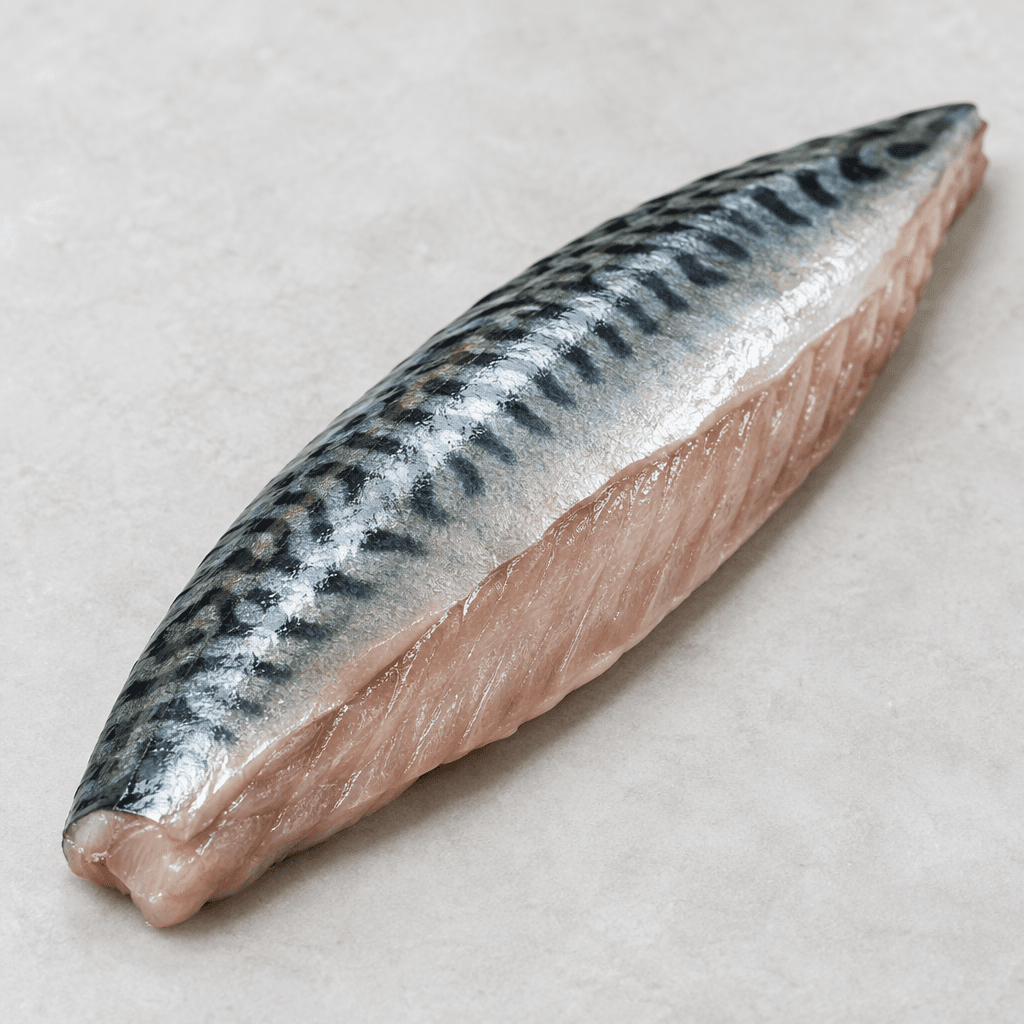
Mackerel fillet Calories
Rich in omega-3, high protein, source of vitamin B12
In season: Spring · Summer · Autumn · Winter
CALORIES
GI
POTASSIUM
FIBER
Quick answer
1 piece (medium) of Mackerel fillet (120 g) has 246 calories. That works out to 205 calories per 100 g. It contains 0 g of carbs, 22.8 g of protein, 16.8 g of fat and 0 g of fiber. Its 22.8 µg of B12 covers 950% of the Daily Value. Its glycemic index is 0 (low), so it raises blood sugar slowly.
What is Mackerel fillet?
Mackerel fillet is the boneless portion cut from mackerel, a firm-fleshed, oily sea fish. Its skin is often left on; the flesh is moist and richly flavoured, with a stronger taste than many white fish. Across its range, mackerel is commonly grilled, pan-fried or baked, and it is also smoked or preserved. In Turkey, grilled mackerel and mackerel sandwiches are familiar ways to enjoy it.
Naturally rich in protein and omega-3 fats, it makes a satisfying main dish. Serve it with lemon and a crisp salad, or pair it with potatoes or bread for a heartier meal. For a lighter preparation, grill or bake the fillet rather than frying it.
Mackerel fillet Nutrition Facts
Selected: 100 g
205
KCAL / 100G
Carbs
0g
· 0% DV
Protein
19g
· 38% DV
Fat
14g
· 18% DV
Fiber
0g
· 0% DV
DV is the share of the daily value covered, on a 2,000 kcal reference diet.
Calories come from: Carbs 0% · Protein 38% · Fat 62%
Mackerel fillet Vitamins & Minerals
Vitamins
B12
19µg · 792% DV
Vitamin D
16µg · 80% DV
B3
7.6mg · 48% DV
B6
0.6mg · 35% DV
Minerals
Selenium
44µg · 80% DV
Phosphorus
280mg · 40% DV
Iodine
40µg · 27% DV
Magnesium
76mg · 18% DV
How Nutritious Is Mackerel fillet?
Nutrient density
Very high
How many vitamins, minerals and how much fiber this food carries per calorie. A high score means a lot of nutrition for few calories.
Satiety score
Medium
An EatBetter score computed from fiber, protein and calorie density. A high score means staying full longer on the same calories.
Both scores are calculated per 100 g and do not change with the selected portion. The satiety score is EatBetter's own calculation, not a clinical measure.
Mackerel fillet Glycemic Index
GLYCEMIC INDEX
GLYCEMIC LOAD
Accounts for portion size — a more realistic measure than GI alone.
How to Burn Off Mackerel fillet
To burn the 205 calories in 100 g:
🚶
Walking (5 km/h)
🏃
Running (8 km/h)
🚴
Cycling
🏊
Swimming
Times are calculated with the MET equation for a 70 kg adult. Actual burn varies with your weight, age and pace.
Is Mackerel fillet Processed?
NOVA 2
Minimally Processed
1. Unprocessed
2. Minimally Processed
3. Processed
4. Ultra-Processed
NOVA classifies foods into 4 groups by industrial processing. NOVA 1 (unprocessed) is the healthiest.
Does Mackerel fillet Contain Allergens?
Contains these allergens:
Which Diets Is Mackerel fillet Good For?
Vegan
— Not suitable
Vegetarian
— Not suitable
Gluten-Free
✓ Suitable
Dairy-Free
— Not suitable
Mediterranean
✓ Suitable
Paleo
✓ Suitable
Whole30
— Not suitable
DASH
— Not suitable
Keto
✓ Suitable
Low FODMAP
— Not suitable
Mackerel fillet Fat Profile
SATURATED
3.3g
MONOUNSATURATED
5.2g
POLYUNSATURATED
3.1g
Omega 6:3 ratio 0.1:1
Below the ideal 4:1 — a good omega balance.
Compare Mackerel fillet
Foods Similar to Mackerel fillet
Frequently Asked Questions About Mackerel fillet
How do you cook a mackerel fillet?
Cook a mackerel fillet until the flesh turns opaque and separates easily with a fork. It works well under a hot grill, in a pan, or in the oven; pat the skin dry first if you want it to crisp.
How long should you bake a mackerel fillet?
Bake a mackerel fillet in a preheated 400°F (200°C) oven for about 10–15 minutes, depending on thickness. It is ready when the flesh is opaque throughout and flakes easily; avoid overcooking, which can dry it out.
Can you pan-fry a mackerel fillet with the skin on?
Yes, pan-fry a mackerel fillet skin-side down first. A dry fillet and a hot, lightly oiled pan help the skin crisp; press it gently for a few seconds so it stays flat, then turn it carefully to finish cooking.
Does a mackerel fillet have bones?
A mackerel fillet has had its backbone removed, but small pin bones may remain. Run your fingers along the flesh before cooking and pull out any bones with clean tweezers; check carefully before serving it to children.
Can you eat the skin on a mackerel fillet?
Yes, mackerel fillet skin is edible when properly cooked. It becomes crisp when pan-fried or grilled, and adds texture to the fish; if you prefer not to eat it, the cooked flesh separates from the skin easily.
Can you freeze mackerel fillets?
Yes, freeze mackerel fillets in airtight packaging to limit air exposure and preserve quality. Thaw them in the refrigerator rather than on the counter, and cook them soon after thawing; do not refreeze them raw once thawed.
How can you tell if a mackerel fillet is fresh?
A fresh mackerel fillet should smell mild and marine, look moist, and feel firm rather than sticky. Avoid fillets with a sour, ammonia-like, or strongly fishy smell, or flesh that looks dull and feels slimy.
How long do cooked mackerel fillets last in the fridge?
Cooked mackerel fillets keep in the refrigerator for 3–4 days when stored promptly in a covered container. Refrigerate them within two hours of cooking, and discard them if they develop an unusual smell or appearance.
Is mackerel fillet healthy to eat?
Yes, mackerel fillet is a nutritious fish that provides protein, omega-3 fats, and vitamin B12. Its rich flavor also means a simple preparation—such as baking with lemon and herbs—can make a satisfying meal without heavy sauces.
Can you eat mackerel fillet while pregnant?
Yes, some types of mackerel can be eaten during pregnancy when thoroughly cooked, but mercury levels vary by species. King mackerel is high in mercury and should be avoided; ask your healthcare professional which local mackerel species are appropriate.
Have another question about Mackerel fillet?
Ask the AI nutrition coach — calories, portions, alternatives and more, answered in seconds in the app.

Scan calories with your camera
Instant AI nutrition analysis

Nutrition data compiled from USDA FoodData Central and scientific sources.