

Ready & Packaged Foods
All →Vegetables & Legumes
All →Desserts & Confectionery
All →Meat & Protein
All →Grains & Bakery
All →Beverages
All →Milk & Dairy
All →

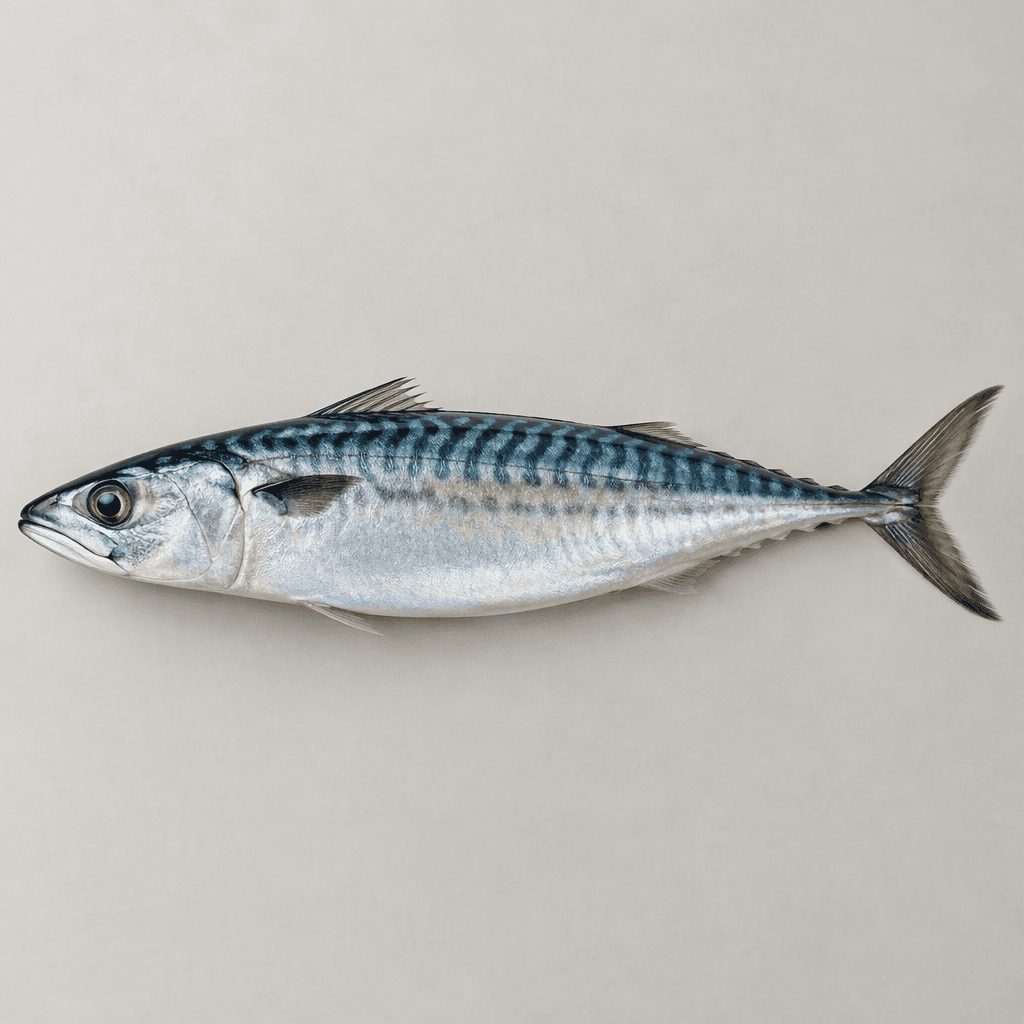
Mackerel Calories
Rich in omega-3, high protein, excellent source of B12
In season: Spring · Summer · Autumn · Winter
CALORIES
GI
POTASSIUM
FIBER
Quick answer
1 piece (medium) of Mackerel (120 g) has 246 calories. That works out to 205 calories per 100 g. It contains 0 g of carbs, 22.8 g of protein, 16.8 g of fat and 0 g of fiber. Its 22.8 µg of B12 covers 950% of the Daily Value. Its glycemic index is 0 (low), so it raises blood sugar slowly.
What is Mackerel?
Mackerel is an oily saltwater fish found in temperate seas, including the waters around Turkey. It is sold whole or as fillets, fresh, smoked or canned, with the exact form and preparation varying by region.
Its firm, moist flesh has a pronounced savoury flavour. It is often grilled or baked, and also works well smoked or tinned in simple meals; in Turkey, it is commonly served with salad, onion and lemon. Mackerel is rich in protein and omega-3 fats, with no carbohydrates. For a lighter plate, grill or bake it rather than frying, and pair it with vegetables or a crisp salad.
Mackerel Nutrition Facts
Selected: 100 g
205
KCAL / 100G
Carbs
0g
· 0% DV
Protein
19g
· 38% DV
Fat
14g
· 18% DV
Fiber
0g
· 0% DV
DV is the share of the daily value covered, on a 2,000 kcal reference diet.
Calories come from: Carbs 0% · Protein 38% · Fat 62%
Mackerel Vitamins & Minerals
Vitamins
B12
19µg · 792% DV
Vitamin D
16µg · 80% DV
B3
7.6mg · 48% DV
B6
0.6mg · 35% DV
Minerals
Selenium
44µg · 80% DV
Phosphorus
280mg · 40% DV
Iodine
50µg · 33% DV
Magnesium
76mg · 18% DV
How Nutritious Is Mackerel?
Nutrient density
Very high
How many vitamins, minerals and how much fiber this food carries per calorie. A high score means a lot of nutrition for few calories.
Satiety score
Medium
An EatBetter score computed from fiber, protein and calorie density. A high score means staying full longer on the same calories.
Both scores are calculated per 100 g and do not change with the selected portion. The satiety score is EatBetter's own calculation, not a clinical measure.
Mackerel Glycemic Index
GLYCEMIC INDEX
GLYCEMIC LOAD
Accounts for portion size — a more realistic measure than GI alone.
How to Burn Off Mackerel
To burn the 205 calories in 100 g:
🚶
Walking (5 km/h)
🏃
Running (8 km/h)
🚴
Cycling
🏊
Swimming
Times are calculated with the MET equation for a 70 kg adult. Actual burn varies with your weight, age and pace.
Is Mackerel Processed?
NOVA 1
Unprocessed
1. Unprocessed
2. Minimally Processed
3. Processed
4. Ultra-Processed
NOVA classifies foods into 4 groups by industrial processing. NOVA 1 (unprocessed) is the healthiest.
Does Mackerel Contain Allergens?
Contains these allergens:
Which Diets Is Mackerel Good For?
Vegan
— Not suitable
Vegetarian
— Not suitable
Gluten-Free
✓ Suitable
Dairy-Free
— Not suitable
Mediterranean
✓ Suitable
Paleo
✓ Suitable
Whole30
— Not suitable
DASH
— Not suitable
Keto
✓ Suitable
Low FODMAP
— Not suitable
Mackerel Fat Profile
SATURATED
3.3g
MONOUNSATURATED
5.2g
POLYUNSATURATED
3.1g
Omega 6:3 ratio 0.1:1
Below the ideal 4:1 — a good omega balance.
Compare Mackerel
Foods Similar to Mackerel
Frequently Asked Questions About Mackerel
How do you cook mackerel?
Mackerel can be grilled, pan-fried, baked or broiled. Pat it dry, season simply, and cook until the flesh turns opaque and separates easily. Its naturally oily flesh pairs well with lemon, herbs and sharp sauces.
What does mackerel taste like?
Mackerel has a rich, savory flavor and a distinctly oily, tender texture. Its taste is stronger than that of mild white fish, so lemon, vinegar, mustard or fresh herbs work well alongside it.
Is mackerel high in mercury?
Atlantic mackerel is generally low in mercury, but king mackerel is high in mercury and should be avoided by people following stricter mercury limits. The species matters, so check which type you are buying rather than relying on the name alone.
Can you eat mackerel skin?
Yes, mackerel skin is edible, and it becomes crisp when the fish is cooked skin-side down in a hot pan or on a grill. Remove it if you dislike its texture, and make sure the skin is cleaned before cooking.
Does mackerel have a lot of bones?
Mackerel has a central backbone and some fine bones, but it is not especially difficult to eat once filleted. Run your fingers along the flesh to find pin bones, particularly before serving it to children.
How can you tell if mackerel is fresh?
Fresh mackerel has clear, bright eyes, shiny taut skin and a mild sea smell. Avoid fish with dull eyes, soft flesh or a sour, ammonia-like odor; mackerel spoils quickly compared with many less oily fish.
Can you eat mackerel raw?
Yes, but only mackerel prepared and handled for raw consumption should be eaten raw. Curing it in lemon juice or vinegar does not reliably kill parasites, so cook ordinary fresh mackerel unless its raw-food safety is confirmed.
Can you freeze fresh mackerel?
Yes, fresh mackerel freezes well when cleaned, dried and tightly wrapped to limit air exposure. Thaw it in the refrigerator and use it soon afterward; freezing does not restore quality if the fish was already old.
Is mackerel safe to eat during pregnancy?
Atlantic mackerel is generally a lower-mercury choice and can be eaten fully cooked during pregnancy. Avoid king mackerel, which is high in mercury, and ask your clinician if you are unsure which species you have.
What is the difference between mackerel and sardines?
Mackerel and sardines are different oily fish, though both have rich flavors and are commonly sold fresh or canned. Mackerel is typically larger with a firmer, meatier flesh, while sardines are smaller and often eaten whole.
Have another question about Mackerel?
Ask the AI nutrition coach — calories, portions, alternatives and more, answered in seconds in the app.

Scan calories with your camera
Instant AI nutrition analysis

Nutrition data compiled from USDA FoodData Central and scientific sources.