

Ready & Packaged Foods
All →Vegetables & Legumes
All →Desserts & Confectionery
All →Meat & Protein
All →Grains & Bakery
All →Beverages
All →Milk & Dairy
All →

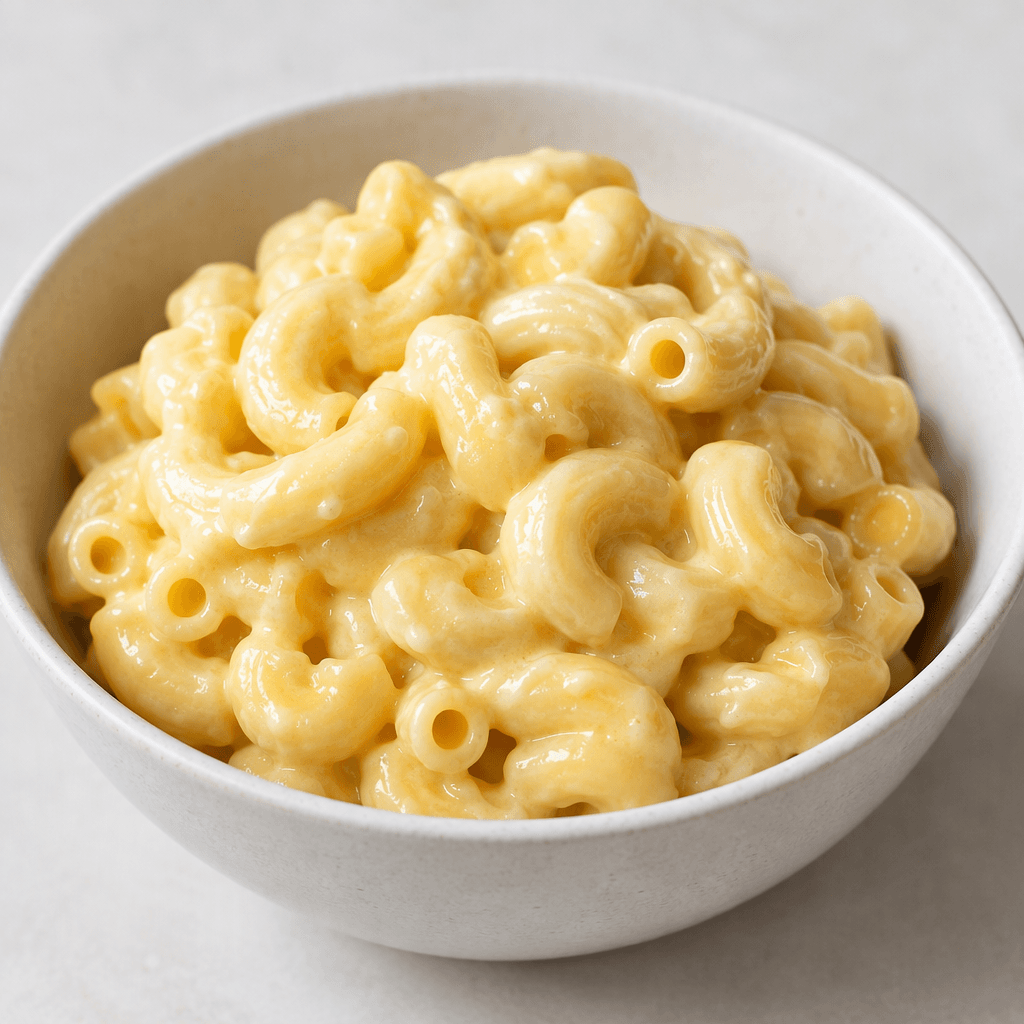
Macaroni and Cheese Calories
Classic creamy macaroni with cheese, high in carbs and calcium
In season: Winter · Autumn
CALORIES
GI
POTASSIUM
FIBER
Quick answer
1 cup (medium) of Macaroni and Cheese (200 g) has 330 calories. That works out to 165 calories per 100 g. It contains 45 g of carbs, 12.4 g of protein, 12.2 g of fat and 2.4 g of fiber. Its 220 mg of Phosphorus covers 31% of the Daily Value. Its glycemic index is 64 (medium), so it raises blood sugar at a moderate pace.
What is Macaroni and Cheese?
Macaroni and Cheese pairs short pasta, usually elbow macaroni, with a creamy cheese sauce. It is closely associated with American home cooking, though baked pasta with cheese has a longer history in Europe. The sauce coats the pasta thickly, giving the dish a soft, comforting texture and a savoury, mildly tangy taste.
It is commonly served as a quick main or a side, whether made on the stovetop or baked until golden. It is carbohydrate-forward, with some protein from the cheese. For a lighter, more balanced meal, serve it with a crisp salad or add vegetables such as peas or broccoli; a little less sauce also keeps the bowl from feeling too rich.
Macaroni and Cheese Nutrition Facts
Selected: 100 g
165
KCAL / 100G
Carbs
22.5g
· 8% DV
Protein
6.2g
· 12% DV
Fat
6.1g
· 8% DV
Fiber
1.2g
· 4% DV
DV is the share of the daily value covered, on a 2,000 kcal reference diet.
Calories come from: Carbs 53% · Protein 15% · Fat 32%
Macaroni and Cheese Vitamins & Minerals
Vitamins
B12
0.32µg · 13% DV
Vitamin A
90µg · 10% DV
B2
0.13mg · 10% DV
B5
0.35mg · 7% DV
Minerals
Phosphorus
110mg · 16% DV
Calcium
145mg · 14% DV
Sodium
330mg · 14% DV
Selenium
6.2µg · 11% DV
How Nutritious Is Macaroni and Cheese?
Nutrient density
Medium
How many vitamins, minerals and how much fiber this food carries per calorie. A high score means a lot of nutrition for few calories.
Satiety score
Medium
An EatBetter score computed from fiber, protein and calorie density. A high score means staying full longer on the same calories.
Both scores are calculated per 100 g and do not change with the selected portion. The satiety score is EatBetter's own calculation, not a clinical measure.
Macaroni and Cheese Glycemic Index
GLYCEMIC INDEX
GLYCEMIC LOAD
Accounts for portion size — a more realistic measure than GI alone.
How to Burn Off Macaroni and Cheese
To burn the 165 calories in 100 g:
🚶
Walking (5 km/h)
🏃
Running (8 km/h)
🚴
Cycling
🏊
Swimming
Times are calculated with the MET equation for a 70 kg adult. Actual burn varies with your weight, age and pace.
Is Macaroni and Cheese Processed?
NOVA 3
Processed
1. Unprocessed
2. Minimally Processed
3. Processed
4. Ultra-Processed
NOVA classifies foods into 4 groups by industrial processing. NOVA 1 (unprocessed) is the healthiest.
Does Macaroni and Cheese Contain Allergens?
Contains these allergens:
Which Diets Is Macaroni and Cheese Good For?
Vegan
— Not suitable
Vegetarian
✓ Suitable
Gluten-Free
— Not suitable
Dairy-Free
— Not suitable
Mediterranean
— Not suitable
Paleo
— Not suitable
Whole30
— Not suitable
DASH
— Not suitable
Keto
— Not suitable
Low FODMAP
— Not suitable
Macaroni and Cheese Fat Profile
SATURATED
3.1g
MONOUNSATURATED
1.7g
POLYUNSATURATED
0.4g
Omega 6:3 ratio 6:1
Above the ideal 4:1 (6:1).
Compare Macaroni and Cheese
Foods Similar to Macaroni and Cheese
Frequently Asked Questions About Macaroni and Cheese
What is in macaroni and cheese?
Macaroni and cheese is made with short pasta and a cheese-based sauce. A homemade sauce commonly combines cheese with milk and butter; some recipes also use flour to thicken it or breadcrumbs for a crisp topping.
How do you make macaroni and cheese from scratch?
To make macaroni and cheese from scratch, cook the pasta, prepare a smooth cheese sauce, and stir them together. Add grated cheese gradually over low heat so it melts evenly, then serve it stovetop-style or bake it with a topping.
What cheese is best for macaroni and cheese?
Cheddar is a popular choice for macaroni and cheese because it melts well and gives the sauce a distinct flavor. Combining it with a milder melting cheese can make the sauce smoother without making the cheese taste too sharp.
Why is my macaroni and cheese sauce grainy?
Macaroni and cheese sauce often turns grainy when it gets too hot or the cheese is added all at once. Take the sauce off the heat before stirring in finely grated cheese, and avoid letting it boil after the cheese melts.
Is macaroni and cheese better baked or stovetop?
Neither style is always better: stovetop macaroni and cheese is usually creamier, while baked macaroni and cheese develops a browned top and firmer texture. Choose stovetop for a quick, saucy meal or bake it when you want a crisp topping.
What pasta shape works best for macaroni and cheese?
Elbow macaroni is the classic pasta for macaroni and cheese because its curves hold onto the sauce. Small shells and cavatappi are good alternatives; choose a shape with ridges or openings that catch the cheese.
How long does macaroni and cheese last in the fridge?
Macaroni and cheese keeps for about 3–4 days in the refrigerator when stored in a covered container. Refrigerate leftovers promptly rather than leaving the dish out, and reheat only the portion you plan to eat.
Can you freeze macaroni and cheese?
Yes, you can freeze macaroni and cheese, though the sauce may separate or become less creamy after thawing. Freeze it in an airtight container, thaw it in the refrigerator, and stir in a little milk while reheating.
What should you serve with macaroni and cheese?
A crisp green salad or roasted vegetables pair well with macaroni and cheese because their freshness balances its rich sauce. Grilled chicken is another option when you want to make it a more substantial meal.
Where did macaroni and cheese come from?
Macaroni and cheese is strongly associated with the United States today, but pasta dishes combining noodles and cheese have older European roots. The familiar American version became popular through home cooking and prepared products.
Have another question about Macaroni and Cheese?
Ask the AI nutrition coach — calories, portions, alternatives and more, answered in seconds in the app.

Scan calories with your camera
Instant AI nutrition analysis

Nutrition data compiled from USDA FoodData Central and scientific sources.