

Ready & Packaged Foods
All →Vegetables & Legumes
All →Desserts & Confectionery
All →Meat & Protein
All →Grains & Bakery
All →Beverages
All →Milk & Dairy
All →

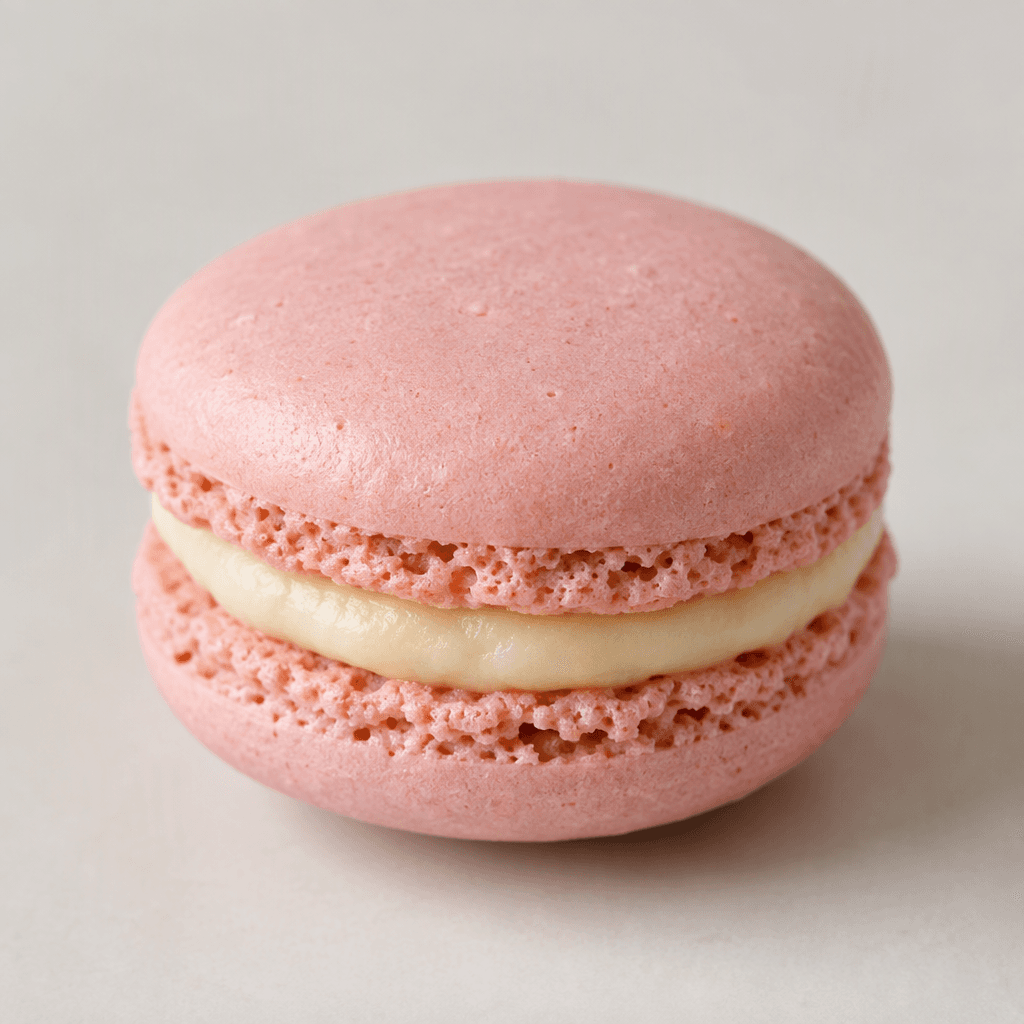
Macaron Calories
Colorful almond French pastry
In season: Spring · Summer · Autumn · Winter
CALORIES
GI
POTASSIUM
FIBER
Quick answer
2 piece (medium) of Macaron (24 g) has 101 calories. That works out to 420 calories per 100 g. It contains 14.4 g of carbs, 1.8 g of protein, 3.8 g of fat and 0.8 g of fiber. Its 0 mg of Copper covers 5% of the Daily Value. Its glycemic index is 50 (medium), so it raises blood sugar at a moderate pace.
What is Macaron?
A macaron is a French confection made from two delicate almond-meringue shells sandwiched around a filling such as ganache, buttercream or fruit jam. Its smooth, lightly crisp shells have a soft centre, while the filling brings much of the flavour; colours and varieties range from chocolate and pistachio to citrus and berry.
In France it is sold in pâtisseries and gift boxes, and enjoyed with coffee or tea. Elsewhere, it is often served as a small café treat or at celebrations. Macarons are sweet and energy-dense, with much of their energy coming from sugar and fat. A small one pairs well with unsweetened coffee or tea when you want a modest dessert.
Macaron Nutrition Facts
Selected: 100 g
420
KCAL / 100G
Carbs
60g
· 22% DV
Protein
7.5g
· 15% DV
Fat
16g
· 21% DV
Fiber
3.5g
· 13% DV
DV is the share of the daily value covered, on a 2,000 kcal reference diet.
Calories come from: Carbs 58% · Protein 7% · Fat 35%
Macaron Vitamins & Minerals
Vitamins
Vitamin E
2.2mg · 15% DV
B2
0.15mg · 12% DV
Biotin
2.5µg · 8% DV
B5
0.25mg · 5% DV
Minerals
Phosphorus
110mg · 16% DV
Magnesium
45mg · 11% DV
Zinc
1mg · 9% DV
Calcium
70mg · 7% DV
How Nutritious Is Macaron?
Nutrient density
Low
How many vitamins, minerals and how much fiber this food carries per calorie. A high score means a lot of nutrition for few calories.
Satiety score
Low
An EatBetter score computed from fiber, protein and calorie density. A high score means staying full longer on the same calories.
Both scores are calculated per 100 g and do not change with the selected portion. The satiety score is EatBetter's own calculation, not a clinical measure.
Macaron Glycemic Index
GLYCEMIC INDEX
GLYCEMIC LOAD
Accounts for portion size — a more realistic measure than GI alone.
How to Burn Off Macaron
To burn the 420 calories in 100 g:
🚶
Walking (5 km/h)
🏃
Running (8 km/h)
🚴
Cycling
🏊
Swimming
Times are calculated with the MET equation for a 70 kg adult. Actual burn varies with your weight, age and pace.
Is Macaron Processed?
NOVA 3
Processed
1. Unprocessed
2. Minimally Processed
3. Processed
4. Ultra-Processed
NOVA classifies foods into 4 groups by industrial processing. NOVA 1 (unprocessed) is the healthiest.
Does Macaron Contain Allergens?
Contains these allergens:
Which Diets Is Macaron Good For?
Vegan
— Not suitable
Vegetarian
✓ Suitable
Gluten-Free
— Not suitable
Dairy-Free
— Not suitable
Mediterranean
— Not suitable
Paleo
— Not suitable
Whole30
— Not suitable
DASH
— Not suitable
Keto
— Not suitable
Low FODMAP
— Not suitable
Macaron Fat Profile
SATURATED
2.5g
MONOUNSATURATED
10.5g
POLYUNSATURATED
2.2g
Omega 6:3 ratio 24:1
Above the ideal 4:1 (24:1).
Compare Macaron
Foods Similar to Macaron
Frequently Asked Questions About Macaron
What is a macaron?
A macaron is a French sandwich cookie made from two smooth almond-meringue shells with a filling such as ganache, buttercream, or jam. Its shells are lightly crisp outside and soft inside.
What is the difference between a macaron and a macaroon?
A macaron has two smooth, colorful almond-based shells and a filling; a macaroon is usually a chewy coconut cookie. The names sound alike, but the ingredients, shape, and texture are different.
What are macarons made of?
Macaron shells are typically made with almond flour, egg whites, and sugar, while the center may contain ganache, buttercream, or jam. Common flavors include chocolate, pistachio, vanilla, and fruit.
Why are macarons so expensive?
Macarons can cost more because their shells require careful mixing, resting, and baking to get the right texture. Almond flour and good-quality fillings also add to the ingredient cost, and small batches take time to make.
Why are my macarons hollow inside?
Macarons often turn hollow when the batter is overmixed, the shells are not rested properly, or the oven temperature is off. Stop folding when the batter flows in a ribbon but still briefly holds its shape.
Why do macarons crack in the oven?
Macaron shells commonly crack when they go into the oven before their surfaces have dried. Excessive oven heat or overwhipped batter can also cause cracks; let the piped shells dry until they are no longer tacky to the touch.
How do you store macarons?
Store macarons in an airtight container in the refrigerator. The filling softens the shells and helps the flavors meld; bring them briefly to room temperature before serving for a softer texture and fuller flavor.
Can you freeze macarons?
Yes, macarons freeze well in an airtight container. Thaw them slowly in the refrigerator before serving, and do not refreeze them after thawing, since repeated freezing can damage their texture.
How long should macaron shells rest before baking?
Rest macaron shells until their surfaces feel dry and do not stick to a fingertip; the time varies with room conditions. Baking them before a skin forms can make the shells crack instead of rising evenly.
What fillings work best in macarons?
Thick fillings such as chocolate ganache, buttercream, nut paste, and firm fruit curd work well in macarons. Very runny fillings can seep into the shells and make them soggy, so use a filling that holds its shape.
Have another question about Macaron?
Ask the AI nutrition coach — calories, portions, alternatives and more, answered in seconds in the app.

Scan calories with your camera
Instant AI nutrition analysis

Nutrition data compiled from USDA FoodData Central and scientific sources.