

Ready & Packaged Foods
All →Vegetables & Legumes
All →Desserts & Confectionery
All →Meat & Protein
All →Grains & Bakery
All →Beverages
All →Milk & Dairy
All →

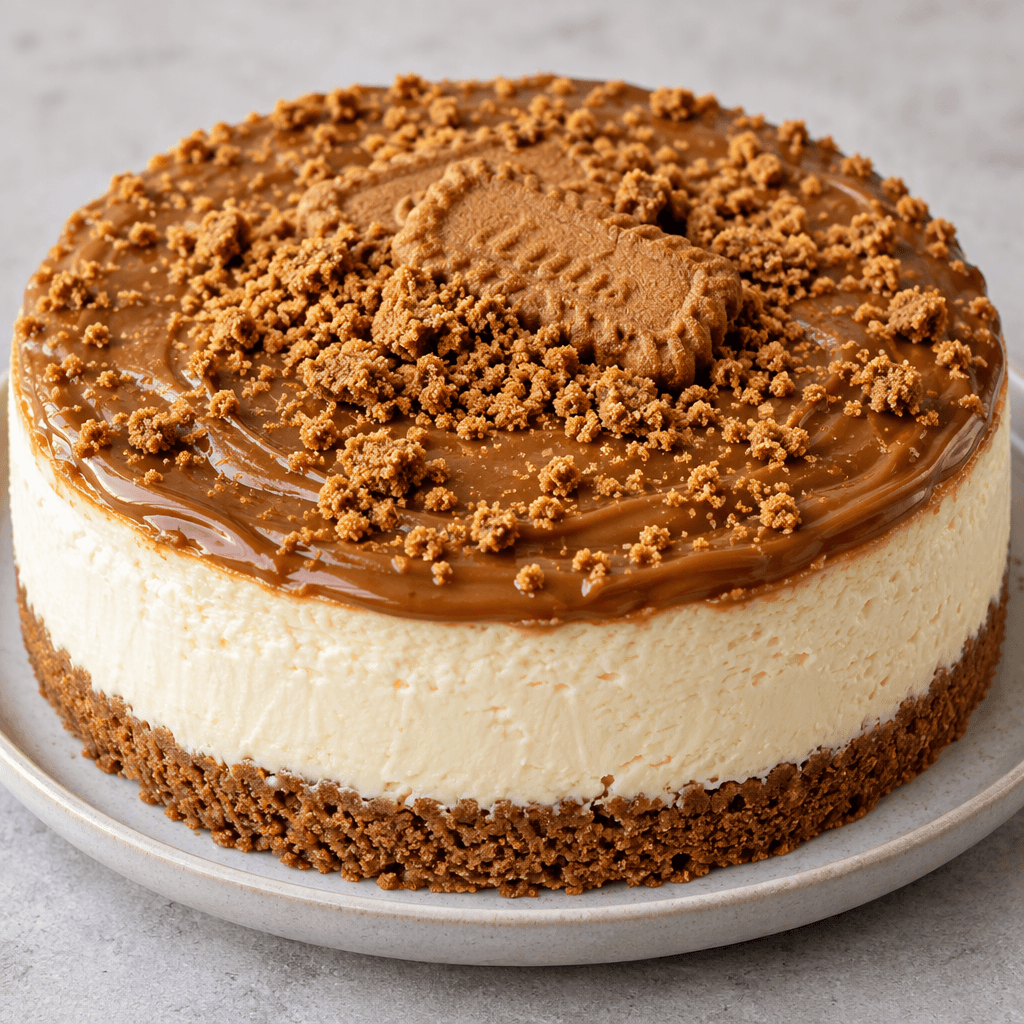
Lotus Biscoff Cheesecake Calories
Creamy, Lotus Biscoff, sweet, popular
In season: Spring · Summer · Autumn · Winter
CALORIES
GI
POTASSIUM
FIBER
Quick answer
1 slice (medium) of Lotus Biscoff Cheesecake (120 g) has 444 calories. That works out to 370 calories per 100 g. It contains 45.6 g of carbs, 5.8 g of protein, 26.4 g of fat and 1.4 g of fiber. Its 144 µg of Vitamin A covers 16% of the Daily Value. Its glycemic index is 55 (medium), so it raises blood sugar at a moderate pace.
What is Lotus Biscoff Cheesecake?
Lotus Biscoff cheesecake pairs a crumbly base made from Lotus Biscoff biscuits with a smooth, usually cream-cheese filling. It may also have Biscoff spread folded into the filling or spooned over the top, bringing the caramelised biscuit’s distinctive flavour to a familiar cheesecake style.
Served chilled in slices, it is a popular café and bakery dessert and goes especially well with coffee; at home, it also makes an easy centrepiece for a gathering. Its rich, sweet filling makes it an indulgent treat rather than a light snack: it provides 370 calories per 100 g. A smaller slice and unsweetened coffee can keep the serving more modest.
Lotus Biscoff Cheesecake Nutrition Facts
Selected: 100 g
370
KCAL / 100G
Carbs
38g
· 14% DV
Protein
4.8g
· 10% DV
Fat
22g
· 28% DV
Fiber
1.2g
· 4% DV
DV is the share of the daily value covered, on a 2,000 kcal reference diet.
Calories come from: Carbs 41% · Protein 5% · Fat 54%
Lotus Biscoff Cheesecake Vitamins & Minerals
Vitamins
Vitamin A
120µg · 13% DV
B2
0.13mg · 10% DV
B12
0.18µg · 8% DV
B5
0.35mg · 7% DV
Minerals
Phosphorus
95mg · 14% DV
Calcium
85mg · 9% DV
Sodium
210mg · 9% DV
Iron
1mg · 6% DV
How Nutritious Is Lotus Biscoff Cheesecake?
Nutrient density
Low
How many vitamins, minerals and how much fiber this food carries per calorie. A high score means a lot of nutrition for few calories.
Satiety score
Low
An EatBetter score computed from fiber, protein and calorie density. A high score means staying full longer on the same calories.
Both scores are calculated per 100 g and do not change with the selected portion. The satiety score is EatBetter's own calculation, not a clinical measure.
Lotus Biscoff Cheesecake Glycemic Index
GLYCEMIC INDEX
GLYCEMIC LOAD
Accounts for portion size — a more realistic measure than GI alone.
How to Burn Off Lotus Biscoff Cheesecake
To burn the 370 calories in 100 g:
🚶
Walking (5 km/h)
🏃
Running (8 km/h)
🚴
Cycling
🏊
Swimming
Times are calculated with the MET equation for a 70 kg adult. Actual burn varies with your weight, age and pace.
Is Lotus Biscoff Cheesecake Processed?
NOVA 3
Processed
1. Unprocessed
2. Minimally Processed
3. Processed
4. Ultra-Processed
NOVA classifies foods into 4 groups by industrial processing. NOVA 1 (unprocessed) is the healthiest.
Does Lotus Biscoff Cheesecake Contain Allergens?
Contains these allergens:
Which Diets Is Lotus Biscoff Cheesecake Good For?
Vegan
— Not suitable
Vegetarian
— Not suitable
Gluten-Free
— Not suitable
Dairy-Free
— Not suitable
Mediterranean
— Not suitable
Paleo
— Not suitable
Whole30
— Not suitable
DASH
— Not suitable
Keto
— Not suitable
Low FODMAP
— Not suitable
Lotus Biscoff Cheesecake Fat Profile
SATURATED
11.5g
MONOUNSATURATED
6.2g
POLYUNSATURATED
2.1g
Omega 6:3 ratio 60:1
Above the ideal 4:1 (60:1).
Compare Lotus Biscoff Cheesecake
Foods Similar to Lotus Biscoff Cheesecake
Frequently Asked Questions About Lotus Biscoff Cheesecake
How do you make Lotus Biscoff Cheesecake?
Lotus Biscoff Cheesecake is made with a crushed Biscoff biscuit base and a creamy cheesecake filling, finished with Biscoff spread or biscuit crumbs. Recipes vary: some bake the filling, while no-bake versions set it in the refrigerator.
Can you make Lotus Biscoff Cheesecake without baking it?
Yes, you can make Lotus Biscoff Cheesecake without baking. Mix cream cheese with whipped cream and the recipe’s setting ingredient, spread it over the chilled biscuit base, and refrigerate until firm enough to slice.
What ingredients go into Lotus Biscoff Cheesecake?
The usual ingredients are Lotus Biscoff biscuits, butter, cream cheese, cream, and sugar. Biscoff spread is commonly used for the topping; no-bake recipes may also use gelatin or another setting ingredient to help the filling hold its shape.
Why does the biscuit base fall apart in Lotus Biscoff Cheesecake?
The base can crumble if the biscuit crumbs are too dry or have not been pressed firmly into the pan. Mix them thoroughly with melted butter, compact the mixture evenly, and chill it before adding the cheesecake filling.
How do you melt Biscoff spread for the topping on Lotus Biscoff Cheesecake?
Warm the Biscoff spread briefly in the microwave or over gentle heat until it can be poured. Avoid overheating it, and pour it over a fully chilled cheesecake so the topping spreads smoothly without softening the filling.
Why does Lotus Biscoff Cheesecake crack in the oven?
Lotus Biscoff Cheesecake can crack if it is overbaked, exposed to a sudden temperature change, or the filling is beaten with too much air. Mix just until combined and let the cheesecake cool gradually in the switched-off oven with the door slightly open.
How long does Lotus Biscoff Cheesecake last in the fridge?
Lotus Biscoff Cheesecake keeps for about three days in the refrigerator when covered or stored in an airtight container. Keep it chilled between servings, since its cream-cheese filling should not sit at room temperature for an extended period.
Can you freeze Lotus Biscoff Cheesecake?
Yes, Lotus Biscoff Cheesecake can be frozen. Wrap individual slices tightly and place them in a sealed container; thaw them slowly in the refrigerator. Biscuit decorations may soften after thawing, so add those just before serving for the best texture.
How do you get clean slices of Lotus Biscoff Cheesecake?
Chill Lotus Biscoff Cheesecake until the filling is fully set, then cut it with a sharp knife warmed in hot water and wiped dry. Clean the blade between cuts to keep the creamy layers and biscuit base from dragging into each other.
Can Lotus Biscoff Cheesecake be made ahead of time?
Yes, Lotus Biscoff Cheesecake is well suited to making ahead because the filling needs time to set. Refrigerate it covered after assembling, then add the biscuit crumbs or other crunchy decorations shortly before serving so they stay crisp.
Have another question about Lotus Biscoff Cheesecake?
Ask the AI nutrition coach — calories, portions, alternatives and more, answered in seconds in the app.

Scan calories with your camera
Instant AI nutrition analysis

Nutrition data compiled from USDA FoodData Central and scientific sources.