

Ready & Packaged Foods
All →Vegetables & Legumes
All →Desserts & Confectionery
All →Meat & Protein
All →Grains & Bakery
All →Beverages
All →Milk & Dairy
All →

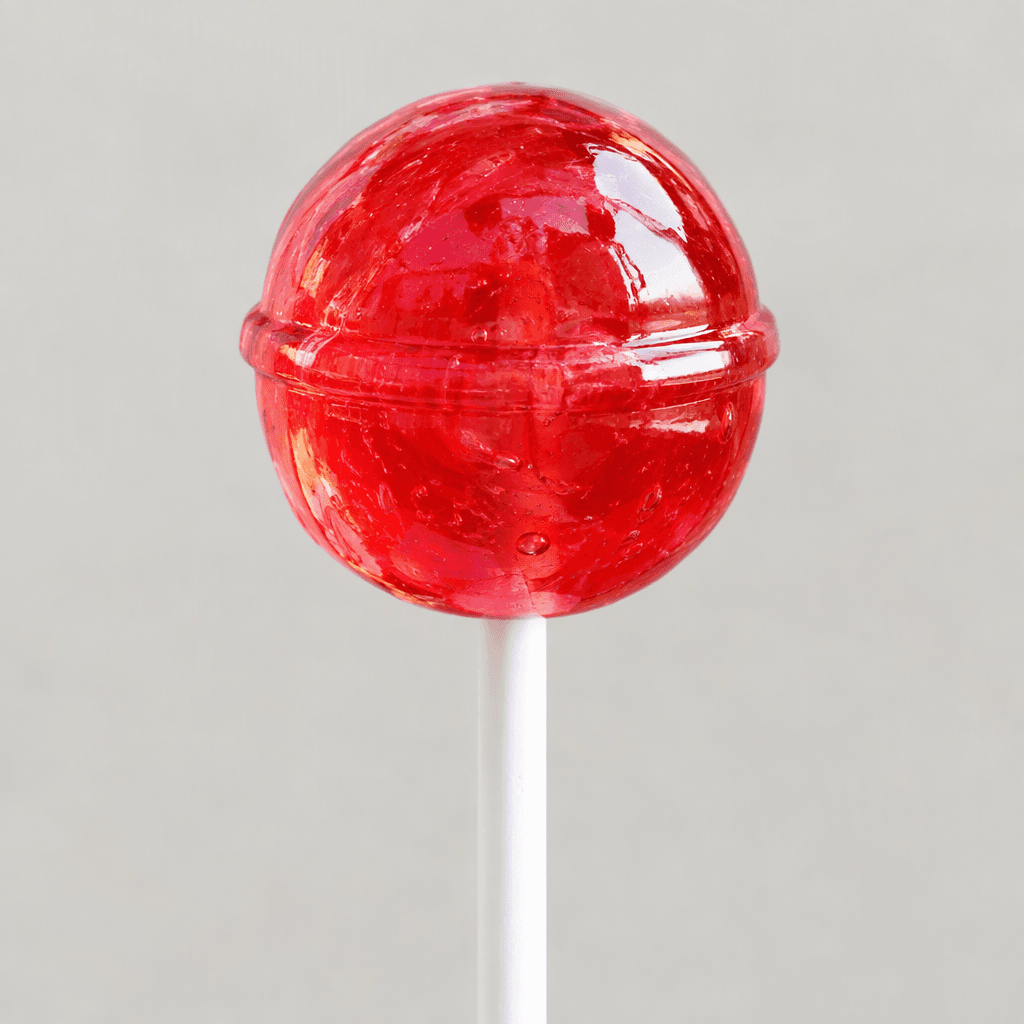
Lollipop Calories
Colorful, sweet, popular with children
In season: Spring · Summer · Autumn · Winter
CALORIES
GI
POTASSIUM
FIBER
Quick answer
1 piece (medium) of Lollipop (18 g) has 70 calories. That works out to 390 calories per 100 g. It contains 17.6 g of carbs, 0 g of protein, 0 g of fat and 0 g of fiber. Its glycemic index is 80 (high), so it raises blood sugar quickly.
What is Lollipop?
A lollipop is a hard sweet made by heating sugar with flavourings, then setting it around the end of a slender stick. It is often brightly coloured and glossy, and may be round or moulded into playful shapes; fruit flavours are especially common.
You usually enjoy a lollipop by slowly sucking it, letting the smooth candy dissolve rather than biting into it. It is a familiar treat for children in many places, often handed out at parties or tucked into a lunchbox. With about 98 g of carbohydrate per 100 g, it is almost entirely a sweet, quick treat rather than a filling snack. One medium piece is easy to portion; pair it with fruit if you want something alongside it.
Lollipop Nutrition Facts
Selected: 100 g
390
KCAL / 100G
Carbs
98g
· 36% DV
Protein
0g
· 0% DV
Fat
0.1g
· 0% DV
Fiber
0g
· 0% DV
DV is the share of the daily value covered, on a 2,000 kcal reference diet.
Calories come from: Carbs 100% · Protein 0% · Fat 0%
Lollipop Vitamins & Minerals
Vitamins
Vitamin A
0µg · 0% DV
B1
0mg · 0% DV
B2
0mg · 0% DV
B3
0mg · 0% DV
Minerals
Calcium
2mg · 0% DV
Iron
0mg · 0% DV
Magnesium
1mg · 0% DV
Zinc
0mg · 0% DV
How Nutritious Is Lollipop?
Nutrient density
Low
How many vitamins, minerals and how much fiber this food carries per calorie. A high score means a lot of nutrition for few calories.
Satiety score
Low
An EatBetter score computed from fiber, protein and calorie density. A high score means staying full longer on the same calories.
Both scores are calculated per 100 g and do not change with the selected portion. The satiety score is EatBetter's own calculation, not a clinical measure.
Lollipop Glycemic Index
GLYCEMIC INDEX
GLYCEMIC LOAD
Accounts for portion size — a more realistic measure than GI alone.
How to Burn Off Lollipop
To burn the 390 calories in 100 g:
🚶
Walking (5 km/h)
🏃
Running (8 km/h)
🚴
Cycling
🏊
Swimming
Times are calculated with the MET equation for a 70 kg adult. Actual burn varies with your weight, age and pace.
Is Lollipop Processed?
NOVA 4
Ultra-Processed
1. Unprocessed
2. Minimally Processed
3. Processed
4. Ultra-Processed
NOVA classifies foods into 4 groups by industrial processing. NOVA 1 (unprocessed) is the healthiest.
Does Lollipop Contain Allergens?
No known major allergens
Which Diets Is Lollipop Good For?
Vegan
— Not suitable
Vegetarian
✓ Suitable
Gluten-Free
— Not suitable
Dairy-Free
— Not suitable
Mediterranean
— Not suitable
Paleo
— Not suitable
Whole30
— Not suitable
DASH
— Not suitable
Keto
— Not suitable
Low FODMAP
— Not suitable
Lollipop Fat Profile
SATURATED
0.05g
MONOUNSATURATED
0.02g
POLYUNSATURATED
0.01g
Compare Lollipop
Foods Similar to Lollipop
Frequently Asked Questions About Lollipop
Are lollipops bad for your teeth?
Yes, lollipops can raise the risk of tooth decay. Because they take time to suck, sugar stays in contact with teeth for longer than it might with a quickly eaten sweet. Drinking water afterward and brushing regularly help protect teeth.
Can toddlers have lollipops?
Lollipops are generally not suitable for children under 4 because hard candy can cause choking. Older children should sit still while eating one and be supervised, rather than walking or running with it.
How are lollipops made?
Lollipops are made by heating a sugar mixture, pouring it into molds, and adding a stick before the candy hardens. Manufacturers can add colors and flavors to the mixture before molding it.
Why is there a hole in a lollipop stick?
The hole helps anchor the candy to the stick. During manufacturing, some of the hot sugar mixture flows into it and hardens, making the lollipop less likely to slip off.
Why do lollipops turn your tongue different colors?
Coloring in a lollipop dissolves in saliva and spreads over the tongue, leaving a temporary stain. The color usually fades after drinking water or cleaning your mouth.
Can dogs eat lollipops?
No, dogs should not eat lollipops. The sugar can harm their teeth and upset digestion, while the hard candy or stick can cause choking or injury. Lollipops containing xylitol are especially dangerous to dogs.
Can you make lollipops at home?
Yes, you can make lollipops at home by cooking a sugar mixture until it hardens, then pouring it into heat-safe molds with sticks in place. Hot sugar can cause serious burns, so keep children away while making them.
Do lollipops expire?
Lollipops usually keep for a long time when sealed and stored in a cool, dry place, but their quality can decline. Moisture can make them sticky, and heat can soften or deform them; follow the date on the package.
Can lollipops soothe a sore throat?
A lollipop may briefly soothe a sore throat because sucking increases saliva, but it does not treat the cause. Its hard candy is a choking hazard for young children, so it is not a safe option for them.
Can people with diabetes eat lollipops?
People with diabetes can include a lollipop only if it fits their personal blood-sugar plan; its sugar can raise blood glucose. Sugar-free versions may still affect glucose differently, so a clinician or dietitian can advise on individual needs.
Have another question about Lollipop?
Ask the AI nutrition coach — calories, portions, alternatives and more, answered in seconds in the app.

Scan calories with your camera
Instant AI nutrition analysis

Nutrition data compiled from USDA FoodData Central and scientific sources.