

Ready & Packaged Foods
All →Vegetables & Legumes
All →Desserts & Confectionery
All →Meat & Protein
All →Grains & Bakery
All →Beverages
All →Milk & Dairy
All →

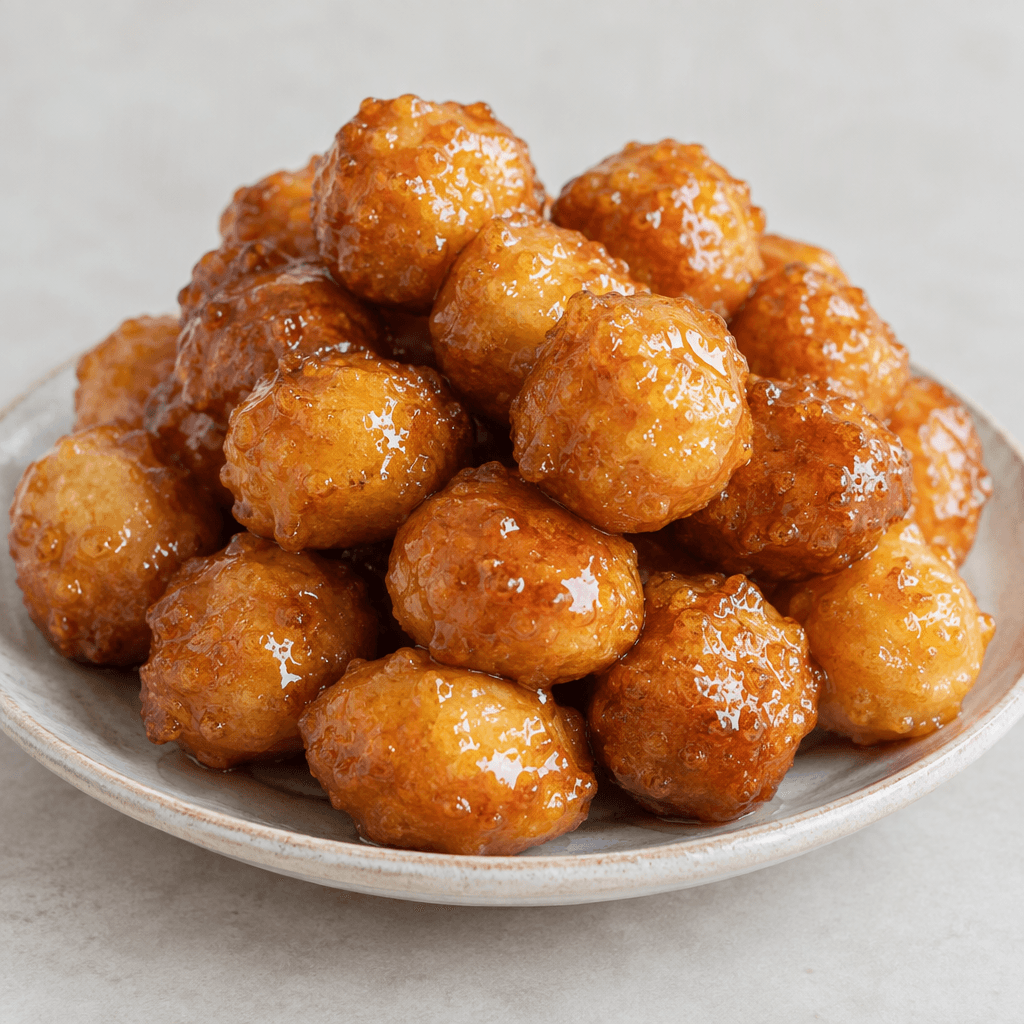
Lokma Calories
Traditional Turkish dessert, fried dough balls, syrup-soaked
In season: Spring · Summer · Autumn · Winter
CALORIES
GI
POTASSIUM
FIBER
Quick answer
4 piece (medium) of Lokma (60 g) has 204 calories. That works out to 340 calories per 100 g. It contains 33.1 g of carbs, 3.1 g of protein, 6.1 g of fat and 1 g of fiber. Its glycemic index is 75 (high), so it raises blood sugar quickly.
What is Lokma?
Lokma is a Turkish sweet made by frying small pieces of yeasted dough, then soaking them in syrup. The little rounds are usually crisp on the outside and soft within, with a pronounced sweetness from the syrup. In Türkiye, they’re often served fresh from street stalls and handed out at celebrations or as a charitable treat. Turkish communities abroad and visitors may also come across lokma at food festivals and Turkish dessert shops; it’s best eaten soon after serving.
With fried dough and syrup, lokma is a rich, energy-dense sweet, providing 340 calories per 100 g. Enjoy a few pieces with unsweetened tea or coffee, or share a plate after a meal if you’d prefer a smaller portion.
Lokma Nutrition Facts
Selected: 100 g
340
KCAL / 100G
Carbs
55.2g
· 20% DV
Protein
5.1g
· 10% DV
Fat
10.2g
· 13% DV
Fiber
1.6g
· 6% DV
DV is the share of the daily value covered, on a 2,000 kcal reference diet.
Calories come from: Carbs 66% · Protein 6% · Fat 28%
Lokma Vitamins & Minerals
Vitamins
B1
0.07mg · 6% DV
Vitamin E
0.7mg · 5% DV
Biotin
1.2µg · 4% DV
B2
0.04mg · 3% DV
Minerals
Iron
1mg · 6% DV
Phosphorus
32mg · 5% DV
Selenium
2.3µg · 4% DV
Sodium
65mg · 3% DV
How Nutritious Is Lokma?
Nutrient density
Low
How many vitamins, minerals and how much fiber this food carries per calorie. A high score means a lot of nutrition for few calories.
Satiety score
Low
An EatBetter score computed from fiber, protein and calorie density. A high score means staying full longer on the same calories.
Both scores are calculated per 100 g and do not change with the selected portion. The satiety score is EatBetter's own calculation, not a clinical measure.
Lokma Glycemic Index
GLYCEMIC INDEX
GLYCEMIC LOAD
Accounts for portion size — a more realistic measure than GI alone.
How to Burn Off Lokma
To burn the 340 calories in 100 g:
🚶
Walking (5 km/h)
🏃
Running (8 km/h)
🚴
Cycling
🏊
Swimming
Times are calculated with the MET equation for a 70 kg adult. Actual burn varies with your weight, age and pace.
Is Lokma Processed?
NOVA 3
Processed
1. Unprocessed
2. Minimally Processed
3. Processed
4. Ultra-Processed
NOVA classifies foods into 4 groups by industrial processing. NOVA 1 (unprocessed) is the healthiest.
Does Lokma Contain Allergens?
Contains these allergens:
Which Diets Is Lokma Good For?
Vegan
— Not suitable
Vegetarian
✓ Suitable
Gluten-Free
— Not suitable
Dairy-Free
— Not suitable
Mediterranean
— Not suitable
Paleo
— Not suitable
Whole30
— Not suitable
DASH
— Not suitable
Keto
— Not suitable
Low FODMAP
— Not suitable
Lokma Fat Profile
SATURATED
2.1g
MONOUNSATURATED
5.2g
POLYUNSATURATED
2.5g
Omega 6:3 ratio 80:1
Above the ideal 4:1 (80:1).
Compare Lokma
Foods Similar to Lokma
Frequently Asked Questions About Lokma
What is lokma, the Turkish dessert?
Lokma is a Turkish dessert made from small pieces of yeast-raised dough, fried until golden and soaked in syrup. It is usually served in bite-sized portions, often while still fresh, with a crisp outside and soft centre.
How do you make lokma at home?
To make lokma, mix flour, water, yeast and a little salt into a sticky, pourable dough and let it rise. Drop small portions into hot oil, fry until golden, then briefly dip them in cooled syrup.
Where did lokma originate?
Lokma has roots in Ottoman-era cuisine and remains especially associated with İzmir in Turkey. Similar syrup-soaked fried doughs are found across the region, so its broader culinary history is shared rather than limited to one modern country.
Is lokma the same as Greek loukoumades?
Lokma and Greek loukoumades are closely related fried dough sweets, but they are not always served in the same way. Turkish lokma is commonly soaked in syrup, while loukoumades may be topped with honey, cinnamon or nuts.
Why is lokma handed out in Turkey?
Lokma is handed out in Turkey as a charitable offering, often at religious gatherings, memorials and other community events. People may arrange for a batch to be cooked and shared publicly as an act of generosity or remembrance.
Should lokma go into hot or cold syrup?
Freshly fried lokma is usually dipped into cooled syrup. The contrast helps the dough absorb sweetness without leaving it in the syrup too long; an extended soak can make the outside lose its crispness.
Why does lokma turn soggy?
Lokma turns soggy when it sits in syrup too long or is stored after soaking. For the best texture, dip it briefly and serve soon after frying; syrup-soaked lokma naturally softens as it stands.
Can you bake lokma instead of frying it?
Traditional lokma is fried, so baking produces a different dessert rather than the usual crisp, syrup-soaked result. For a less oily homemade version, control the frying temperature and cook small batches instead of changing the cooking method.
How should you store leftover lokma?
Store leftover lokma in a covered container at room temperature and eat it soon, since the syrup makes the crust soften over time. A short reheat may improve the outside, but it will not restore freshly fried crispness.
What is lokma traditionally served with?
Lokma is commonly served on its own, with Turkish tea or coffee alongside. At gatherings it may be offered as a shared sweet after a meal or event, rather than paired with a particular savoury dish.
Have another question about Lokma?
Ask the AI nutrition coach — calories, portions, alternatives and more, answered in seconds in the app.

Scan calories with your camera
Instant AI nutrition analysis

Nutrition data compiled from USDA FoodData Central and scientific sources.