

Ready & Packaged Foods
All →Vegetables & Legumes
All →Desserts & Confectionery
All →Meat & Protein
All →Grains & Bakery
All →Beverages
All →Milk & Dairy
All →

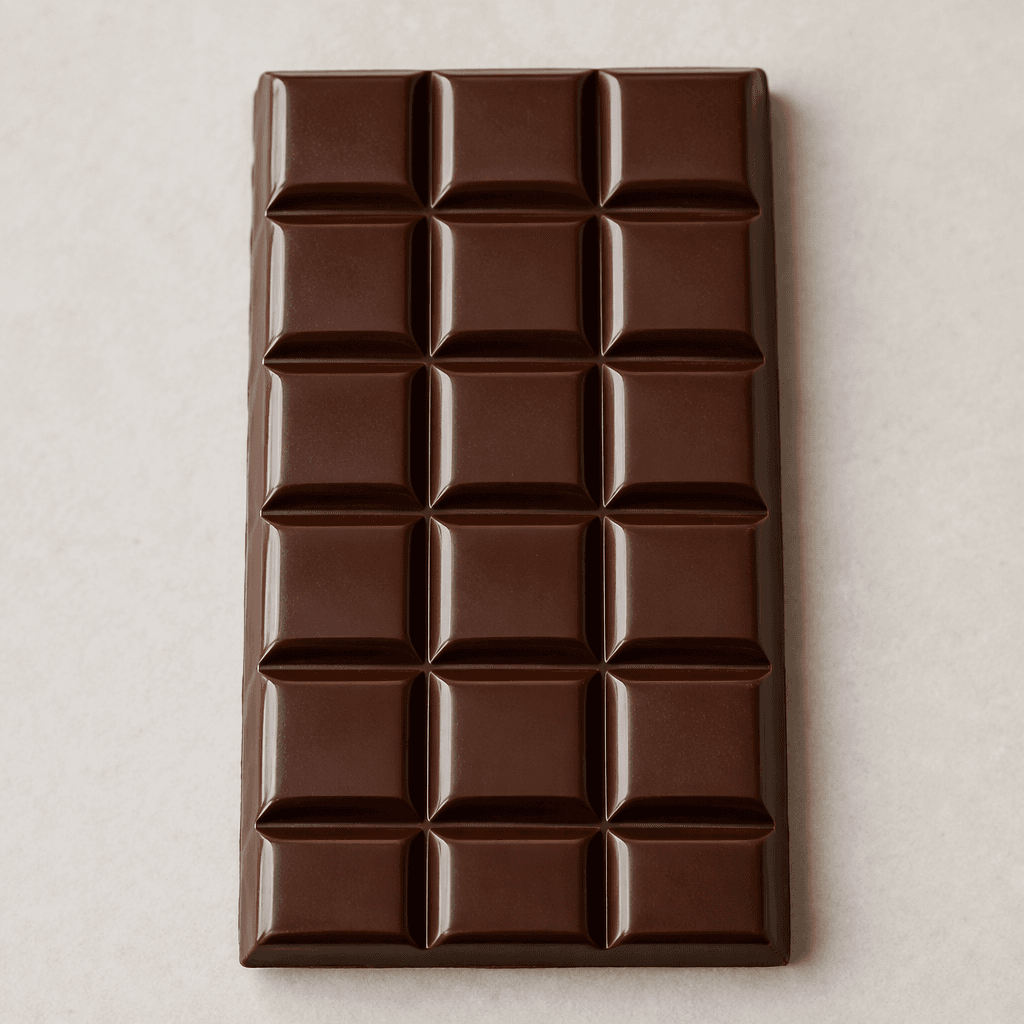
Lindt Chocolate Calories
Swiss chocolate, rich cocoa, creamy texture
In season: Winter · Spring · Summer · Autumn
CALORIES
GI
POTASSIUM
FIBER
Quick answer
1 piece (medium) of Lindt Chocolate (20 g) has 108 calories. That works out to 540 calories per 100 g. It contains 9.2 g of carbs, 1.2 g of protein, 7.2 g of fat and 1.4 g of fiber. Its 0.2 mg of Copper covers 27% of the Daily Value. Its glycemic index is 40 (medium), so it raises blood sugar at a moderate pace.
What is Lindt Chocolate?
Lindt Chocolate is a chocolate product from the Swiss chocolatier Lindt, made with cocoa ingredients and, depending on the variety, milk. The range includes different styles and cocoa strengths, so flavour and texture vary; a bar is commonly divided into neat squares.
Its smooth, creamy feel and pronounced cocoa taste make it an easy treat alongside coffee or tea, or an ingredient to melt, chop or grate into desserts. Chocolate is energy-dense: this one provides 540 calories per 100 g. Enjoy a small piece with fruit, or use a little grated chocolate to add flavour to a dessert without making it the main ingredient.
Lindt Chocolate Nutrition Facts
Selected: 100 g
540
KCAL / 100G
Carbs
46g
· 17% DV
Protein
6g
· 12% DV
Fat
36g
· 46% DV
Fiber
7g
· 25% DV
DV is the share of the daily value covered, on a 2,000 kcal reference diet.
Calories come from: Carbs 35% · Protein 5% · Fat 60%
Lindt Chocolate Vitamins & Minerals
Vitamins
B2
0.25mg · 19% DV
B5
0.5mg · 10% DV
Vitamin E
1.5mg · 10% DV
B1
0.08mg · 7% DV
Minerals
Copper
1mg · 111% DV
Manganese
1mg · 43% DV
Phosphorus
220mg · 31% DV
Magnesium
80mg · 19% DV
How Nutritious Is Lindt Chocolate?
Nutrient density
Low
How many vitamins, minerals and how much fiber this food carries per calorie. A high score means a lot of nutrition for few calories.
Satiety score
Medium
An EatBetter score computed from fiber, protein and calorie density. A high score means staying full longer on the same calories.
Both scores are calculated per 100 g and do not change with the selected portion. The satiety score is EatBetter's own calculation, not a clinical measure.
Lindt Chocolate Glycemic Index
GLYCEMIC INDEX
GLYCEMIC LOAD
Accounts for portion size — a more realistic measure than GI alone.
How to Burn Off Lindt Chocolate
To burn the 540 calories in 100 g:
🚶
Walking (5 km/h)
🏃
Running (8 km/h)
🚴
Cycling
🏊
Swimming
Times are calculated with the MET equation for a 70 kg adult. Actual burn varies with your weight, age and pace.
Is Lindt Chocolate Processed?
NOVA 3
Processed
1. Unprocessed
2. Minimally Processed
3. Processed
4. Ultra-Processed
NOVA classifies foods into 4 groups by industrial processing. NOVA 1 (unprocessed) is the healthiest.
Does Lindt Chocolate Contain Allergens?
Contains these allergens:
Which Diets Is Lindt Chocolate Good For?
Vegan
— Not suitable
Vegetarian
✓ Suitable
Gluten-Free
— Not suitable
Dairy-Free
— Not suitable
Mediterranean
✓ Suitable
Paleo
— Not suitable
Whole30
— Not suitable
DASH
— Not suitable
Keto
— Not suitable
Low FODMAP
— Not suitable
Lindt Chocolate Fat Profile
SATURATED
21g
MONOUNSATURATED
11g
POLYUNSATURATED
2g
Omega 6:3 ratio 10:1
Above the ideal 4:1 (10:1).
Compare Lindt Chocolate
Foods Similar to Lindt Chocolate
Frequently Asked Questions About Lindt Chocolate
Is Lindt Chocolate Swiss?
Yes, Lindt Chocolate is Swiss in origin. Lindt & Sprüngli was founded in Zurich in 1845, although the brand now makes and sells chocolate in multiple countries.
Is Lindt Chocolate real chocolate?
Yes, Lindt Chocolate includes products made with cocoa ingredients such as cocoa mass and cocoa butter. Recipes differ by variety: milk chocolate contains milk ingredients, while white chocolate uses cocoa butter but no cocoa mass.
Why is Lindt Chocolate so smooth?
Lindt Chocolate is known for a smooth texture because its recipes and production methods are designed to refine and blend the cocoa ingredients evenly. The texture also varies by product: a Lindor truffle, for example, has a soft filling inside a firmer shell.
What is the difference between Lindt Excellence and Lindor?
Lindt Excellence is mainly a range of chocolate bars, often highlighting different cocoa percentages and flavors. Lindor is best known for chocolate spheres with a crisp outer shell and a soft, melting center.
Which Lindt Chocolate is best for baking?
Lindt Chocolate bars can work well in baking, but the best choice depends on the recipe. A plain bar is easier to chop and melt than a filled Lindor truffle, whose soft center can change the texture of batters or ganache.
Why does Lindt Chocolate turn white?
A white or gray coating on Lindt Chocolate is usually chocolate bloom, caused by cocoa butter or sugar moving to the surface after temperature or moisture changes. It is generally a quality issue rather than a sign that the chocolate is unsafe, provided it has been stored properly.
Can dogs eat Lindt Chocolate?
No, dogs should not eat Lindt Chocolate. Chocolate contains theobromine, which is toxic to dogs, and darker varieties can be especially dangerous. If your dog has eaten any, contact a veterinarian promptly and share the type and amount.
Does Lindt Chocolate contain caffeine?
Yes, cocoa-based Lindt Chocolate contains naturally occurring caffeine. The amount varies with the variety and serving, and darker chocolate generally contains more than milk chocolate. People sensitive to caffeine may prefer not to eat it close to bedtime.
Does Lindt Chocolate expire?
Yes, Lindt Chocolate has a best-before date, and its flavor and texture can decline over time. Proper storage helps preserve quality; a date having passed does not by itself establish that the chocolate is unsafe, so check for unusual odor, appearance, or damage to the packaging.
Can you freeze Lindt Chocolate?
Yes, you can freeze Lindt Chocolate, though freezing is usually unnecessary and may affect its texture. Seal it in an airtight container to protect it from moisture and odors, then let it return to room temperature while still wrapped to reduce condensation.
Have another question about Lindt Chocolate?
Ask the AI nutrition coach — calories, portions, alternatives and more, answered in seconds in the app.

Scan calories with your camera
Instant AI nutrition analysis

Nutrition data compiled from USDA FoodData Central and scientific sources.