

Ready & Packaged Foods
All →Vegetables & Legumes
All →Desserts & Confectionery
All →Meat & Protein
All →Grains & Bakery
All →Beverages
All →Milk & Dairy
All →

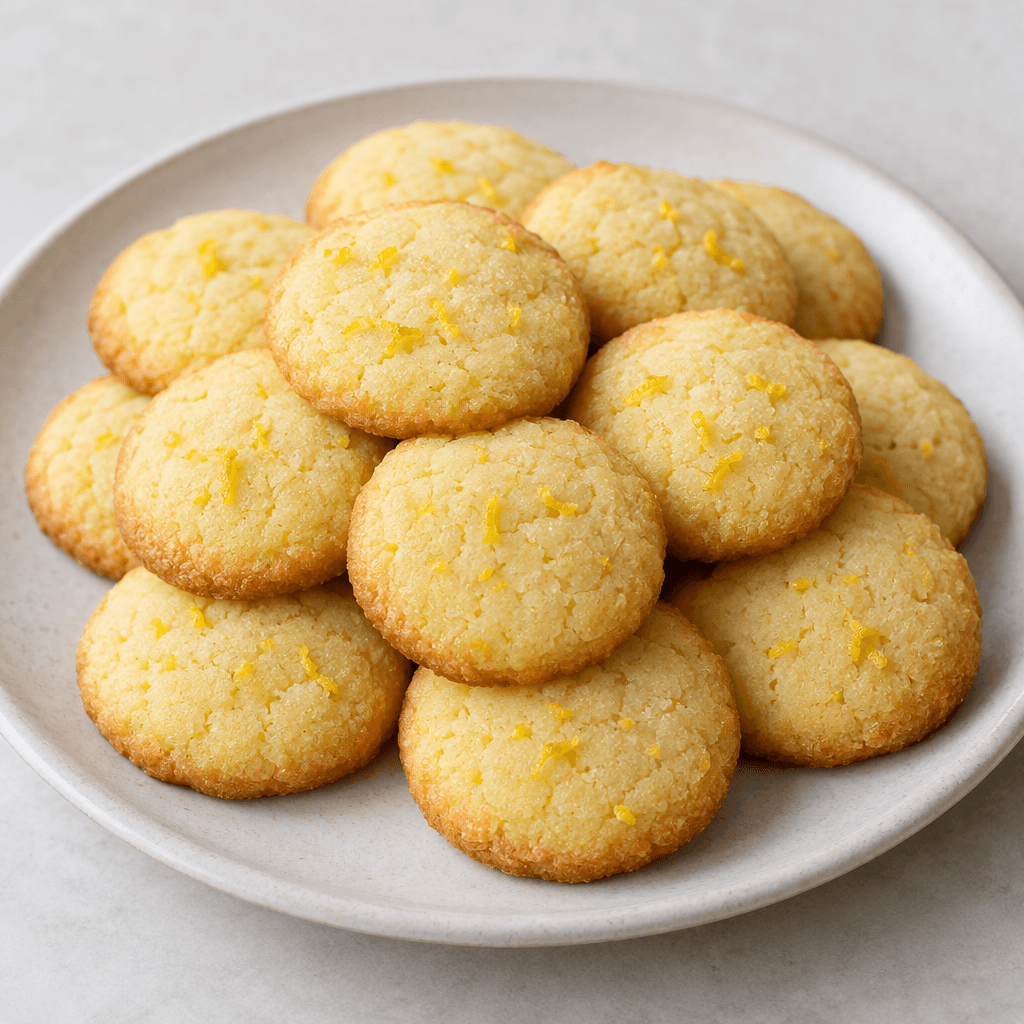
Lemon Cookie Calories
Sweet, lemon-flavored cookie
In season: Spring · Summer · Autumn · Winter
CALORIES
GI
POTASSIUM
FIBER
Quick answer
1 piece (medium) of Lemon Cookie (25 g) has 118 calories. That works out to 470 calories per 100 g. It contains 17 g of carbs, 1.3 g of protein, 5 g of fat and 0.4 g of fiber. Its glycemic index is 70 (high), so it raises blood sugar quickly.
What is Lemon Cookie?
Lemon Cookie is a small baked biscuit flavoured with lemon zest, sometimes with a little juice in the dough. Recipes vary, but the result is often lightly golden, gently crumbly and sweet with a bright citrus aroma; it is a home-baking favourite in many places rather than a dish tied to one specific origin.
Serve one with tea or coffee as an afternoon snack, or alongside a simple dessert spread. It is mainly a source of carbohydrate and fat, with little fibre. A medium cookie is about 25 g, so having one with unsweetened tea or coffee is an easy way to keep the treat modest.
Lemon Cookie Nutrition Facts
Selected: 100 g
470
KCAL / 100G
Carbs
68g
· 25% DV
Protein
5g
· 10% DV
Fat
20g
· 26% DV
Fiber
1.5g
· 5% DV
DV is the share of the daily value covered, on a 2,000 kcal reference diet.
Calories come from: Carbs 58% · Protein 4% · Fat 38%
Lemon Cookie Vitamins & Minerals
Vitamins
B1
0.08mg · 7% DV
Biotin
2µg · 7% DV
B2
0.07mg · 5% DV
B5
0.2mg · 4% DV
Minerals
Sodium
220mg · 10% DV
Selenium
4µg · 7% DV
Iron
1mg · 6% DV
Phosphorus
40mg · 6% DV
How Nutritious Is Lemon Cookie?
Nutrient density
Low
How many vitamins, minerals and how much fiber this food carries per calorie. A high score means a lot of nutrition for few calories.
Satiety score
Low
An EatBetter score computed from fiber, protein and calorie density. A high score means staying full longer on the same calories.
Both scores are calculated per 100 g and do not change with the selected portion. The satiety score is EatBetter's own calculation, not a clinical measure.
Lemon Cookie Glycemic Index
GLYCEMIC INDEX
GLYCEMIC LOAD
Accounts for portion size — a more realistic measure than GI alone.
How to Burn Off Lemon Cookie
To burn the 470 calories in 100 g:
🚶
Walking (5 km/h)
🏃
Running (8 km/h)
🚴
Cycling
🏊
Swimming
Times are calculated with the MET equation for a 70 kg adult. Actual burn varies with your weight, age and pace.
Is Lemon Cookie Processed?
NOVA 3
Processed
1. Unprocessed
2. Minimally Processed
3. Processed
4. Ultra-Processed
NOVA classifies foods into 4 groups by industrial processing. NOVA 1 (unprocessed) is the healthiest.
Does Lemon Cookie Contain Allergens?
Contains these allergens:
Which Diets Is Lemon Cookie Good For?
Vegan
— Not suitable
Vegetarian
✓ Suitable
Gluten-Free
— Not suitable
Dairy-Free
— Not suitable
Mediterranean
— Not suitable
Paleo
— Not suitable
Whole30
— Not suitable
DASH
— Not suitable
Keto
— Not suitable
Low FODMAP
— Not suitable
Lemon Cookie Fat Profile
SATURATED
8g
MONOUNSATURATED
7g
POLYUNSATURATED
2.5g
Omega 6:3 ratio 24:1
Above the ideal 4:1 (24:1).
Compare Lemon Cookie
Foods Similar to Lemon Cookie
Frequently Asked Questions About Lemon Cookie
How do you make lemon cookies?
To make lemon cookies, cream butter and sugar, then mix in an egg, lemon zest, a little lemon juice, and flour. Shape the dough and bake until the edges are lightly golden; taking them out promptly helps keep the centers tender.
Why do my lemon cookies spread too much?
Lemon cookies often spread when the butter is too warm, the dough is very soft, or the baking sheet is still hot. Chill the shaped dough before baking and place it on a cool sheet to help the cookies hold their shape.
Should lemon cookies use lemon zest, lemon juice, or both?
Use both for a balanced lemon flavor: zest provides fragrant citrus oils, while juice adds tartness. Keep the juice modest, because too much liquid can loosen the dough and change how the lemon cookies bake.
How do you keep lemon cookies soft?
For soft lemon cookies, take them out when the edges are set but the centers still look slightly underdone. Let them finish setting on the baking sheet, then store them airtight once fully cool so they do not dry out.
Can you make lemon cookie dough ahead of time?
Yes, lemon cookie dough can be made ahead and kept covered in the refrigerator. Chilling also firms the butter, which makes the dough easier to shape and can help the cookies bake with less spreading.
Can you freeze lemon cookies?
Yes, freeze fully cooled lemon cookies in an airtight container, separating layers so they do not stick together. Thaw them at room temperature. You can also freeze portions of unbaked dough and thaw them in the refrigerator before baking.
How long do lemon cookies last?
Lemon cookies stay enjoyable for several days when kept in an airtight container at room temperature. Let them cool completely before storing; trapped warmth creates condensation and can make their crumb soggy.
Can you make lemon cookies without eggs?
Yes, you can make egg-free lemon cookies by using a tested egg-free cookie recipe or a suitable egg replacer. Simply omitting the egg from a standard recipe can leave the dough crumbly and alter how the cookies spread.
Can you use bottled lemon juice in lemon cookies?
Yes, bottled lemon juice can add tartness to lemon cookies, but it will not provide the fresh aroma of lemon zest. For a more vivid citrus flavor, use fresh zest even if bottled juice is what you have on hand.
Why are my lemon cookies bitter?
Lemon cookies can taste bitter if the zest includes too much of the white pith beneath the yellow peel. Grate only the thin, colored outer layer, and avoid adding excessive lemon juice or zest to the dough.
Have another question about Lemon Cookie?
Ask the AI nutrition coach — calories, portions, alternatives and more, answered in seconds in the app.

Scan calories with your camera
Instant AI nutrition analysis

Nutrition data compiled from USDA FoodData Central and scientific sources.