

Ready & Packaged Foods
All →Vegetables & Legumes
All →Desserts & Confectionery
All →Meat & Protein
All →Grains & Bakery
All →Beverages
All →Milk & Dairy
All →

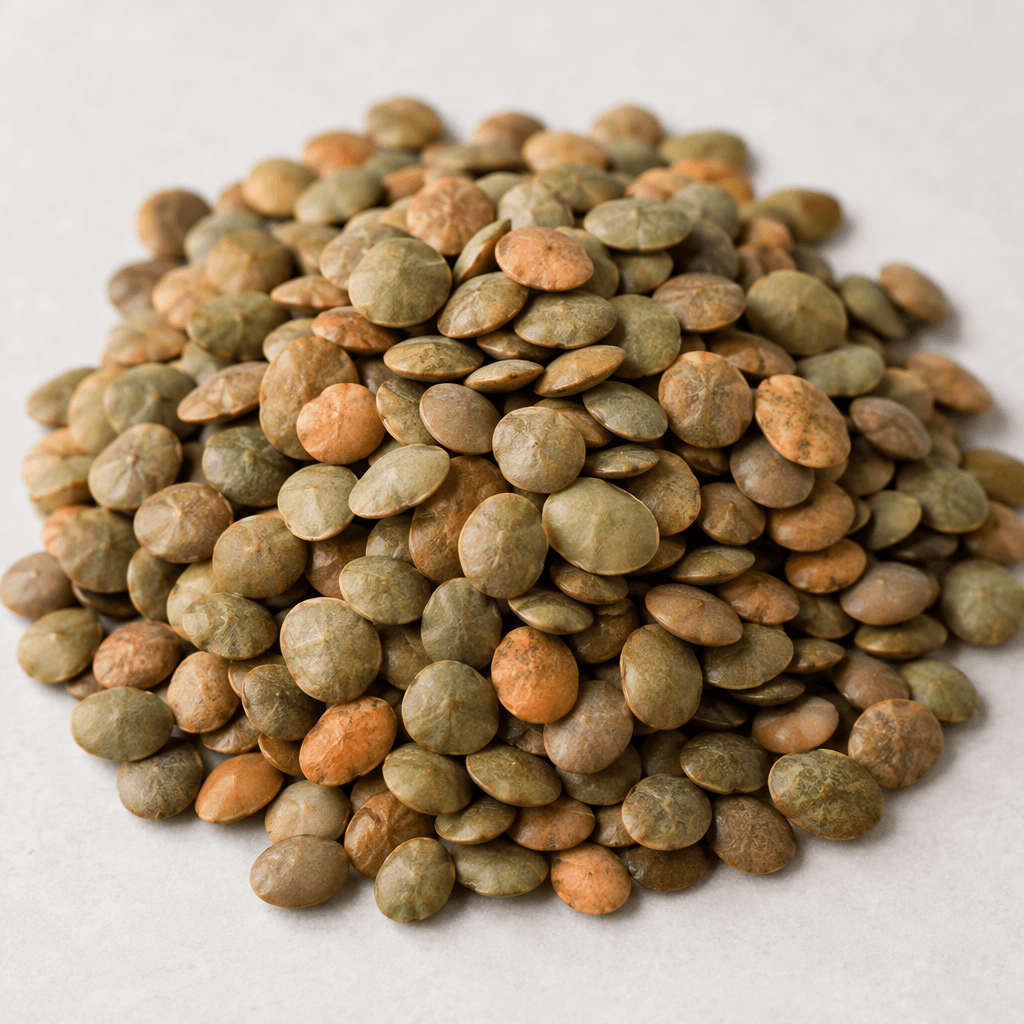
Lentils (Raw) Calories
High in protein and fiber, rich in iron and folate
In season: Spring · Summer · Autumn · Winter
CALORIES
GI
POTASSIUM
FIBER
Quick answer
100 g of Lentils (Raw) has 353 calories. It contains 60.1 g of carbs, 25.8 g of protein, 1.1 g of fat and 10.7 g of fiber. Its 479 µg of Folate covers 120% of the Daily Value. Its glycemic index is 21 (low), so it raises blood sugar slowly.
What is Lentils (Raw)?
Raw lentils are the dried seeds of a legume, commonly sold in green, brown and red varieties. Cultivated for thousands of years across parts of Southwest Asia and the Mediterranean, they are pantry staples in many cuisines. They are not usually eaten uncooked: simmering softens their firm texture and brings out a mild, earthy flavour.
Depending on the variety, cooked lentils hold their shape or turn soft and creamy. They are often used in soups, stews, curries and salads, and can be served with grains or vegetables. Lentils provide substantial plant protein and fibre while remaining low in fat. Pick through and rinse them before cooking; for a lighter meal, simmer with plenty of vegetables and serve with fresh herbs or a crisp salad.
Lentils (Raw) Nutrition Facts
Selected: 100 g
353
KCAL / 100G
Carbs
60.1g
· 22% DV
Protein
25.8g
· 52% DV
Fat
1.1g
· 1% DV
Fiber
10.7g
· 38% DV
DV is the share of the daily value covered, on a 2,000 kcal reference diet.
Calories come from: Carbs 68% · Protein 29% · Fat 3%

Log this food in EatBetter
100,000+ people use it
- Get your daily calorie target
- Snap your meal, log it in seconds
- See every vitamin and mineral

📸 Scan the code to get the app free.

Lentils (Raw) Vitamins & Minerals
Vitamins
Folate
479µg · 120% DV
B1
0.87mg · 73% DV
B6
0.54mg · 32% DV
B5
1.33mg · 27% DV
Minerals
Copper
1mg · 111% DV
Manganese
1mg · 43% DV
Phosphorus
281mg · 40% DV
Iron
7mg · 39% DV
Potassium ⭐
677mg · 20% DV
How Nutritious Is Lentils (Raw)?
Nutrient density
Very high
How many vitamins, minerals and how much fiber this food carries per calorie. A high score means a lot of nutrition for few calories.
Satiety score
High
An EatBetter score computed from fiber, protein and calorie density. A high score means staying full longer on the same calories.
Both scores are calculated per 100 g and do not change with the selected portion. The satiety score is EatBetter's own calculation, not a clinical measure.
Lentils (Raw) Glycemic Index
GLYCEMIC INDEX
GLYCEMIC LOAD
Accounts for portion size — a more realistic measure than GI alone.
How to Burn Off Lentils (Raw)
To burn the 353 calories in 100 g:
🚶
Walking (5 km/h)
🏃
Running (8 km/h)
🚴
Cycling
🏊
Swimming
Times are calculated with the MET equation for a 70 kg adult. Actual burn varies with your weight, age and pace.
Is Lentils (Raw) Processed?
NOVA 1
Unprocessed
1. Unprocessed
2. Minimally Processed
3. Processed
4. Ultra-Processed
NOVA classifies foods into 4 groups by industrial processing. NOVA 1 (unprocessed) is the healthiest.
Does Lentils (Raw) Contain Allergens?
No known major allergens
Which Diets Is Lentils (Raw) Good For?
Vegan
✓ Suitable
Vegetarian
✓ Suitable
Gluten-Free
✓ Suitable
Dairy-Free
— Not suitable
Mediterranean
✓ Suitable
Paleo
✓ Suitable
Whole30
— Not suitable
DASH
— Not suitable
Keto
✓ Suitable
Low FODMAP
— Not suitable
Lentils (Raw) Fat Profile
SATURATED
0.16g
MONOUNSATURATED
0.16g
POLYUNSATURATED
0.53g
Omega 6:3 ratio 6.1:1
Above the ideal 4:1 (6.1:1).
Compare Lentils (Raw)
Foods Similar to Lentils (Raw)
Frequently Asked Questions About Lentils (Raw)
How long do raw lentils take to cook?
Red lentils usually soften in about 15–20 minutes, while green or brown lentils often take 25–40 minutes. Older lentils may need longer, so check for tenderness near the end and stop cooking when they reach the texture you want.
Do raw lentils need to be soaked before cooking?
No, soaking lentils is optional; they cook without it. Soaking can shorten the cooking time, especially for whole green or brown lentils. If you soak them, drain and rinse them before adding fresh water for cooking.
Can you eat raw lentils?
No, don’t eat dry, uncooked lentils: they are hard and difficult to digest. Cook them until tender before eating. Sprouted lentils are a separate preparation, but raw sprouts can carry harmful bacteria, so cooking sprouts is the safer choice.
How much water should you use to cook lentils?
For stovetop cooking, cover the lentils with plenty of water, then drain any excess once they are tender. For soup or a dish where you want to keep the cooking liquid, use less water and add more as needed.
Why do lentils turn mushy when cooked?
Lentils turn mushy when they are cooked too long, particularly red lentils, which are often split and lose their shape quickly. For salads or side dishes, choose whole green or brown lentils, simmer gently, and check them before they become fully soft.
Should you rinse lentils before cooking them?
Yes. Pick through dry lentils to remove any small stones or debris, then rinse them under cool running water. This quick step cleans the lentils before cooking and does not require special equipment.
Can you cook lentils in a pressure cooker?
Yes, lentils cook well in a pressure cooker, and soaking is usually unnecessary. Use enough liquid and allow room for foam; cooking time varies by lentil type and cooker. Check the manufacturer’s instructions, since lentils can become mushy if overcooked.
Can you freeze cooked lentils?
Yes, cooked lentils freeze well. Cool them promptly, portion them into airtight freezer-safe containers, and include a little cooking liquid to help keep them moist. Thaw them in the refrigerator or add them straight to soups and stews while reheating.
How should you store dry lentils?
Keep dry lentils in an airtight container in a cool, dry cupboard away from sunlight and moisture. Store them separately from strong-smelling foods, and discard any lentils that are damp, moldy, or infested with insects.
Can you sprout raw lentils at home?
Yes, whole lentils can be sprouted at home in a clean jar or sprouting container. Rinse them regularly and keep them well drained. Because raw sprouts can harbor harmful bacteria, cook them before eating, especially if foodborne illness would pose a serious risk.
Have another question about Lentils (Raw)?
Ask the AI nutrition coach — calories, portions, alternatives and more, answered in seconds in the app.

Scan calories with your camera
Instant AI nutrition analysis

Nutrition data compiled from USDA FoodData Central and scientific sources.