

Ready & Packaged Foods
All →Vegetables & Legumes
All →Desserts & Confectionery
All →Meat & Protein
All →Grains & Bakery
All →Beverages
All →Milk & Dairy
All →

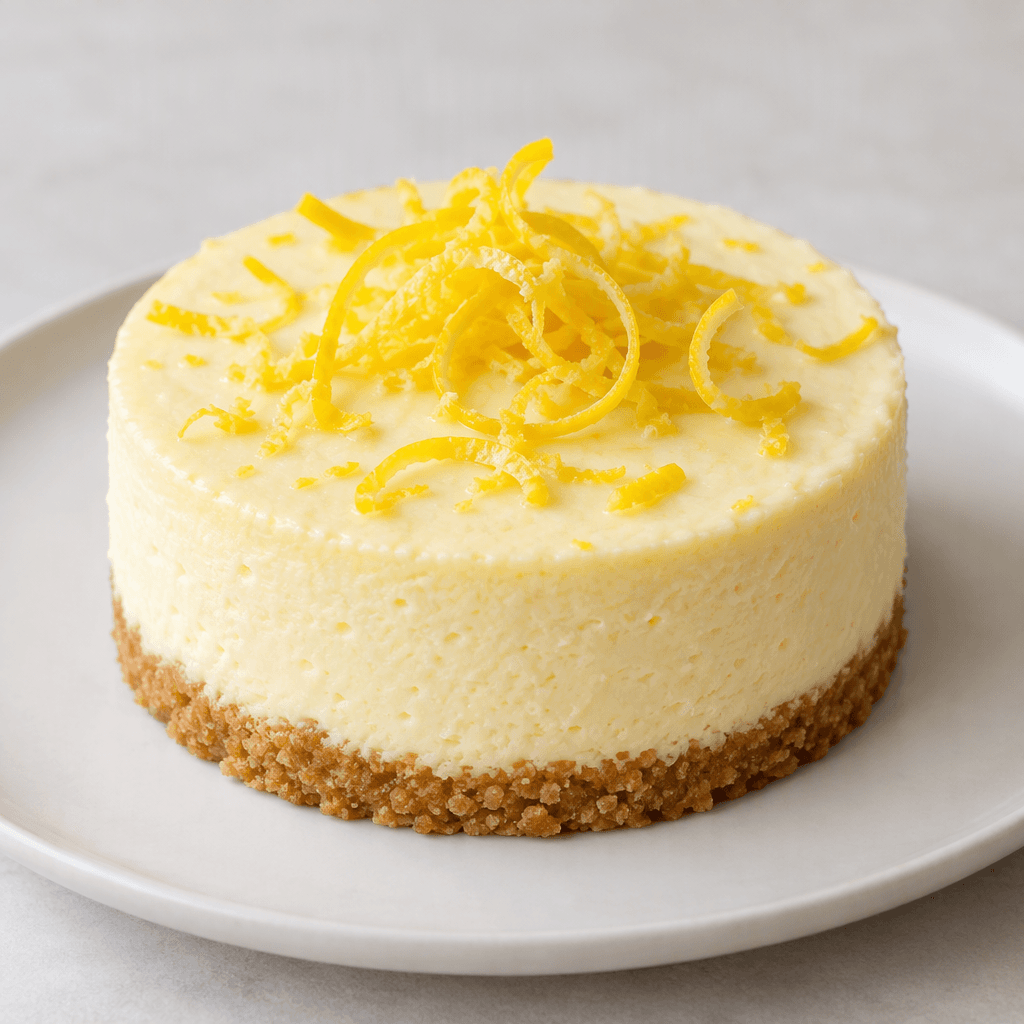
Lemon cheesecake Calories
Creamy, lemon-flavored, sweet, cheese-based cake
In season: Spring · Summer · Autumn · Winter
CALORIES
GI
POTASSIUM
FIBER
Quick answer
1 slice (medium) of Lemon cheesecake (90 g) has 279 calories. That works out to 310 calories per 100 g. It contains 28.8 g of carbs, 4.7 g of protein, 16.2 g of fat and 0.6 g of fiber. Its 108 µg of Vitamin A covers 12% of the Daily Value. Its glycemic index is 55 (medium), so it raises blood sugar at a moderate pace.
What is Lemon cheesecake?
Lemon cheesecake pairs a rich, cheese-based filling with the bright flavour of lemon, usually on a thin crust made from crushed biscuits or crackers. The creamy, baked style familiar today is strongly associated with American baking, though recipes vary: some are set in the oven, while others are chilled until firm.
Its smooth, dense filling is sweet with a gentle tang, balanced by a crisp, buttery base. It is commonly served as a dessert after a meal or with coffee or tea, whether at home or in a café; fresh berries make a natural accompaniment. Lemon cheesecake is an indulgent treat rather than a significant source of protein, and it contains little fibre. For a lighter serving, keep the slice modest and skip extra cream or syrup.
Lemon cheesecake Nutrition Facts
Selected: 100 g
310
KCAL / 100G
Carbs
32g
· 12% DV
Protein
5.2g
· 10% DV
Fat
18g
· 23% DV
Fiber
0.7g
· 3% DV
DV is the share of the daily value covered, on a 2,000 kcal reference diet.
Calories come from: Carbs 41% · Protein 7% · Fat 52%
Lemon cheesecake Vitamins & Minerals
Vitamins
B2
0.18mg · 14% DV
Vitamin A
120µg · 13% DV
B12
0.28µg · 12% DV
B5
0.35mg · 7% DV
Minerals
Phosphorus
95mg · 14% DV
Calcium
85mg · 9% DV
Zinc
1mg · 9% DV
Sodium
210mg · 9% DV
How Nutritious Is Lemon cheesecake?
Nutrient density
Low
How many vitamins, minerals and how much fiber this food carries per calorie. A high score means a lot of nutrition for few calories.
Satiety score
Low
An EatBetter score computed from fiber, protein and calorie density. A high score means staying full longer on the same calories.
Both scores are calculated per 100 g and do not change with the selected portion. The satiety score is EatBetter's own calculation, not a clinical measure.
Lemon cheesecake Glycemic Index
GLYCEMIC INDEX
GLYCEMIC LOAD
Accounts for portion size — a more realistic measure than GI alone.
How to Burn Off Lemon cheesecake
To burn the 310 calories in 100 g:
🚶
Walking (5 km/h)
🏃
Running (8 km/h)
🚴
Cycling
🏊
Swimming
Times are calculated with the MET equation for a 70 kg adult. Actual burn varies with your weight, age and pace.
Is Lemon cheesecake Processed?
NOVA 3
Processed
1. Unprocessed
2. Minimally Processed
3. Processed
4. Ultra-Processed
NOVA classifies foods into 4 groups by industrial processing. NOVA 1 (unprocessed) is the healthiest.
Does Lemon cheesecake Contain Allergens?
Contains these allergens:
Which Diets Is Lemon cheesecake Good For?
Vegan
— Not suitable
Vegetarian
✓ Suitable
Gluten-Free
— Not suitable
Dairy-Free
— Not suitable
Mediterranean
— Not suitable
Paleo
— Not suitable
Whole30
— Not suitable
DASH
— Not suitable
Keto
— Not suitable
Low FODMAP
— Not suitable
Lemon cheesecake Fat Profile
SATURATED
10.2g
MONOUNSATURATED
5.1g
POLYUNSATURATED
1.1g
Omega 6:3 ratio 7.3:1
Above the ideal 4:1 (7.3:1).
Compare Lemon cheesecake
Foods Similar to Lemon cheesecake
Frequently Asked Questions About Lemon cheesecake
What is lemon cheesecake made of?
Lemon cheesecake is made with a crumb crust and a creamy filling usually based on cream cheese, eggs, sugar, and lemon juice or zest. Some versions add sour cream or a lemon curd topping, which makes the flavor tangier.
How do you make lemon cheesecake?
To make lemon cheesecake, press a buttered crumb mixture into a pan, pour in a lemon-flavored cream cheese filling, and bake until the center still has a slight wobble. Cool it gradually, then chill it thoroughly before slicing.
Can you make lemon cheesecake without baking it?
Yes, lemon cheesecake can be made without baking. The filling is chilled until set, often with gelatin or another setting ingredient, rather than being cooked with eggs. Its texture is usually lighter and softer than baked lemon cheesecake.
Why does lemon cheesecake crack?
Lemon cheesecake commonly cracks when it is overbaked, overmixed, or cooled too quickly. Mix only until the filling is smooth, stop baking while the center still wobbles slightly, and let the cake cool gradually before chilling it.
How do you know when lemon cheesecake is done baking?
Lemon cheesecake is ready when the outer part looks set but the center jiggles slightly when the pan is moved. It will continue to firm up as it cools and chills, so baking until the middle is completely solid can make it dry.
What is the best topping for lemon cheesecake?
Lemon curd is a popular topping for lemon cheesecake because its bright, tart flavor complements the creamy filling. Fresh berries, whipped cream, or finely grated lemon zest also work well; add delicate toppings shortly before serving.
How long does lemon cheesecake last in the fridge?
Lemon cheesecake keeps for about 3–4 days in the refrigerator when covered or stored in an airtight container. Refrigerate it promptly after serving, since its dairy-based filling should not be left at room temperature for extended periods.
Can you freeze lemon cheesecake?
Yes, lemon cheesecake freezes well when wrapped tightly to protect it from freezer air. Freeze it whole or in individual slices, then thaw it slowly in the refrigerator; add fresh fruit or whipped cream after thawing.
Why does lemon cheesecake taste bitter?
Lemon cheesecake can taste bitter if too much white pith gets into the zest or if the lemon peel is grated deeply. Zest only the colored outer peel and use the recipe’s measured amount of lemon juice to keep the flavor balanced.
What goes well with lemon cheesecake?
Fresh berries, lightly sweetened whipped cream, or a cup of tea pair well with lemon cheesecake. Their mild sweetness or tartness complements the citrus filling without overwhelming it; serve the cake chilled for the cleanest slices.
Have another question about Lemon cheesecake?
Ask the AI nutrition coach — calories, portions, alternatives and more, answered in seconds in the app.

Scan calories with your camera
Instant AI nutrition analysis

Nutrition data compiled from USDA FoodData Central and scientific sources.