

Ready & Packaged Foods
All →Vegetables & Legumes
All →Desserts & Confectionery
All →Meat & Protein
All →Grains & Bakery
All →Beverages
All →Milk & Dairy
All →

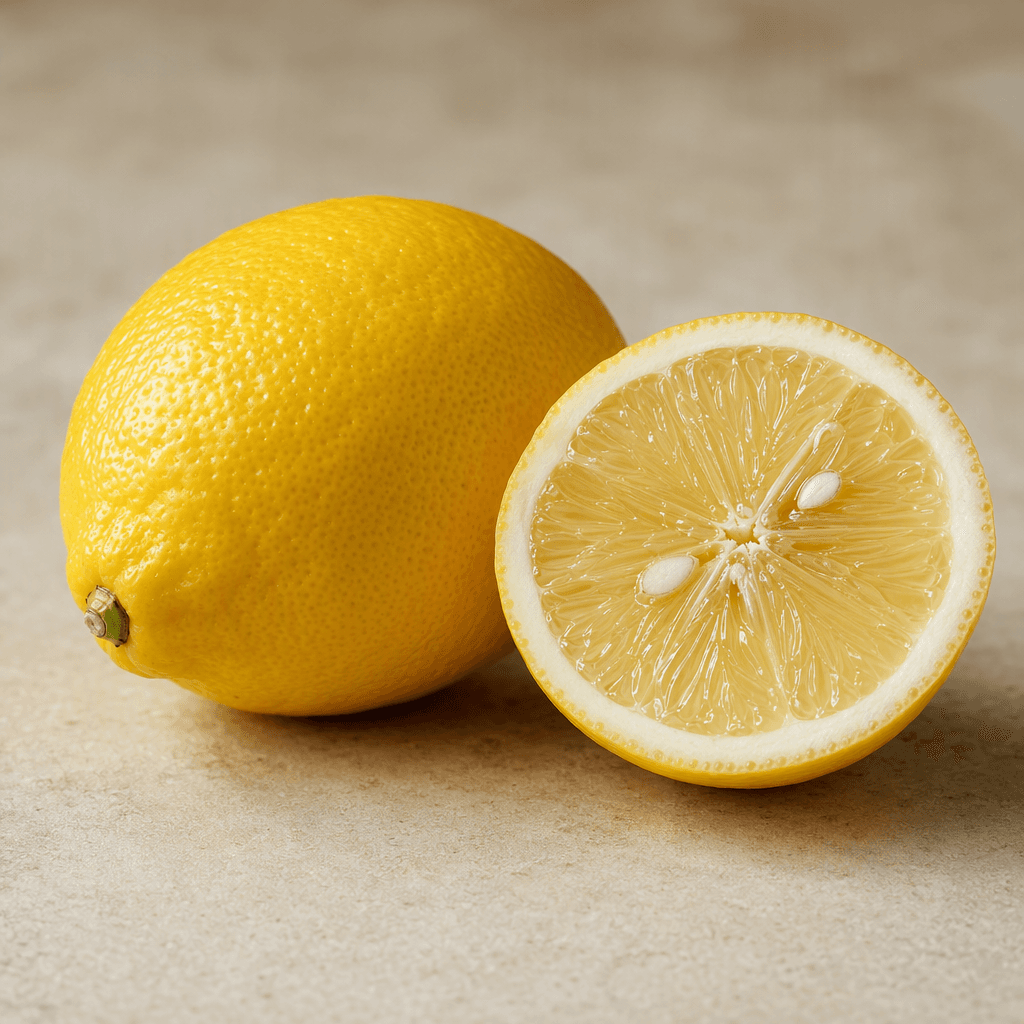
Lemon Calories
Vitamin C powerhouse, low calorie, antioxidant, refreshing
In season: Winter · Spring · Summer · Autumn
CALORIES
GI
POTASSIUM
FIBER
Quick answer
1 piece (medium) of Lemon (65 g) has 19 calories. That works out to 29 calories per 100 g. It contains 6 g of carbs, 0.7 g of protein, 0.2 g of fat and 1.8 g of fiber. Its 34.5 mg of Vitamin C covers 38% of the Daily Value. Its glycemic index is 20 (low), so it raises blood sugar slowly.
What is Lemon?
Lemon is a citrus fruit valued for its sharply sour juice and fragrant peel. Its juice brightens dressings, marinades, soups and cooked vegetables, while grated zest brings a floral, fresh note to baking and desserts. In many places it is squeezed over fish or seafood at the table, mixed into lemonade, or added to hot tea; the exact variety and everyday uses vary widely.
The juice is intensely tart, so lemon is usually used as a seasoning rather than eaten on its own. It is low in calories and provides vitamin C, while the whole fruit also contributes some fibre. Add it near the end of cooking to keep its lively flavour, or use juice and herbs in place of some oil in a lighter dressing.
Lemon Nutrition Facts
Selected: 100 g
29
KCAL / 100G
Carbs
9.3g
· 3% DV
Protein
1.1g
· 2% DV
Fat
0.3g
· 0% DV
Fiber
2.8g
· 10% DV
DV is the share of the daily value covered, on a 2,000 kcal reference diet.
Calories come from: Carbs 84% · Protein 10% · Fat 6%
Lemon Vitamins & Minerals
Vitamins
Vitamin C
53mg · 59% DV
B6
0.08mg · 5% DV
B5
0.19mg · 4% DV
B1
0.04mg · 3% DV
Minerals
Iron
1mg · 6% DV
Potassium ⭐
138mg · 4% DV
Calcium
26mg · 3% DV
Magnesium
8mg · 2% DV
How Nutritious Is Lemon?
Nutrient density
Very high
How many vitamins, minerals and how much fiber this food carries per calorie. A high score means a lot of nutrition for few calories.
Satiety score
Medium
An EatBetter score computed from fiber, protein and calorie density. A high score means staying full longer on the same calories.
Both scores are calculated per 100 g and do not change with the selected portion. The satiety score is EatBetter's own calculation, not a clinical measure.
Lemon Glycemic Index
GLYCEMIC INDEX
GLYCEMIC LOAD
Accounts for portion size — a more realistic measure than GI alone.
How to Burn Off Lemon
To burn the 29 calories in 100 g:
🚶
Walking (5 km/h)
🏃
Running (8 km/h)
🚴
Cycling
🏊
Swimming
Times are calculated with the MET equation for a 70 kg adult. Actual burn varies with your weight, age and pace.
Is Lemon Processed?
NOVA 1
Unprocessed
1. Unprocessed
2. Minimally Processed
3. Processed
4. Ultra-Processed
NOVA classifies foods into 4 groups by industrial processing. NOVA 1 (unprocessed) is the healthiest.
Does Lemon Contain Allergens?
No known major allergens
Which Diets Is Lemon Good For?
Vegan
✓ Suitable
Vegetarian
✓ Suitable
Gluten-Free
✓ Suitable
Dairy-Free
— Not suitable
Mediterranean
✓ Suitable
Paleo
✓ Suitable
Whole30
— Not suitable
DASH
— Not suitable
Keto
✓ Suitable
Low FODMAP
— Not suitable
Lemon Fat Profile
SATURATED
0.04g
MONOUNSATURATED
0.03g
POLYUNSATURATED
0.08g
Omega 6:3 ratio 0.5:1
Below the ideal 4:1 — a good omega balance.
Compare Lemon
Foods Similar to Lemon
Frequently Asked Questions About Lemon
Are lemons good for you?
Yes, lemons are a useful source of vitamin C and can add bright flavor to food and drinks. Their juice can help you use less salt in some dishes, though eating a lemon is not a cure or a substitute for a varied diet.
Does lemon water help you lose weight?
No, lemon water does not directly cause weight loss or burn fat. It can be a low-sugar alternative to sweetened drinks, which may help reduce overall calorie intake when it replaces them.
How long do lemons last in the fridge?
Whole lemons can keep for several weeks in the refrigerator, especially in a produce drawer or a sealed bag. Cut lemons dry out faster, so cover them and use them promptly.
Can you freeze lemons?
Yes, lemons freeze well whole, sliced, or juiced. Freezing changes their texture, so thawed lemons are best for cooking, drinks, and dressings rather than dishes that rely on firm, fresh segments.
How do you get more juice out of a lemon?
Roll the lemon firmly against the counter with your palm before cutting it. This loosens the juice-filled segments; squeezing a room-temperature lemon also tends to be easier than squeezing one straight from the fridge.
Why are lemons coated with wax?
Lemons may be coated with food-grade wax to reduce moisture loss and help protect the peel during storage and transport. Wash and scrub the fruit under running water before using the zest; washing removes surface dirt but may not remove every coating.
Can lemon juice replace vinegar in a recipe?
Yes, lemon juice can replace vinegar in many dressings, marinades, and sauces, but the flavor will be fruitier and less sharp. Add it gradually and taste, since the best amount depends on the recipe.
What are preserved lemons used for?
Preserved lemons are lemons cured in salt, and their softened peel is the part most often used in cooking. Finely chop it into North African-style stews, sauces, or dressings; rinse it first if it tastes too salty.
Do lemons ripen after they are picked?
Lemons can continue to change color after picking, but they do not become noticeably sweeter like some fruits. Choose one that feels heavy for its size and has a firm, evenly colored peel.
Can you eat lemon seeds?
Yes, accidentally swallowing a lemon seed is generally harmless. The seeds can taste bitter if chewed, so remove them when juicing or preparing a dish where their texture would be unwelcome.
Have another question about Lemon?
Ask the AI nutrition coach — calories, portions, alternatives and more, answered in seconds in the app.

Scan calories with your camera
Instant AI nutrition analysis

Nutrition data compiled from USDA FoodData Central and scientific sources.