

Ready & Packaged Foods
All →Vegetables & Legumes
All →Desserts & Confectionery
All →Meat & Protein
All →Grains & Bakery
All →Beverages
All →Milk & Dairy
All →

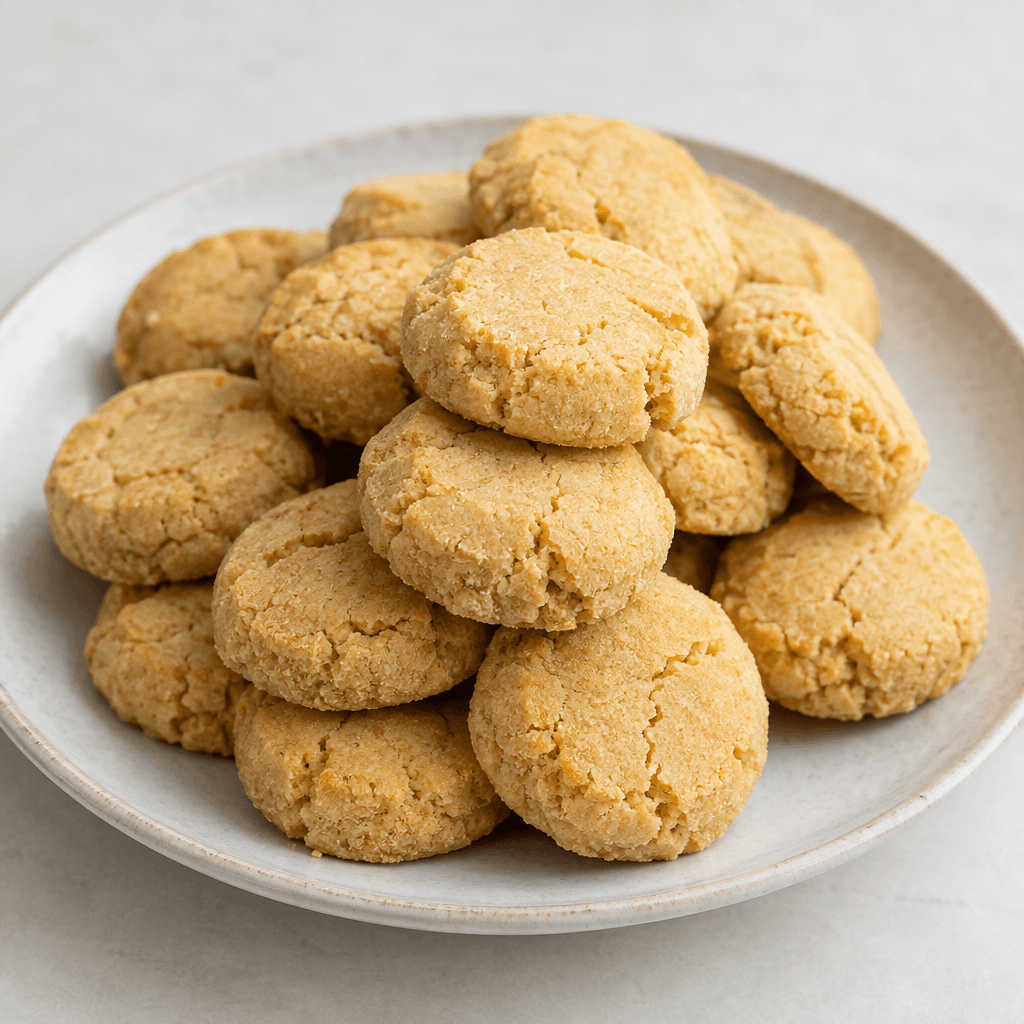
Chickpea Cookie Calories
Rich in protein and fiber, gluten-free alternative
In season: Spring · Summer · Autumn · Winter
CALORIES
GI
POTASSIUM
FIBER
Quick answer
1 piece (medium) of Chickpea Cookie (30 g) has 123 calories. That works out to 410 calories per 100 g. It contains 16.8 g of carbs, 2.5 g of protein, 4.6 g of fat and 2 g of fiber. Its 0.1 mg of Copper covers 8% of the Daily Value. Its glycemic index is 45 (medium), so it raises blood sugar at a moderate pace.
What is Chickpea Cookie?
A Chickpea Cookie is a sweet, crumbly biscuit made with finely ground roasted chickpeas, often alongside flour, sugar and butter or oil. Recipes vary, including in how much chickpea meal they use. In Turkey, where this style of cookie is enjoyed, it is usually small and round, with a pale golden colour and a gently toasted, nutty flavour.
It is commonly served with tea, offered to guests or set out as a small sweet alongside breakfast. Chickpeas contribute some protein and fibre, but the cookie is still a sweet treat with plenty of carbohydrate and fat. Its dry, delicate texture pairs especially well with a hot drink; a modest portion makes a simple tea-time snack.
Chickpea Cookie Nutrition Facts
Selected: 100 g
410
KCAL / 100G
Carbs
56g
· 20% DV
Protein
8.2g
· 16% DV
Fat
15.5g
· 20% DV
Fiber
6.7g
· 24% DV
DV is the share of the daily value covered, on a 2,000 kcal reference diet.
Calories come from: Carbs 57% · Protein 8% · Fat 35%
Chickpea Cookie Vitamins & Minerals
Vitamins
B1
0.11mg · 9% DV
Folate
35µg · 9% DV
Biotin
2.5µg · 8% DV
B2
0.08mg · 6% DV
Minerals
Phosphorus
92mg · 13% DV
Iron
2mg · 11% DV
Magnesium
38mg · 9% DV
Zinc
1mg · 9% DV
How Nutritious Is Chickpea Cookie?
Nutrient density
Medium
How many vitamins, minerals and how much fiber this food carries per calorie. A high score means a lot of nutrition for few calories.
Satiety score
Medium
An EatBetter score computed from fiber, protein and calorie density. A high score means staying full longer on the same calories.
Both scores are calculated per 100 g and do not change with the selected portion. The satiety score is EatBetter's own calculation, not a clinical measure.
Chickpea Cookie Glycemic Index
GLYCEMIC INDEX
GLYCEMIC LOAD
Accounts for portion size — a more realistic measure than GI alone.
How to Burn Off Chickpea Cookie
To burn the 410 calories in 100 g:
🚶
Walking (5 km/h)
🏃
Running (8 km/h)
🚴
Cycling
🏊
Swimming
Times are calculated with the MET equation for a 70 kg adult. Actual burn varies with your weight, age and pace.
Is Chickpea Cookie Processed?
NOVA 3
Processed
1. Unprocessed
2. Minimally Processed
3. Processed
4. Ultra-Processed
NOVA classifies foods into 4 groups by industrial processing. NOVA 1 (unprocessed) is the healthiest.
Does Chickpea Cookie Contain Allergens?
No known major allergens
Which Diets Is Chickpea Cookie Good For?
Vegan
— Not suitable
Vegetarian
✓ Suitable
Gluten-Free
✓ Suitable
Dairy-Free
— Not suitable
Mediterranean
✓ Suitable
Paleo
— Not suitable
Whole30
— Not suitable
DASH
— Not suitable
Keto
— Not suitable
Low FODMAP
— Not suitable
Chickpea Cookie Fat Profile
SATURATED
2.7g
MONOUNSATURATED
6.1g
POLYUNSATURATED
3.3g
Omega 6:3 ratio 15:1
Above the ideal 4:1 (15:1).
Compare Chickpea Cookie
Foods Similar to Chickpea Cookie
Frequently Asked Questions About Chickpea Cookie
What are chickpea cookies made of?
Chickpea cookies are made with chickpea flour or ground roasted chickpeas, plus ingredients such as butter or oil and a sweetener. Recipes vary, and some add egg or another flour to help the dough hold together.
Do chickpea cookies taste like chickpeas?
Chickpea cookies can have a mild nutty, roasted-chickpea flavor, especially when made with flour from roasted chickpeas. Sweetener and flavorings such as vanilla or cinnamon can soften that taste, but they do not make every recipe taste identical.
Can I make chickpea cookies with canned chickpeas instead of chickpea flour?
Not as a direct swap. Canned chickpeas contain much more moisture than chickpea flour, so they produce a different, often softer cookie dough. Use a recipe written specifically for canned chickpeas rather than substituting them in a flour-based chickpea cookie recipe.
Why are my chickpea cookies dry and crumbly?
Chickpea cookies often turn dry and crumbly when the dough has too much flour or too little fat, or when the cookies are overbaked. Add the dry ingredients gradually, stop once the dough holds together, and let the cookies cool before moving them.
How can I make chickpea cookies chewy instead of crumbly?
For softer chickpea cookies, use a recipe designed for a chewy texture and avoid baking them until they feel firm in the oven. Let them finish setting on the baking tray; swapping ingredients in a crumbly-style recipe may change how well the dough holds together.
Can roasted chickpea flour be used for chickpea cookies?
Yes, roasted chickpea flour works well in chickpea cookies and gives them a more pronounced toasted flavor. It is not always interchangeable with regular chickpea flour, so use a recipe that specifies roasted flour or adjust the dough gradually to its texture.
How should I store chickpea cookies?
Store chickpea cookies only after they have cooled completely, in an airtight container in a cool, dry place. Moisture can soften their crumbly texture, so keep the container away from steam, direct sunlight, and warm appliances.
Can you freeze chickpea cookies?
Yes, chickpea cookies can be frozen once fully cooled. Pack them in a sealed freezer-safe container, separating layers if they crumble easily, then thaw at room temperature. Avoid refreezing cookies that have already thawed.
Are chickpea cookies healthier than regular cookies?
Chickpea cookies can provide more protein and fiber than some conventional cookies, but they are still a sweet baked treat and recipes vary in added sugar and fat. The ingredient list and portion matter more than the cookie’s name.
Can you make chickpea cookies without eggs?
Yes, many chickpea cookie recipes can be made without eggs, but the result depends on what holds the dough together. Choose an egg-free recipe rather than simply leaving eggs out, since chickpea flour can make cookies crumbly without enough binding.
Have another question about Chickpea Cookie?
Ask the AI nutrition coach — calories, portions, alternatives and more, answered in seconds in the app.

Scan calories with your camera
Instant AI nutrition analysis

Nutrition data compiled from USDA FoodData Central and scientific sources.