

Ready & Packaged Foods
All →Vegetables & Legumes
All →Desserts & Confectionery
All →Meat & Protein
All →Grains & Bakery
All →Beverages
All →Milk & Dairy
All →

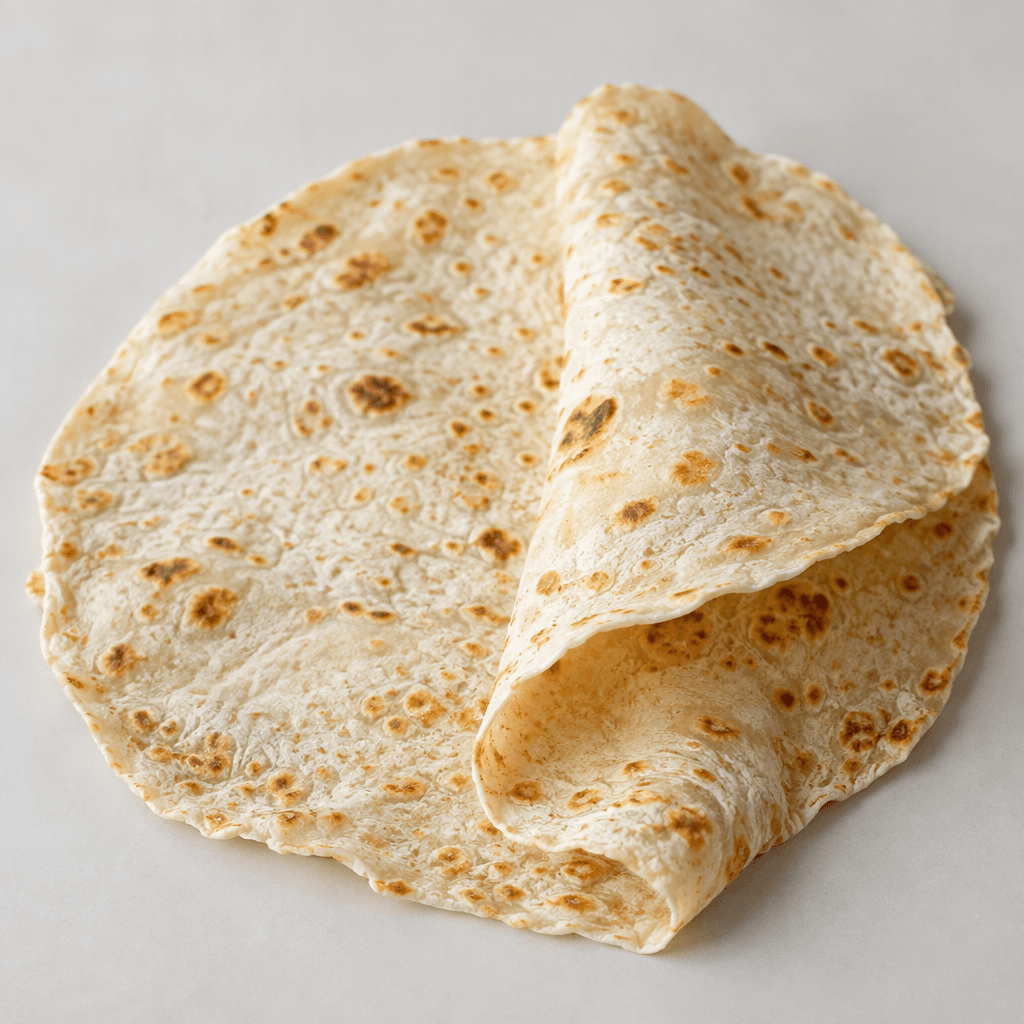
Lavash bread Calories
Thin, soft, traditional flatbread
In season: Spring · Summer · Autumn · Winter
CALORIES
GI
POTASSIUM
FIBER
Quick answer
1 piece (medium) of Lavash bread (60 g) has 162 calories. That works out to 270 calories per 100 g. It contains 32.4 g of carbs, 5.1 g of protein, 0.9 g of fat and 1.3 g of fiber. Its 0.1 mg of B1 covers 9% of the Daily Value. Its glycemic index is 70 (high), so it raises blood sugar quickly.
What is Lavash bread?
Lavash bread is a thin, flexible flatbread made from rolled dough and baked on a hot griddle, in a tandoor or in an oven. It is a traditional staple across parts of West Asia and the Caucasus, including Turkey, Armenia and Iran, though recipes and names vary by place.
Soft and pliable when fresh, with a mild flavour and occasional toasted spots, it is commonly used to wrap kebabs, grilled vegetables, cheese or herbs. In Turkey and nearby regions it often accompanies meals or becomes a dürüm; elsewhere, it works well as a wrap or alongside dips. It is mainly a source of carbohydrate and relatively low in fat. Add plenty of vegetables and go easy on rich sauces for a lighter wrap.
Lavash bread Nutrition Facts
Selected: 100 g
270
KCAL / 100G
Carbs
54g
· 20% DV
Protein
8.5g
· 17% DV
Fat
1.5g
· 2% DV
Fiber
2.2g
· 8% DV
DV is the share of the daily value covered, on a 2,000 kcal reference diet.
Calories come from: Carbs 82% · Protein 13% · Fat 5%
Lavash bread Vitamins & Minerals
Vitamins
B1
0.18mg · 15% DV
B3
2.2mg · 14% DV
B5
0.3mg · 6% DV
Folate
22µg · 6% DV
Minerals
Sodium
340mg · 15% DV
Selenium
7.5µg · 14% DV
Iron
2mg · 11% DV
Phosphorus
70mg · 10% DV
How Nutritious Is Lavash bread?
Nutrient density
Low
How many vitamins, minerals and how much fiber this food carries per calorie. A high score means a lot of nutrition for few calories.
Satiety score
Medium
An EatBetter score computed from fiber, protein and calorie density. A high score means staying full longer on the same calories.
Both scores are calculated per 100 g and do not change with the selected portion. The satiety score is EatBetter's own calculation, not a clinical measure.
Lavash bread Glycemic Index
GLYCEMIC INDEX
GLYCEMIC LOAD
Accounts for portion size — a more realistic measure than GI alone.
How to Burn Off Lavash bread
To burn the 270 calories in 100 g:
🚶
Walking (5 km/h)
🏃
Running (8 km/h)
🚴
Cycling
🏊
Swimming
Times are calculated with the MET equation for a 70 kg adult. Actual burn varies with your weight, age and pace.
Is Lavash bread Processed?
NOVA 2
Minimally Processed
1. Unprocessed
2. Minimally Processed
3. Processed
4. Ultra-Processed
NOVA classifies foods into 4 groups by industrial processing. NOVA 1 (unprocessed) is the healthiest.
Does Lavash bread Contain Allergens?
Contains these allergens:
Which Diets Is Lavash bread Good For?
Vegan
✓ Suitable
Vegetarian
✓ Suitable
Gluten-Free
— Not suitable
Dairy-Free
— Not suitable
Mediterranean
✓ Suitable
Paleo
— Not suitable
Whole30
— Not suitable
DASH
— Not suitable
Keto
— Not suitable
Low FODMAP
— Not suitable
Lavash bread Fat Profile
SATURATED
0.3g
MONOUNSATURATED
0.2g
POLYUNSATURATED
0.19g
Omega 6:3 ratio 18:1
Above the ideal 4:1 (18:1).
Compare Lavash bread
Foods Similar to Lavash bread
Frequently Asked Questions About Lavash bread
What is lavash bread?
Lavash bread is a thin flatbread traditionally made from flour, water and salt, then baked on a hot surface or in a clay oven. It can be soft and flexible when fresh, or dried until crisp for longer storage.
How do you make lavash bread at home?
You can make lavash bread with a simple dough of flour, water, salt and, in some recipes, yeast. Roll it very thin and cook it briefly on a very hot skillet or in a hot oven so it stays flexible.
Is lavash bread the same as pita bread?
No. Lavash bread is usually a thin, flexible sheet, while pita is thicker and often forms a pocket as it bakes. Lavash is commonly rolled around fillings or served alongside meals rather than split and stuffed.
How do you keep lavash bread from cracking when you roll it?
Warm lavash bread briefly before rolling it; cold or dry bread is more likely to crack. Keep unused pieces covered, avoid overfilling, and fold the sides over the filling before rolling it tightly.
How should you store lavash bread?
Keep lavash bread in a sealed bag or airtight container in a cool, dry place. Once opened, refrigerating it can help limit mold growth, though it may dry out; discard the bread if you see any mold.
Can you freeze lavash bread?
Yes, lavash bread freezes well. Separate the pieces with parchment paper, seal them in a freezer bag, and thaw only what you need while covered. Warm thawed bread briefly before using it for wraps.
What can you make with lavash bread?
Lavash bread works well for wraps, flatbread pizzas, and crisp chips. Fill it with grilled meat, vegetables or cheese, or cut it into pieces and bake until crisp to serve with dips or soup.
What is the difference between lavash bread and a tortilla?
Lavash bread is typically rolled thinner and wider than many tortillas, and traditional versions may be baked against the wall of a clay oven. Tortillas are usually cooked on a griddle and are especially associated with Mexican dishes.
How do you soften stale lavash bread?
To soften lavash bread that has dried but has no mold, sprinkle it lightly with water and warm it briefly in a covered skillet. A damp cloth can also help it regain flexibility; use it soon after warming.
Where does lavash bread come from?
Lavash bread has a long history across the Caucasus and parts of West Asia, including Armenia, Türkiye and Iran. Recipes and baking methods vary by region, but the bread is traditionally rolled thin and cooked at high heat.
Have another question about Lavash bread?
Ask the AI nutrition coach — calories, portions, alternatives and more, answered in seconds in the app.

Scan calories with your camera
Instant AI nutrition analysis

Nutrition data compiled from USDA FoodData Central and scientific sources.