

Ready & Packaged Foods
All →Vegetables & Legumes
All →Desserts & Confectionery
All →Meat & Protein
All →Grains & Bakery
All →Beverages
All →Milk & Dairy
All →

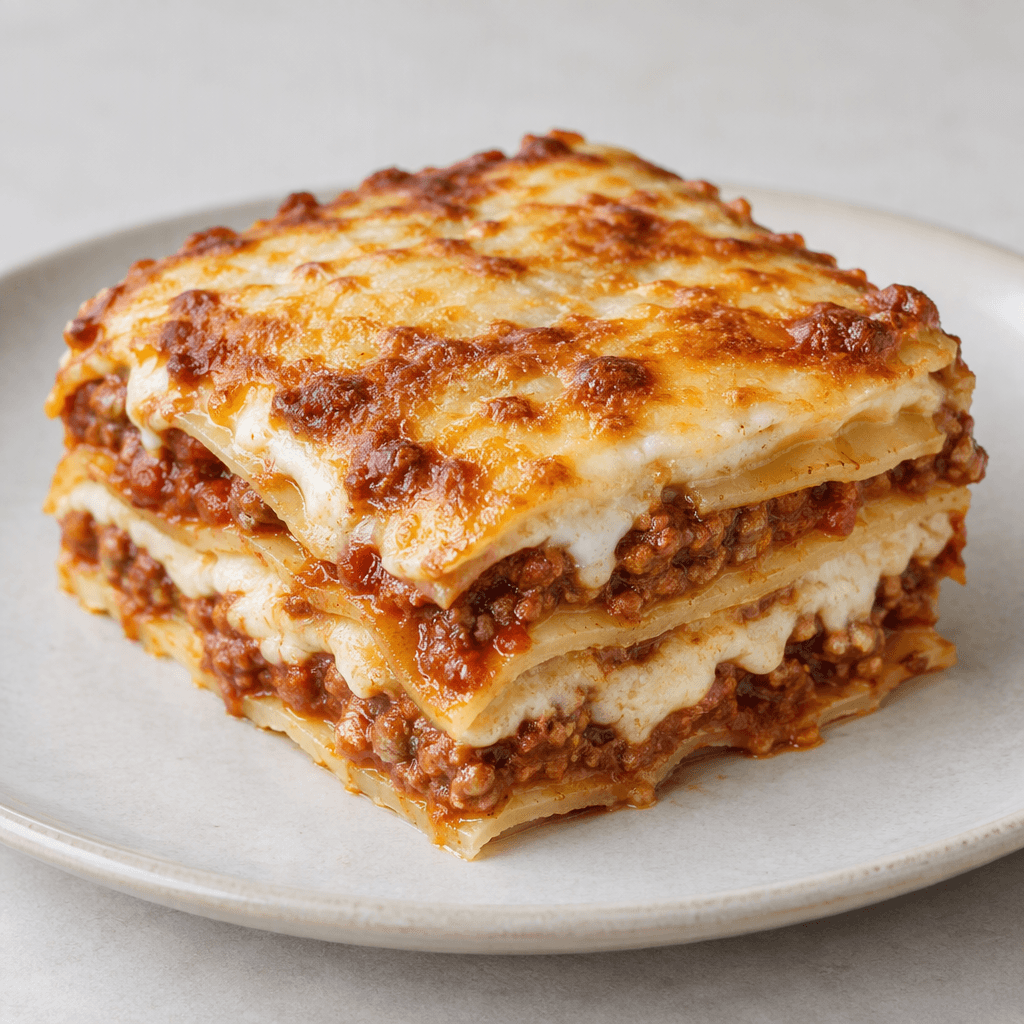
Lasagna Calories
Layered pasta, ground meat, tomato sauce, cheese
In season: Winter · Autumn
CALORIES
GI
POTASSIUM
FIBER
Quick answer
1 piece (medium) of Lasagna (180 g) has 252 calories. That works out to 140 calories per 100 g. It contains 29.7 g of carbs, 13.5 g of protein, 9.4 g of fat and 2.9 g of fiber. Its 594 mg of Sodium covers 26% of the Daily Value. Its glycemic index is 46 (medium), so it raises blood sugar at a moderate pace.
What is Lasagna?
Lasagna is an Italian baked pasta dish made by layering broad pasta sheets with a sauce—often tomato and minced meat—along with béchamel and cheese. The top turns golden and lightly crisp in the oven, while the layers underneath stay soft and saucy. Its familiar appeal comes from the contrast of tangy tomato, savoury meat and creamy sauce.
In Italy it is served as a substantial first course or main dish, and elsewhere it is often the centre of a family meal, with a green salad alongside. It provides a mix of carbohydrates and protein, with 7.5 g of protein per 100 g. For a lighter plate, serve a smaller piece with plenty of salad, or use a generous tomato sauce and a more modest amount of cheese.
Lasagna Nutrition Facts
Selected: 100 g
140
KCAL / 100G
Carbs
16.5g
· 6% DV
Protein
7.5g
· 15% DV
Fat
5.2g
· 7% DV
Fiber
1.6g
· 6% DV
DV is the share of the daily value covered, on a 2,000 kcal reference diet.
Calories come from: Carbs 46% · Protein 21% · Fat 33%
Lasagna Vitamins & Minerals
Vitamins
Vitamin A
120µg · 13% DV
B12
0.32µg · 13% DV
B2
0.12mg · 9% DV
B3
1.3mg · 8% DV
Minerals
Sodium
330mg · 14% DV
Selenium
7.5µg · 14% DV
Phosphorus
95mg · 14% DV
Calcium
85mg · 9% DV
How Nutritious Is Lasagna?
Nutrient density
Medium
How many vitamins, minerals and how much fiber this food carries per calorie. A high score means a lot of nutrition for few calories.
Satiety score
Medium
An EatBetter score computed from fiber, protein and calorie density. A high score means staying full longer on the same calories.
Both scores are calculated per 100 g and do not change with the selected portion. The satiety score is EatBetter's own calculation, not a clinical measure.
Lasagna Glycemic Index
GLYCEMIC INDEX
GLYCEMIC LOAD
Accounts for portion size — a more realistic measure than GI alone.
How to Burn Off Lasagna
To burn the 140 calories in 100 g:
🚶
Walking (5 km/h)
🏃
Running (8 km/h)
🚴
Cycling
🏊
Swimming
Times are calculated with the MET equation for a 70 kg adult. Actual burn varies with your weight, age and pace.
Is Lasagna Processed?
NOVA 3
Processed
1. Unprocessed
2. Minimally Processed
3. Processed
4. Ultra-Processed
NOVA classifies foods into 4 groups by industrial processing. NOVA 1 (unprocessed) is the healthiest.
Does Lasagna Contain Allergens?
Contains these allergens:
Which Diets Is Lasagna Good For?
Vegan
— Not suitable
Vegetarian
— Not suitable
Gluten-Free
— Not suitable
Dairy-Free
— Not suitable
Mediterranean
✓ Suitable
Paleo
— Not suitable
Whole30
— Not suitable
DASH
— Not suitable
Keto
— Not suitable
Low FODMAP
— Not suitable
Lasagna Fat Profile
SATURATED
2.1g
MONOUNSATURATED
1.6g
POLYUNSATURATED
0.3g
Omega 6:3 ratio 7.7:1
Above the ideal 4:1 (7.7:1).
Compare Lasagna
Foods Similar to Lasagna
Frequently Asked Questions About Lasagna
How do you make lasagna?
Lasagna is made by layering pasta sheets with meat-and-tomato sauce and béchamel, then baking until bubbling and browned. Let it rest briefly before cutting so the layers hold together when served.
What is the difference between lasagna and lasagne?
Lasagna and lasagne usually refer to the same layered pasta dish; the spelling varies by region. “Lasagna” is common in American English, while “lasagne” is the traditional Italian plural form and is widely used in British English.
Do you have to boil lasagna noodles before baking?
No-boil lasagna sheets can go straight into the dish, while conventional dried sheets often need precooking. Follow the package directions, and make sure the layers have enough sauce to soften fully in the oven.
How many layers should lasagna have?
Lasagna commonly has several alternating layers of pasta, sauce, and filling, rather than one fixed number. Use enough layers to fill the dish without stacking them so high that the center cooks unevenly.
Why does lasagna turn out watery?
Lasagna turns watery when its sauce or vegetables release too much liquid during baking. Simmer meat sauce until thick, drain watery vegetables, and let the baked dish rest before slicing so the layers can set.
Can you assemble lasagna the night before?
Yes, you can assemble lasagna ahead and refrigerate it covered before baking. Keep it chilled rather than leaving it at room temperature, and allow extra baking time if it goes into the oven cold.
Can you freeze lasagna?
Yes, lasagna freezes well either before or after baking. Wrap it tightly or use an airtight container, thaw it in the refrigerator for more even reheating, and heat until the center is hot.
How long does leftover lasagna last in the fridge?
Cooked lasagna keeps for about 3–4 days in the refrigerator when stored in a covered container. Refrigerate leftovers promptly, and reheat only the portion you plan to eat.
Why should lasagna rest before serving?
Lasagna should rest briefly after baking so its hot sauces and layers can settle. Cutting it immediately often makes the filling slide apart, while a short rest helps each portion keep its shape.
What should you serve with lasagna?
A crisp green salad or simply cooked vegetables pair well with lasagna. Their fresh, lighter flavors balance the rich tomato sauce, cheese, and pasta without competing with the main dish.
Have another question about Lasagna?
Ask the AI nutrition coach — calories, portions, alternatives and more, answered in seconds in the app.

Scan calories with your camera
Instant AI nutrition analysis

Nutrition data compiled from USDA FoodData Central and scientific sources.