

Ready & Packaged Foods
All →Vegetables & Legumes
All →Desserts & Confectionery
All →Meat & Protein
All →Grains & Bakery
All →Beverages
All →Milk & Dairy
All →

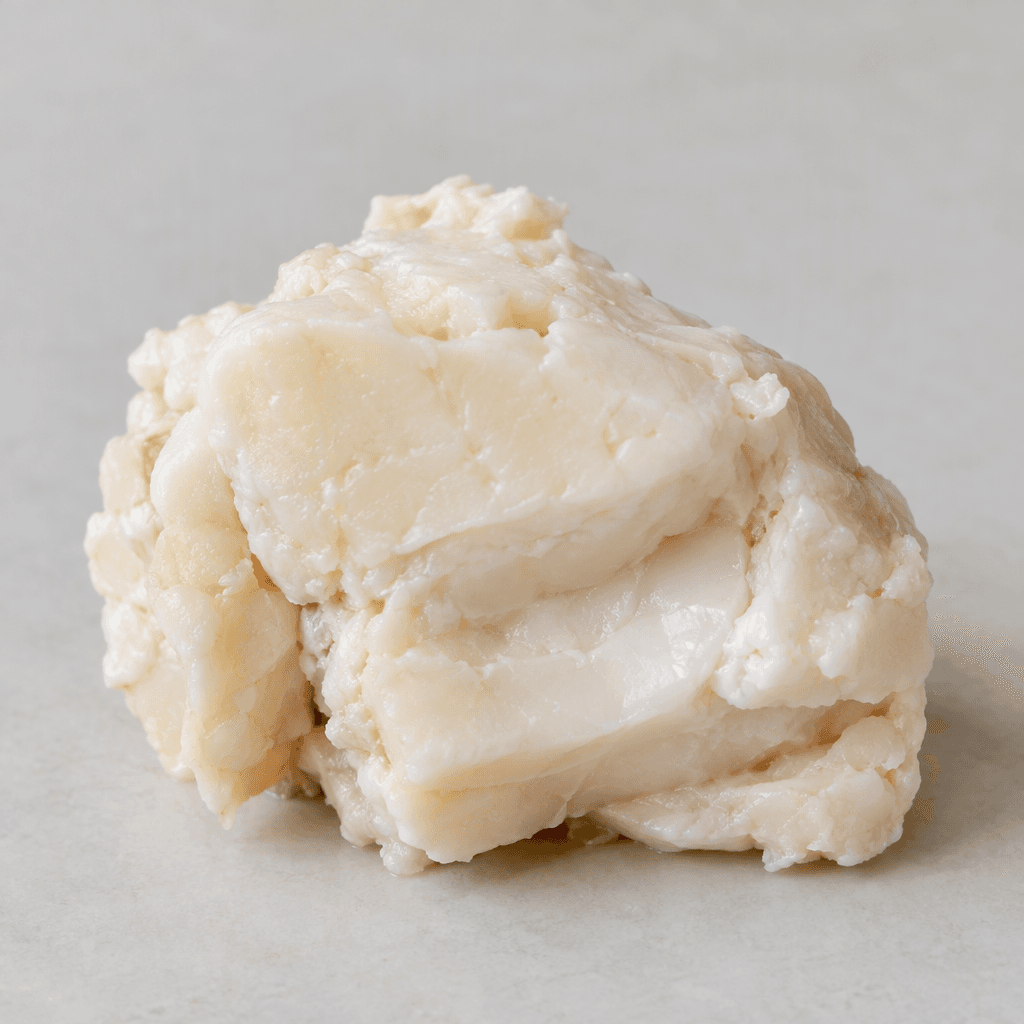
Lamb tail fat Calories
High energy, rich in saturated fat, used in traditional dishes
In season: Spring · Summer · Autumn · Winter
CALORIES
GI
POTASSIUM
FIBER
Quick answer
1 piece (medium) of Lamb tail fat (30 g) has 270 calories. That works out to 900 calories per 100 g. It contains 0 g of carbs, 0.2 g of protein, 29.9 g of fat and 0 g of fiber. Its glycemic index is 0 (low), so it raises blood sugar slowly.
What is Lamb tail fat?
Lamb tail fat is the firm, pale fat stored in the tail of fat-tailed sheep. It is used in Turkish and other regional cooking, either rendered for cooking or cut into small pieces and mixed with meat. It is especially valued in kebabs, kofta and slow-cooked lamb dishes, where it adds richness and helps keep the meat moist.
Raw, it is waxy and firm; as it cooks, it melts and brings a distinctive savoury flavour. It is generally served as part of a cooked dish rather than eaten on its own. Lamb tail fat is very energy-dense and high in saturated fat, so a little can go a long way. For a lighter meal, use a small amount alongside lean meat and vegetables.
Lamb tail fat Nutrition Facts
Selected: 100 g
900
KCAL / 100G
Carbs
0g
· 0% DV
Protein
0.5g
· 1% DV
Fat
99.5g
· 128% DV
Fiber
0g
· 0% DV
DV is the share of the daily value covered, on a 2,000 kcal reference diet.
Calories come from: Carbs 0% · Protein 0% · Fat 100%
Lamb tail fat Vitamins & Minerals
Vitamins
B12
0.1µg · 4% DV
Vitamin D
0.5µg · 3% DV
Vitamin E
0.5mg · 3% DV
Biotin
0.5µg · 2% DV
Minerals
Calcium
5mg · 1% DV
Selenium
0.5µg · 1% DV
Phosphorus
5mg · 1% DV
Iron
0mg · 0% DV
How Nutritious Is Lamb tail fat?
Nutrient density
Low
How many vitamins, minerals and how much fiber this food carries per calorie. A high score means a lot of nutrition for few calories.
Satiety score
Low
An EatBetter score computed from fiber, protein and calorie density. A high score means staying full longer on the same calories.
Both scores are calculated per 100 g and do not change with the selected portion. The satiety score is EatBetter's own calculation, not a clinical measure.
Lamb tail fat Glycemic Index
GLYCEMIC INDEX
GLYCEMIC LOAD
Accounts for portion size — a more realistic measure than GI alone.
How to Burn Off Lamb tail fat
To burn the 900 calories in 100 g:
🚶
Walking (5 km/h)
🏃
Running (8 km/h)
🚴
Cycling
🏊
Swimming
Times are calculated with the MET equation for a 70 kg adult. Actual burn varies with your weight, age and pace.
Is Lamb tail fat Processed?
NOVA 2
Minimally Processed
1. Unprocessed
2. Minimally Processed
3. Processed
4. Ultra-Processed
NOVA classifies foods into 4 groups by industrial processing. NOVA 1 (unprocessed) is the healthiest.
Does Lamb tail fat Contain Allergens?
No known major allergens
Which Diets Is Lamb tail fat Good For?
Vegan
— Not suitable
Vegetarian
— Not suitable
Gluten-Free
✓ Suitable
Dairy-Free
— Not suitable
Mediterranean
✓ Suitable
Paleo
✓ Suitable
Whole30
— Not suitable
DASH
— Not suitable
Keto
✓ Suitable
Low FODMAP
— Not suitable
Lamb tail fat Fat Profile
SATURATED
45g
MONOUNSATURATED
45g
POLYUNSATURATED
5g
Omega 6:3 ratio 5:1
Above the ideal 4:1 (5:1).
Compare Lamb tail fat
Foods Similar to Lamb tail fat
Frequently Asked Questions About Lamb tail fat
What is lamb tail fat used for?
Lamb tail fat is the firm fat stored in a sheep’s tail, used as a cooking fat and flavouring. It is especially common in kebabs and minced-meat dishes, where it helps keep the meat moist as it cooks.
How do you render lamb tail fat at home?
Cut lamb tail fat into small pieces and warm it slowly in a heavy pan over low heat. Stir occasionally until the fat melts and the remaining pieces turn golden, then strain the liquid fat into a clean, dry container.
What does lamb tail fat taste like?
Lamb tail fat has a rich, distinctly lamb-like savoury flavour. Rendered gently, it can add depth to grilled meat, rice and stews; overheating it can make the aroma and taste much stronger.
Why is lamb tail fat added to kebabs?
Lamb tail fat adds moisture and a characteristic rich flavour to kebabs, especially those made with minced meat. Mixing it evenly through the meat helps prevent a dry result, while too much can make the kebab greasy.
Can you use lamb tail fat instead of regular cooking oil?
Yes, lamb tail fat can replace cooking oil in dishes where its savoury lamb flavour fits, such as meat, rice or roasted vegetables. It is less suitable when you want a neutral-tasting fat.
How should you store lamb tail fat?
Keep raw lamb tail fat covered in the refrigerator and use it promptly, or freeze it for longer storage. Store rendered fat in a clean, airtight container in the refrigerator, keeping water and food crumbs out.
Can lamb tail fat be frozen?
Yes, lamb tail fat freezes well. Divide it into recipe-sized portions, wrap or seal them airtight, and thaw only what you need in the refrigerator. Avoid refreezing fat once it has thawed.
Is lamb tail fat the same as lamb tallow?
Not necessarily. Lamb tail fat describes fat taken from a sheep’s tail, while lamb tallow usually means rendered lamb fat and can come from different parts of the animal. The source affects its flavour and texture.
What can you substitute for lamb tail fat in kebabs?
For kebabs, ordinary lamb fat is the closest substitute for lamb tail fat and keeps a similar meaty character. Beef fat or a little neutral oil can add richness, but the flavour and texture will differ.
Is lamb tail fat healthy to eat?
Lamb tail fat is very energy-dense and rich in saturated fat, so it is best used sparingly rather than as an everyday cooking fat. If you have been advised to limit saturated fat for a medical reason, ask your healthcare professional how it fits your diet.
Have another question about Lamb tail fat?
Ask the AI nutrition coach — calories, portions, alternatives and more, answered in seconds in the app.

Scan calories with your camera
Instant AI nutrition analysis

Nutrition data compiled from USDA FoodData Central and scientific sources.