

Ready & Packaged Foods
All →Vegetables & Legumes
All →Desserts & Confectionery
All →Meat & Protein
All →Grains & Bakery
All →Beverages
All →Milk & Dairy
All →

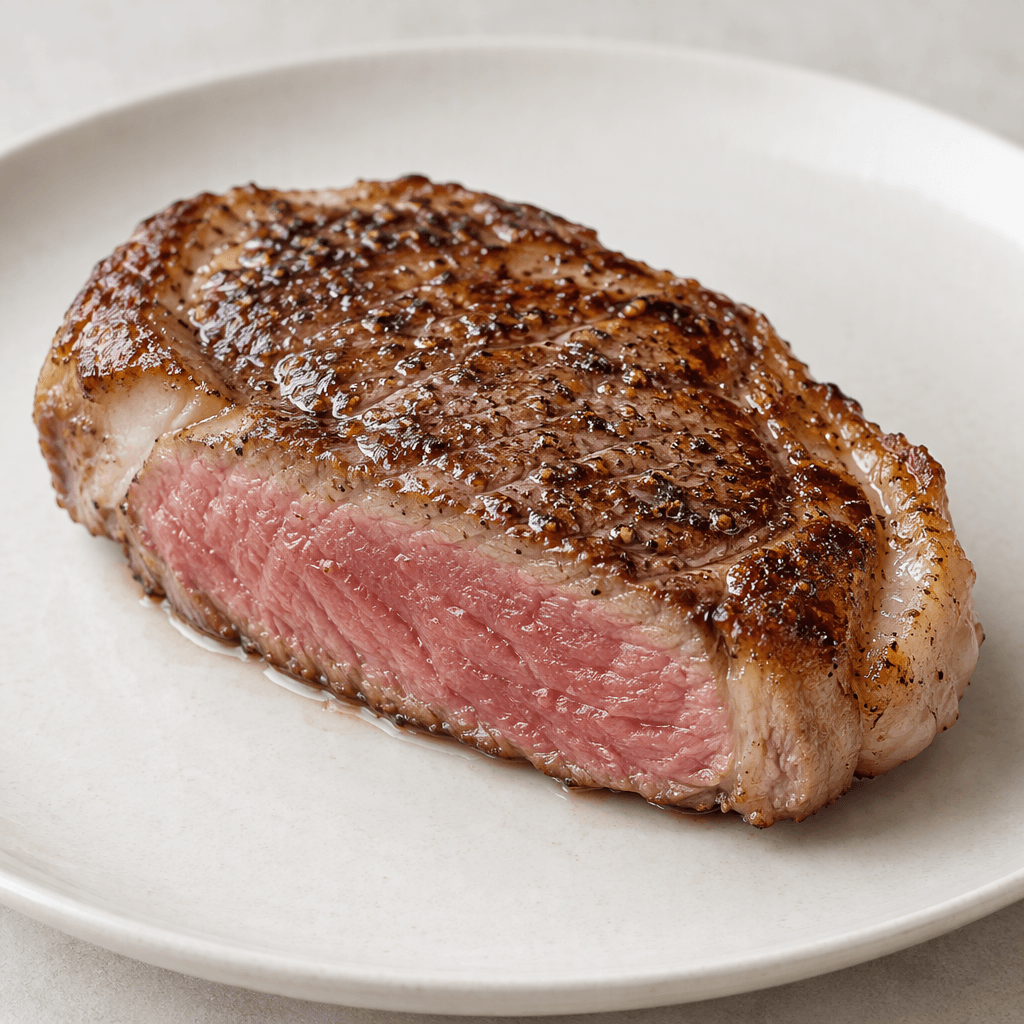
Lamb steak Calories
Rich in protein, iron, and B vitamins
In season: Spring · Summer · Autumn · Winter
CALORIES
GI
POTASSIUM
FIBER
Quick answer
1 piece (medium) of Lamb steak (150 g) has 330 calories. That works out to 220 calories per 100 g. It contains 0 g of carbs, 30.8 g of protein, 23.3 g of fat and 0 g of fiber. Its 3.3 µg of B12 covers 138% of the Daily Value. Its glycemic index is 0 (low), so it raises blood sugar slowly.
What is Lamb steak?
Lamb steak is a thick cut of lamb, commonly taken from the leg or loin and cooked as an individual portion. It is not tied to one particular cuisine: you’ll find it grilled, pan-seared or broiled in many places where lamb is eaten, from Mediterranean kitchens to home cooking in the UK, Australia and beyond.
A good sear brings out its savoury flavour, while careful cooking keeps the centre tender and juicy; the meat can taste richer than beef, especially when its fat is left on. Serve it as a main with vegetables, salad or potatoes, and add herbs or a bright sauce to balance the richness. It provides substantial protein along with iron and B vitamins, with no carbohydrates. For a lighter plate, trim some visible fat and pair it with vegetables.
Lamb steak Nutrition Facts
Selected: 100 g
220
KCAL / 100G
Carbs
0g
· 0% DV
Protein
20.5g
· 41% DV
Fat
15.5g
· 20% DV
Fiber
0g
· 0% DV
DV is the share of the daily value covered, on a 2,000 kcal reference diet.
Calories come from: Carbs 0% · Protein 37% · Fat 63%
Lamb steak Vitamins & Minerals
Vitamins
B12
2.2µg · 92% DV
B3
5.5mg · 34% DV
B2
0.25mg · 19% DV
B5
0.7mg · 14% DV
Minerals
Zinc
4mg · 36% DV
Phosphorus
180mg · 26% DV
Selenium
7µg · 13% DV
Iron
2mg · 11% DV
How Nutritious Is Lamb steak?
Nutrient density
Very high
How many vitamins, minerals and how much fiber this food carries per calorie. A high score means a lot of nutrition for few calories.
Satiety score
Medium
An EatBetter score computed from fiber, protein and calorie density. A high score means staying full longer on the same calories.
Both scores are calculated per 100 g and do not change with the selected portion. The satiety score is EatBetter's own calculation, not a clinical measure.
Lamb steak Glycemic Index
GLYCEMIC INDEX
GLYCEMIC LOAD
Accounts for portion size — a more realistic measure than GI alone.
How to Burn Off Lamb steak
To burn the 220 calories in 100 g:
🚶
Walking (5 km/h)
🏃
Running (8 km/h)
🚴
Cycling
🏊
Swimming
Times are calculated with the MET equation for a 70 kg adult. Actual burn varies with your weight, age and pace.
Is Lamb steak Processed?
NOVA 2
Minimally Processed
1. Unprocessed
2. Minimally Processed
3. Processed
4. Ultra-Processed
NOVA classifies foods into 4 groups by industrial processing. NOVA 1 (unprocessed) is the healthiest.
Does Lamb steak Contain Allergens?
No known major allergens
Which Diets Is Lamb steak Good For?
Vegan
— Not suitable
Vegetarian
— Not suitable
Gluten-Free
✓ Suitable
Dairy-Free
— Not suitable
Mediterranean
✓ Suitable
Paleo
✓ Suitable
Whole30
— Not suitable
DASH
— Not suitable
Keto
✓ Suitable
Low FODMAP
— Not suitable
Lamb steak Fat Profile
SATURATED
6.5g
MONOUNSATURATED
6.2g
POLYUNSATURATED
0.6g
Omega 6:3 ratio 1.9:1
Below the ideal 4:1 — a good omega balance.
Compare Lamb steak
Foods Similar to Lamb steak
Frequently Asked Questions About Lamb steak
How do you cook a lamb steak in a pan?
Sear a lamb steak in a thoroughly heated, lightly oiled pan. Pat the surface dry first, then turn it only when it releases easily from the pan. Cooking time depends on thickness; let it rest briefly before slicing so the juices settle.
How long should you cook a lamb steak?
A lamb steak’s cooking time depends on its thickness, starting temperature, and how well done you want it. Use an instant-read thermometer rather than relying only on minutes, and rest the steak briefly after cooking.
Can you eat lamb steak pink in the middle?
Yes, a whole-cut lamb steak can be served pink when cooked safely. Sear the outside thoroughly and use a food thermometer to check doneness. This advice does not apply to minced lamb, which should be cooked through.
What cut of meat is a lamb steak?
A lamb steak is a thick slice cut from a larger piece of lamb, often the leg or loin. Leg steaks are generally leaner, while loin cuts may be more tender; the exact cut can vary by butcher.
How do you grill a lamb steak?
Grill a lamb steak over a hot, clean grate, turning it as needed to brown both sides without letting flames scorch it. The steak’s thickness determines the cooking time. Rest it before serving to keep it juicier.
How do you make lamb steak tender?
Choose a tender cut, avoid overcooking, and slice the cooked lamb steak across the grain. A short marinade can add flavor, but it cannot fully compensate for a tough cut or prolonged cooking.
What is a good marinade for lamb steak?
A simple lamb steak marinade combines olive oil, garlic, rosemary or oregano, black pepper, and a little lemon. Marinate it in the refrigerator, not on the counter, and remove excess marinade before searing to prevent burning.
How long does raw lamb steak last in the fridge?
Keep raw lamb steak sealed on the lowest refrigerator shelf and cook it within one to two days. Store it separately from ready-to-eat foods so raw juices cannot drip onto them.
Can you freeze lamb steak?
Yes, lamb steak freezes well when wrapped tightly to keep air out. Freeze individual portions for easier use, then thaw them in the refrigerator before cooking; do not thaw raw lamb on the counter.
Should you wash lamb steak before cooking it?
No, do not rinse lamb steak. Washing can spread bacteria from the meat around the sink and nearby surfaces. Pat it dry with a clean paper towel instead, then wash your hands and any utensils that touched the raw meat.
Have another question about Lamb steak?
Ask the AI nutrition coach — calories, portions, alternatives and more, answered in seconds in the app.

Scan calories with your camera
Instant AI nutrition analysis

Nutrition data compiled from USDA FoodData Central and scientific sources.