

Ready & Packaged Foods
All →Vegetables & Legumes
All →Desserts & Confectionery
All →Meat & Protein
All →Grains & Bakery
All →Beverages
All →Milk & Dairy
All →

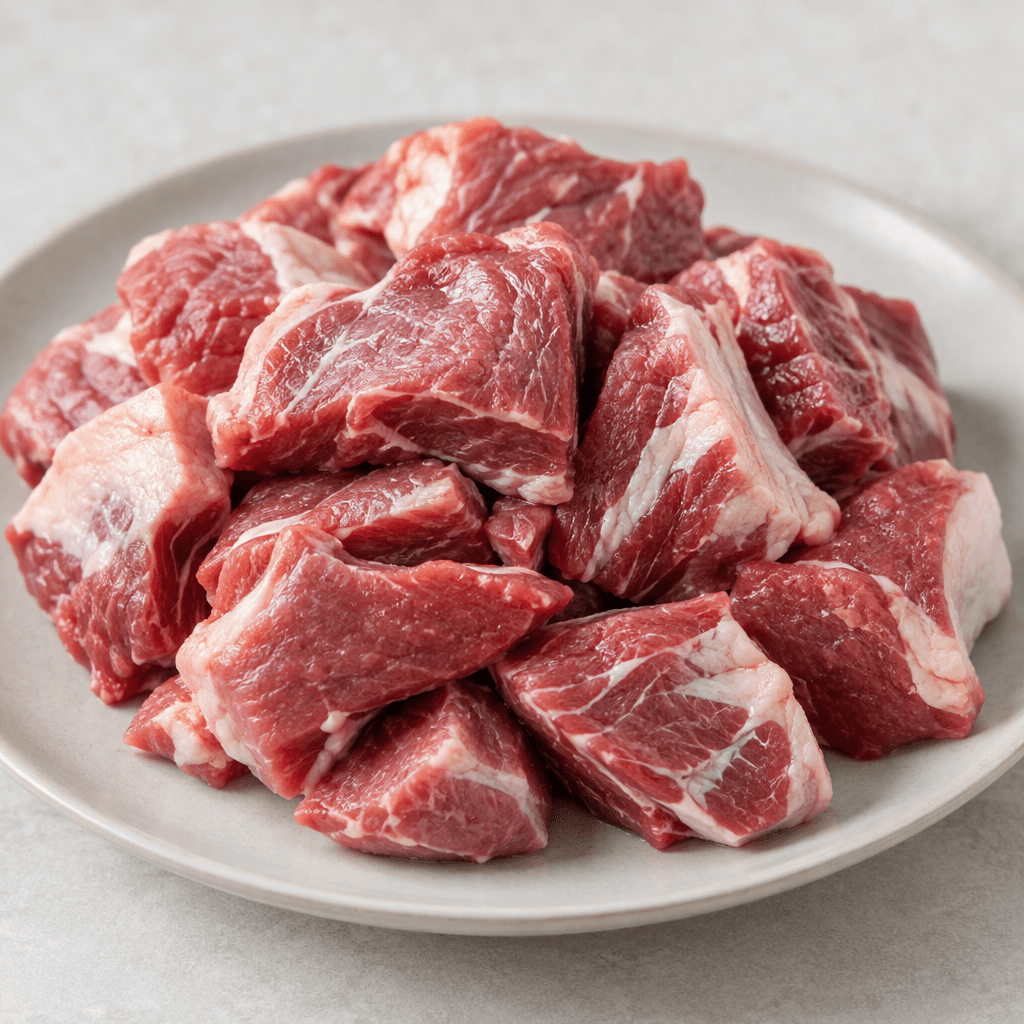
Lamb Meat Calories
Rich in iron and zinc, high-quality protein source
In season: Spring · Summer · Autumn · Winter
CALORIES
GI
POTASSIUM
FIBER
Quick answer
1 piece (medium) of Lamb Meat (120 g) has 300 calories. That works out to 250 calories per 100 g. It contains 0 g of carbs, 30.7 g of protein, 21.1 g of fat and 0 g of fiber. Its 2.8 µg of B12 covers 115% of the Daily Value. Its glycemic index is 0 (low), so it raises blood sugar slowly.
What is Lamb Meat?
Lamb meat comes from young sheep and is sold in cuts ranging from chops and leg to diced pieces and mince. Its flavour is fuller than that of many other meats, while tenderness and fat content depend on the cut.
Across the regions where lamb is traditional, it may be grilled, roasted, braised or cooked slowly in stews; in Turkey, kebabs and oven-baked dishes are familiar ways to serve it. It pairs well with roasted vegetables, herbs, grains or a fresh salad. Lamb is a protein-rich choice and provides iron and zinc. For a lighter plate, trim visible fat and serve a moderate portion with plenty of vegetables.
Lamb Meat Nutrition Facts
Selected: 100 g
250
KCAL / 100G
Carbs
0g
· 0% DV
Protein
25.6g
· 51% DV
Fat
17.6g
· 23% DV
Fiber
0g
· 0% DV
DV is the share of the daily value covered, on a 2,000 kcal reference diet.
Calories come from: Carbs 0% · Protein 39% · Fat 61%
Lamb Meat Vitamins & Minerals
Vitamins
B12
2.3µg · 96% DV
B3
6.5mg · 41% DV
B2
0.23mg · 18% DV
B5
0.7mg · 14% DV
Minerals
Zinc
4mg · 36% DV
Phosphorus
180mg · 26% DV
Selenium
10µg · 18% DV
Iron
2mg · 11% DV
How Nutritious Is Lamb Meat?
Nutrient density
High
How many vitamins, minerals and how much fiber this food carries per calorie. A high score means a lot of nutrition for few calories.
Satiety score
Medium
An EatBetter score computed from fiber, protein and calorie density. A high score means staying full longer on the same calories.
Both scores are calculated per 100 g and do not change with the selected portion. The satiety score is EatBetter's own calculation, not a clinical measure.
Lamb Meat Glycemic Index
GLYCEMIC INDEX
GLYCEMIC LOAD
Accounts for portion size — a more realistic measure than GI alone.
How to Burn Off Lamb Meat
To burn the 250 calories in 100 g:
🚶
Walking (5 km/h)
🏃
Running (8 km/h)
🚴
Cycling
🏊
Swimming
Times are calculated with the MET equation for a 70 kg adult. Actual burn varies with your weight, age and pace.
Is Lamb Meat Processed?
NOVA 1
Unprocessed
1. Unprocessed
2. Minimally Processed
3. Processed
4. Ultra-Processed
NOVA classifies foods into 4 groups by industrial processing. NOVA 1 (unprocessed) is the healthiest.
Does Lamb Meat Contain Allergens?
No known major allergens
Which Diets Is Lamb Meat Good For?
Vegan
— Not suitable
Vegetarian
— Not suitable
Gluten-Free
✓ Suitable
Dairy-Free
— Not suitable
Mediterranean
✓ Suitable
Paleo
✓ Suitable
Whole30
— Not suitable
DASH
— Not suitable
Keto
✓ Suitable
Low FODMAP
— Not suitable
Lamb Meat Fat Profile
SATURATED
7.5g
MONOUNSATURATED
7g
POLYUNSATURATED
1g
Omega 6:3 ratio 1.7:1
Below the ideal 4:1 — a good omega balance.
Compare Lamb Meat
Foods Similar to Lamb Meat
Frequently Asked Questions About Lamb Meat
Is lamb meat the same as mutton?
No. Lamb meat comes from a young sheep, while mutton comes from an older sheep. Mutton usually has a stronger flavor and firmer texture, so recipes may need a longer, slower cooking method than those made with lamb.
Can lamb meat be eaten pink?
Yes, whole cuts of lamb meat can be served pink if cooked safely. A food thermometer should read 145°F (63°C), followed by a three-minute rest; ground lamb needs more thorough cooking because bacteria can be mixed throughout.
Why does lamb meat taste gamey?
Lamb meat’s distinctive, sometimes gamey flavor comes partly from its natural fats and aroma compounds. Trimming excess fat and using herbs such as rosemary, mint, or garlic can make that flavor milder without masking the meat completely.
Which cut of lamb meat is best for roasting?
A leg of lamb is a popular choice for roasting because it cooks evenly as a large joint and is easy to carve. Shoulder is richer and benefits from slower cooking, while rack of lamb is suited to a shorter, more delicate roast.
What herbs go well with lamb meat?
Rosemary, mint, thyme, and oregano pair especially well with lamb meat. Garlic, lemon, and black pepper also complement its rich flavor; use mint in a sauce or garnish rather than relying on it as the only seasoning.
How long does raw lamb meat last in the refrigerator?
Raw lamb meat generally keeps for 1–2 days in a refrigerator set at 40°F (4°C) or below. Store it in a sealed container on the lowest shelf to prevent drips from reaching other foods, and freeze it if you will not cook it in time.
Can lamb meat be frozen after cooking?
Yes, cooked lamb meat can be frozen. Cool it promptly, divide it into meal-sized portions, and seal it well to limit freezer burn. Thaw portions in the refrigerator and reheat them until steaming hot throughout.
Should you wash lamb meat before cooking it?
No, washing lamb meat is not recommended. Water can splash bacteria from raw meat onto the sink, counters, and nearby food. Pat the surface dry with a paper towel if needed, then wash your hands and clean any surfaces the raw meat touched.
How do you keep lamb meat from drying out on the grill?
Choose cuts suited to grilling, such as chops, and avoid leaving them over intense heat for too long. Turning them as needed and letting the cooked meat rest before serving helps retain moisture; slow-cooking tougher cuts works better than grilling them quickly.
What is the best way to thaw lamb meat?
The safest way to thaw lamb meat is in the refrigerator, ideally in a container that catches any drips. For faster thawing, seal it in a leakproof bag and submerge it in cold water, changing the water regularly; cook it promptly afterward.
Have another question about Lamb Meat?
Ask the AI nutrition coach — calories, portions, alternatives and more, answered in seconds in the app.

Scan calories with your camera
Instant AI nutrition analysis

Nutrition data compiled from USDA FoodData Central and scientific sources.