

Ready & Packaged Foods
All →Vegetables & Legumes
All →Desserts & Confectionery
All →Meat & Protein
All →Grains & Bakery
All →Beverages
All →Milk & Dairy
All →

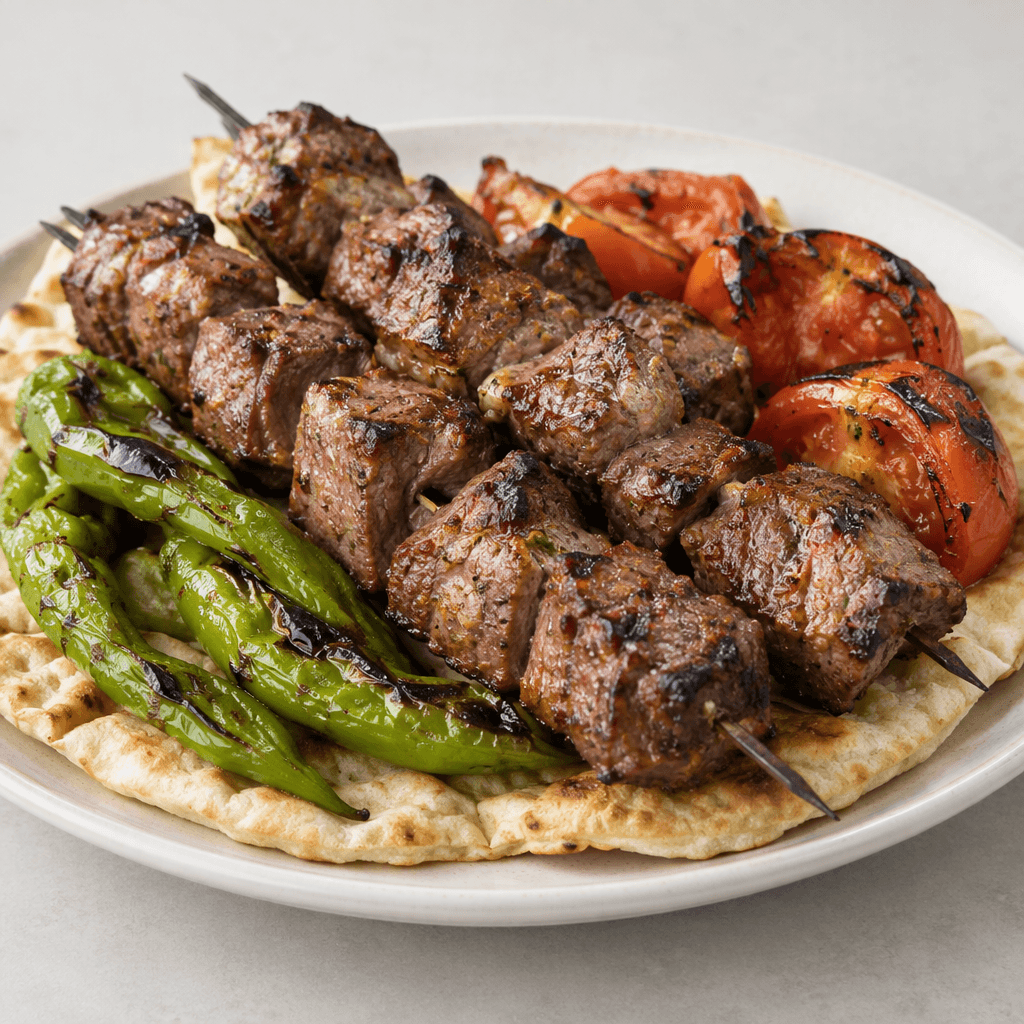
Lamb Kebab Calories
Grilled lamb meat, source of protein and iron, popular in Mediterranean and Middle Eastern cuisine
In season: Spring · Summer · Autumn · Winter
CALORIES
GI
POTASSIUM
FIBER
Quick answer
1 piece (medium) of Lamb Kebab (120 g) has 264 calories. That works out to 220 calories per 100 g. It contains 1.4 g of carbs, 27 g of protein, 17.4 g of fat and 0 g of fiber. Its 2.5 µg of B12 covers 105% of the Daily Value. Its glycemic index is 0 (low), so it raises blood sugar slowly.
What is Lamb Kebab?
Lamb kebab is made from pieces of lamb threaded onto skewers and grilled, a style of cooking found across Turkey and the wider Middle East. Seasoning and marinades vary: some versions rely on little more than salt, while others use herbs or spices to complement the meat.
The browned, lightly charred edges contrast with a tender centre. It is often served with grilled peppers and tomatoes, flatbread, and a fresh salad; you can eat it from the skewer or wrap the pieces in bread. Across English-speaking countries, it also appears on restaurant plates with rice or other sides.
Lamb kebab is a protein-rich, filling main. For a lighter meal, pair it with plenty of salad or grilled vegetables and keep rich sauces modest.
Lamb Kebab Nutrition Facts
Selected: 100 g
220
KCAL / 100G
Carbs
1.2g
· 0% DV
Protein
22.5g
· 45% DV
Fat
14.5g
· 19% DV
Fiber
0g
· 0% DV
DV is the share of the daily value covered, on a 2,000 kcal reference diet.
Calories come from: Carbs 2% · Protein 40% · Fat 58%
Lamb Kebab Vitamins & Minerals
Vitamins
B12
2.1µg · 88% DV
B3
5.5mg · 34% DV
B2
0.22mg · 17% DV
B5
0.8mg · 16% DV
Minerals
Zinc
4mg · 36% DV
Phosphorus
190mg · 27% DV
Selenium
8.5µg · 15% DV
Iron
2mg · 11% DV
How Nutritious Is Lamb Kebab?
Nutrient density
High
How many vitamins, minerals and how much fiber this food carries per calorie. A high score means a lot of nutrition for few calories.
Satiety score
Medium
An EatBetter score computed from fiber, protein and calorie density. A high score means staying full longer on the same calories.
Both scores are calculated per 100 g and do not change with the selected portion. The satiety score is EatBetter's own calculation, not a clinical measure.
Lamb Kebab Glycemic Index
GLYCEMIC INDEX
GLYCEMIC LOAD
Accounts for portion size — a more realistic measure than GI alone.
How to Burn Off Lamb Kebab
To burn the 220 calories in 100 g:
🚶
Walking (5 km/h)
🏃
Running (8 km/h)
🚴
Cycling
🏊
Swimming
Times are calculated with the MET equation for a 70 kg adult. Actual burn varies with your weight, age and pace.
Is Lamb Kebab Processed?
NOVA 2
Minimally Processed
1. Unprocessed
2. Minimally Processed
3. Processed
4. Ultra-Processed
NOVA classifies foods into 4 groups by industrial processing. NOVA 1 (unprocessed) is the healthiest.
Does Lamb Kebab Contain Allergens?
No known major allergens
Which Diets Is Lamb Kebab Good For?
Vegan
— Not suitable
Vegetarian
— Not suitable
Gluten-Free
✓ Suitable
Dairy-Free
— Not suitable
Mediterranean
✓ Suitable
Paleo
✓ Suitable
Whole30
— Not suitable
DASH
— Not suitable
Keto
✓ Suitable
Low FODMAP
— Not suitable
Lamb Kebab Fat Profile
SATURATED
6.2g
MONOUNSATURATED
5.2g
POLYUNSATURATED
1.1g
Omega 6:3 ratio 2.8:1
Below the ideal 4:1 — a good omega balance.
Compare Lamb Kebab
Foods Similar to Lamb Kebab
Frequently Asked Questions About Lamb Kebab
What is lamb kebab made of?
Lamb kebab is typically made with chunks of lamb threaded onto skewers and grilled. The pieces may be seasoned or marinated, and versions vary by region; it is often served with grilled vegetables, flatbread, or rice.
How do you make lamb kebab at home?
Cut boneless lamb into evenly sized chunks, season or marinate them, and thread them onto skewers. Grill over high heat, turning the skewers so the meat browns on all sides without staying on the heat long enough to dry out.
What cut of lamb is best for lamb kebabs?
Boneless leg is a leaner choice for lamb kebabs, while shoulder has more fat and a richer flavor. Choose pieces with some fat rather than trimming them completely, and cut the meat evenly so the chunks cook at a similar pace.
How do you marinate lamb kebabs?
A simple lamb kebab marinade can combine olive oil, lemon juice, garlic, and spices such as cumin or paprika. Keep the meat covered in the refrigerator while it marinates, then drain excess liquid before grilling so the chunks brown instead of steam.
How do you keep lamb kebabs tender?
To keep lamb kebabs tender, use evenly cut pieces with some fat and avoid overcooking them. Grill over a hot fire, turn the skewers as the surfaces brown, and let the meat rest briefly before serving.
Why does lamb kebab fall off the skewer?
Lamb kebab can fall off when the chunks are too small, wet, or loosely threaded. Cut pieces large enough to stay on the skewer, drain off excess marinade, and arrange the chunks close together without leaving big gaps.
Can you cook lamb kebabs in the oven?
Yes, lamb kebabs can be cooked in an oven if grilling is not an option. Place the skewers on a suitable tray under a hot oven or grill setting, turn them during cooking, and watch closely to prevent the lamb from drying out.
What is the difference between lamb kebab and lamb kofta?
Lamb kebab usually means pieces of lamb cooked on skewers, while lamb kofta is made from ground lamb mixed with seasonings and shaped around a skewer or into patties. The texture and cooking time differ because kofta is minced rather than cubed meat.
What should you serve with lamb kebab?
Lamb kebab pairs well with flatbread, grilled tomatoes and peppers, and a fresh salad. Yogurt-based sauces or a lemony onion salad can balance the rich grilled lamb; rice or bulgur makes the meal more substantial.
How long can cooked lamb kebab stay in the fridge?
Store cooked lamb kebab in a covered container in the refrigerator and eat it within three to four days. Reheat only the portion you plan to eat, making sure it is hot throughout, since repeated reheating can dry out the meat.
Have another question about Lamb Kebab?
Ask the AI nutrition coach — calories, portions, alternatives and more, answered in seconds in the app.

Scan calories with your camera
Instant AI nutrition analysis

Nutrition data compiled from USDA FoodData Central and scientific sources.