

Ready & Packaged Foods
All →Vegetables & Legumes
All →Desserts & Confectionery
All →Meat & Protein
All →Grains & Bakery
All →Beverages
All →Milk & Dairy
All →

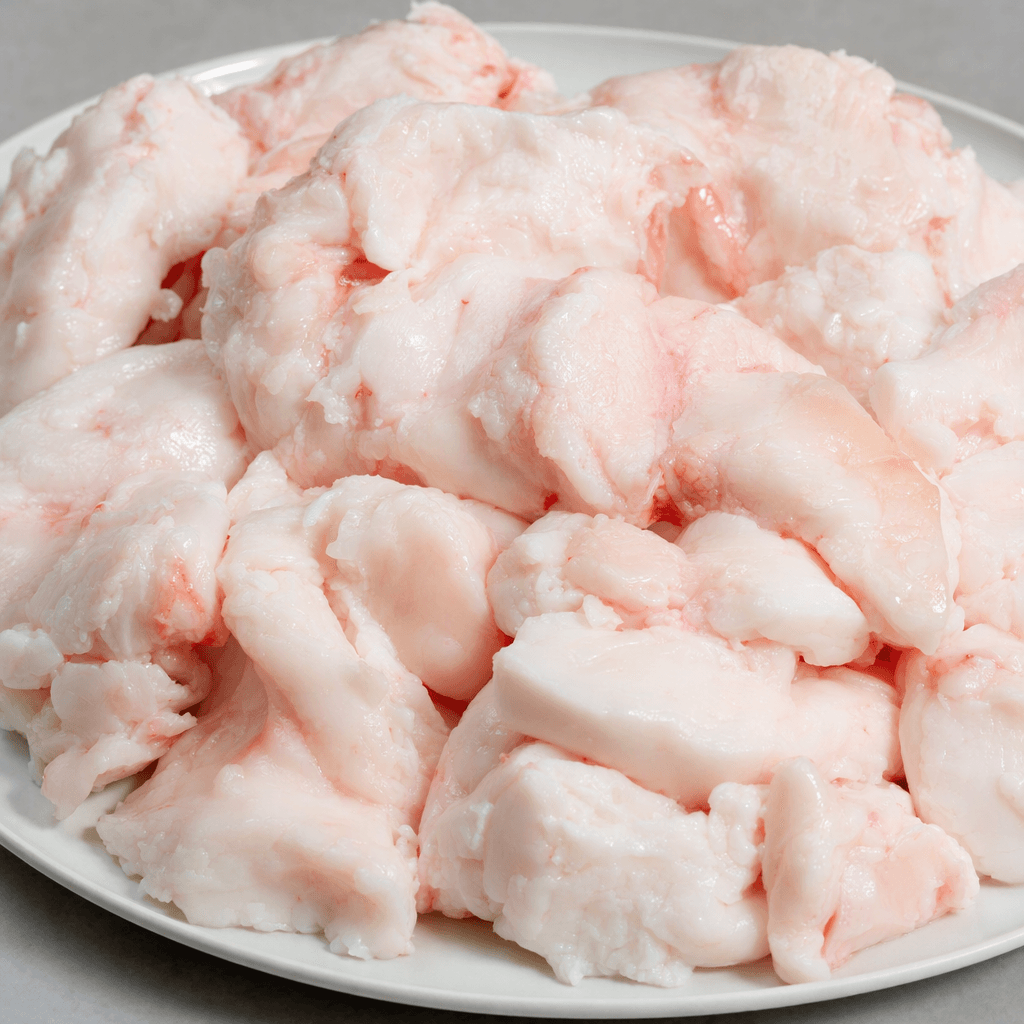
Lamb internal fat Calories
Lamb internal fat is high in saturated fat and energy, low in vitamins and minerals.
In season: Spring · Summer · Autumn · Winter
CALORIES · 100 G
GI
POTASSIUM · 100 G
FIBER · 100 G
Quick answer
1 tablespoon (medium) of Lamb internal fat (14 g) has 126 calories. That works out to 900 calories per 100 g. It contains 0 g of carbs, 0.1 g of protein, 13.9 g of fat and 0 g of fiber. Its glycemic index is 0 (low), so it raises blood sugar slowly.
Lamb internal fat Nutrition Facts
Selected: 1 tablespoon (medium) · 14 g
126
KCAL / 14G
Carbs
0g
· 0% DV
Protein
0.1g
· 0% DV
Fat
13.9g
· 18% DV
Fiber
0g
· 0% DV
DV is the share of the daily value covered, on a 2,000 kcal reference diet.
Calories come from: Carbs 0% · Protein 0% · Fat 100%
Lamb internal fat nutrition facts table · 1 tablespoon (medium) (14 g)
| Nutrient | Amount | % DV |
|---|---|---|
| Calories | 126 kcal | |
| Total fat | 13.9 g | 18% |
| Saturated fat | 6.72 g | 34% |
| Trans fat | 0.42 g | |
| Sodium | 1.4 mg | 0% |
| Total carbohydrate | 0 g | 0% |
| Fiber | 0 g | 0% |
| Protein | 0.1 g | 0% |
Calories: Calories measure energy. Average daily need is 2,000 kcal. Excess calories are stored as fat, too few cause weight loss.
Carbs: Your body's primary energy source. The brain runs exclusively on carbs. Daily need: 275g.
Protein: Essential for muscle repair and cell growth. Daily need: 50g. Keeps you full and boosts metabolism.
Fat: Needed for hormone production and vitamin absorption. Daily need: 78g. Limit saturated fats, choose unsaturated.
Fiber: Critical for digestive health and satiety. Daily need: 28g. Stabilizes blood sugar, lowers cholesterol.

Log this food in EatBetter
100,000+ people use it
- Get your daily calorie target
- Snap your meal, log it in seconds
- See every vitamin and mineral

📸 Scan the code to get the app free.

How Many Calories in 1 Tablespoon of Lamb internal fat?
| Serving | Amount | Calories |
|---|---|---|
| 1 tablespoon (medium) | 14 g | 126 kcal |
| 1 teaspoon (medium) | 5 g | 45 kcal |
| 1 tablespoon (small) | 10 g | 90 kcal |
| 1 tablespoon (large) | 20 g | 180 kcal |
| 1 piece (small) | 30 g | 270 kcal |
| 1 piece (medium) | 50 g | 450 kcal |
| 100 g | 100 g | 900 kcal |
| 1 piece (large) | 100 g | 900 kcal |
| 1 cup (medium) | 200 g | 1800 kcal |
Calculated from 900 calories per 100 g.
Frequently Asked Questions About Lamb internal fat
What is lamb internal fat?
Lamb internal fat is the fat found around a lamb’s internal organs. It is different from fat taken from the tail and is commonly melted down for cooking or added in small amounts to traditional meat dishes.
How do you render lamb internal fat?
Render lamb internal fat slowly over low heat. Cut it into small pieces and let the fat melt gradually; strain out the browned solids once the liquid fat has separated. This simple home method keeps processing to a minimum.
What is the difference between lamb internal fat and lamb tail fat?
Lamb internal fat comes from around the organs, while lamb tail fat comes from the tail. They are not interchangeable in every recipe: their flavour and texture differ, and tail fat is especially associated with dishes that use it as a defining ingredient.
How do you cook with lamb internal fat?
Use lamb internal fat sparingly in savoury cooking, especially meat dishes, where its strong, savoury flavour fits well. You can render it first or add small pieces to a slow-cooked dish so the fat melts as it cooks.
Does lamb internal fat have a strong smell?
Yes, lamb internal fat can have a noticeable meaty smell as it melts and cooks. Trim away unwanted tissue, render it slowly, and use a modest amount; these steps help keep its aroma from overpowering the rest of the dish.
Can you use lamb internal fat instead of butter or cooking oil?
Sometimes, but lamb internal fat gives food a distinct savoury flavour that butter and neutral cooking oils do not. It works better in meat dishes than in baking or recipes where a mild-tasting fat is important.
How should lamb internal fat be stored?
Keep raw lamb internal fat covered in the refrigerator and separate from ready-to-eat foods. Store rendered fat in a clean, sealed container. Discard it if it develops an off smell, visible mould, or another clear sign of spoilage.
Can you freeze lamb internal fat?
Yes, lamb internal fat freezes well. Divide it into portions, seal them in freezer-safe packaging, and thaw only what you need in the refrigerator. Avoid thawing and refreezing the same portion.
Is lamb internal fat bad for your heart?
Lamb internal fat is very high in saturated fat, so using it frequently or in large amounts can make it harder to keep saturated fat intake low. Use it sparingly and choose unsaturated oils more often for everyday cooking.
Can lamb internal fat be used for high-heat cooking?
Lamb internal fat can be used for cooking, but avoid letting it smoke or darken, which can happen if it overheats. Render it gently first, then use moderate heat and lower the temperature if it begins to smoke.
Lamb internal fat Vitamins & Minerals
Vitamins
B12
0.01µg · 0% DV
Vitamin E
0.07mg · 0% DV
Vitamin D
0.07µg · 0% DV
Vitamin K
0.42µg · 0% DV
Minerals
Iron
0.03mg · 0% DV
Copper
0mg · 0% DV
Zinc
0.01mg · 0% DV
Selenium
0.07µg · 0% DV
Sodium
1.4mg · 0% DV
Potassium ⭐
0.7mg · 0% DV
Lamb internal fat Glycemic Index
GLYCEMIC INDEX
GLYCEMIC LOAD
Accounts for portion size — a more realistic measure than GI alone.
How to Burn Off Lamb internal fat
To burn the 126 calories in 1 tablespoon (medium) (14 g):
🚶
Walking (5 km/h)
🏃
Running (8 km/h)
🚴
Cycling
🏊
Swimming
Times are calculated with the MET equation for a 70 kg adult. Actual burn varies with your weight, age and pace.
What is Lamb internal fat?
Lamb internal fat is the fatty tissue found around a lamb’s organs and in the abdominal cavity. It can be chopped into dishes or gently melted and strained into cooking fat. In cuisines where lamb is a staple, it is used to enrich meat dishes, rice and other savoury recipes with a distinctive, full-bodied flavour.
When heated, it softens and releases a rich lamb aroma; a little can make a dish taste noticeably more substantial. It is almost entirely fat and provides a great deal of energy, with very little protein or carbohydrate. Since its flavour is pronounced, start with a small amount, or combine it with leaner meat for a less heavy result.
How Nutritious Is Lamb internal fat?
Nutrient density
Low
How many vitamins, minerals and how much fiber this food carries per calorie. A high score means a lot of nutrition for few calories.
Satiety score
Low
An EatBetter score computed from fiber, protein and calorie density. A high score means staying full longer on the same calories.
Both scores are calculated per 100 g and do not change with the selected portion. The satiety score is EatBetter's own calculation, not a clinical measure.
Is Lamb internal fat Processed?
NOVA 2
Minimally Processed
1. Unprocessed
2. Minimally Processed
3. Processed
4. Ultra-Processed
NOVA classifies foods into 4 groups by industrial processing. NOVA 1 (unprocessed) is the healthiest.
Does Lamb internal fat Contain Allergens?
No known major allergens
Which Diets Is Lamb internal fat Good For?
Vegan
— Not suitable
Vegetarian
— Not suitable
Gluten-Free
✓ Suitable
Dairy-Free
— Not suitable
Mediterranean
✓ Suitable
Paleo
✓ Suitable
Whole30
— Not suitable
DASH
— Not suitable
Keto
✓ Suitable
Low FODMAP
— Not suitable
Lamb internal fat Fat Profile
SATURATED
6.72g
MONOUNSATURATED
5.88g
POLYUNSATURATED
0.35g
Omega 6:3 ratio 2.3:1
Below the ideal 4:1 — a good omega balance.
Compare Lamb internal fat
Foods Similar to Lamb internal fat
Have another question about Lamb internal fat?
Ask the AI nutrition coach — calories, portions, alternatives and more, answered in seconds in the app.

Scan calories with your camera
Instant AI nutrition analysis

Nutrition data compiled from USDA FoodData Central and scientific sources.