

Ready & Packaged Foods
All →Vegetables & Legumes
All →Desserts & Confectionery
All →Meat & Protein
All →Grains & Bakery
All →Beverages
All →Milk & Dairy
All →

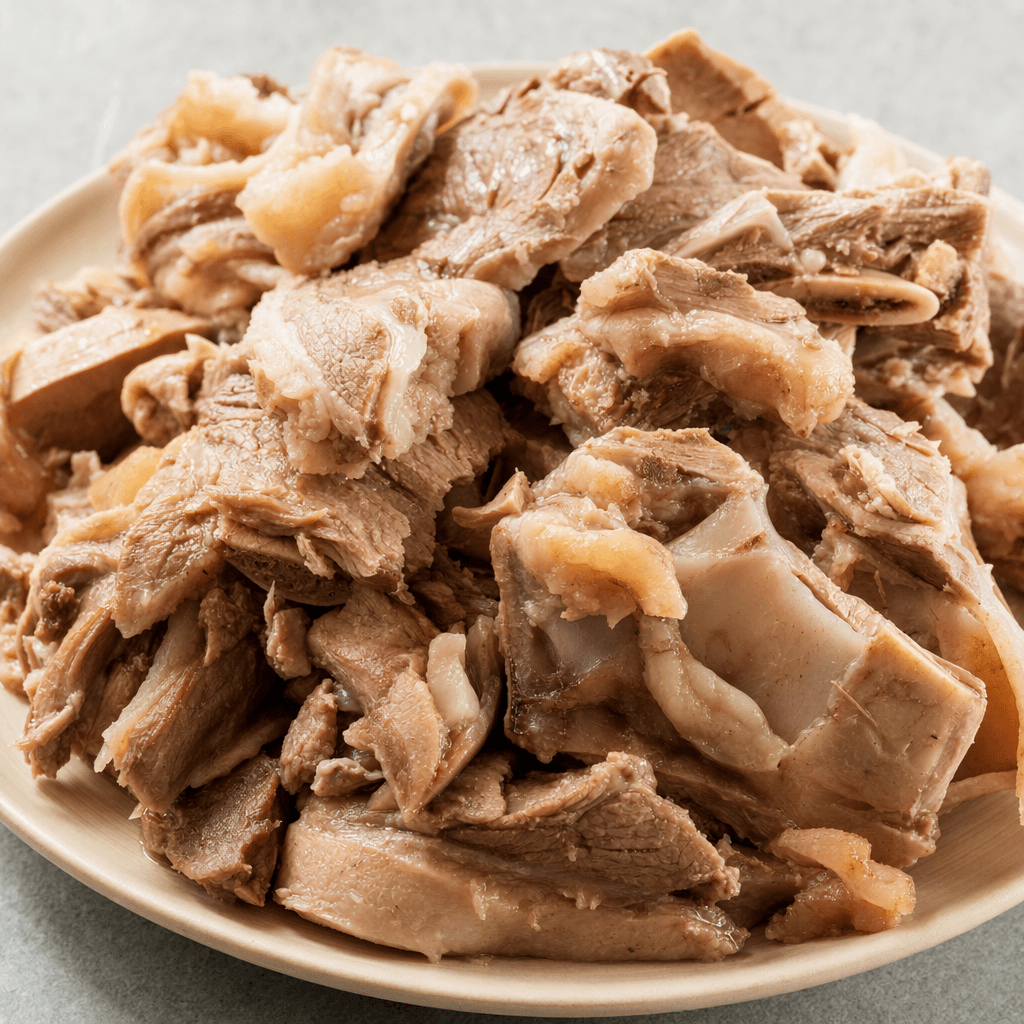
Lamb head meat Calories
Rich in collagen and B vitamins
CALORIES · 100 G
GI
POTASSIUM · 100 G
FIBER · 100 G
Quick answer
1 serving (medium) of Lamb head meat (120 g) has 257 calories. That works out to 214 calories per 100 g. It contains 0 g of carbs, 25 g of protein, 17.5 g of fat and 0 g of fiber. Its 2.9 µg of B12 covers 120% of the Daily Value. Its glycemic index is 0 (low), so it raises blood sugar slowly.
Lamb head meat Nutrition Facts
Selected: 1 serving (medium) · 120 g
257
KCAL / 120G
Carbs
0g
· 0% DV
Protein
25g
· 50% DV
Fat
17.5g
· 22% DV
Fiber
0g
· 0% DV
DV is the share of the daily value covered, on a 2,000 kcal reference diet.
Calories come from: Carbs 0% · Protein 39% · Fat 61%
Lamb head meat nutrition facts table · 1 serving (medium) (120 g)
| Nutrient | Amount | % DV |
|---|---|---|
| Calories | 257 kcal | |
| Total fat | 17.5 g | 22% |
| Saturated fat | 6.12 g | 31% |
| Trans fat | 0.22 g | |
| Sodium | 86 mg | 4% |
| Total carbohydrate | 0 g | 0% |
| Fiber | 0 g | 0% |
| Protein | 25 g | 50% |
Calories: Calories measure energy. Average daily need is 2,000 kcal. Excess calories are stored as fat, too few cause weight loss.
Carbs: Your body's primary energy source. The brain runs exclusively on carbs. Daily need: 275g.
Protein: Essential for muscle repair and cell growth. Daily need: 50g. Keeps you full and boosts metabolism.
Fat: Needed for hormone production and vitamin absorption. Daily need: 78g. Limit saturated fats, choose unsaturated.
Fiber: Critical for digestive health and satiety. Daily need: 28g. Stabilizes blood sugar, lowers cholesterol.

Log this food in EatBetter
100,000+ people use it
- Get your daily calorie target
- Snap your meal, log it in seconds
- See every vitamin and mineral

📸 Scan the code to get the app free.

How Many Calories in 1 Serving of Lamb head meat?
| Serving | Amount | Calories |
|---|---|---|
| 1 serving (medium) | 120 g | 257 kcal |
| 1 ounce (small) | 28 g | 60 kcal |
| 1 piece (small) | 45 g | 96 kcal |
| 1 piece (medium) | 75 g | 161 kcal |
| 100 g | 100 g | 214 kcal |
| 1 piece (large) | 110 g | 235 kcal |
| 1 cup (chopped) | 140 g | 300 kcal |
| 1 cup (diced) | 155 g | 332 kcal |
| 1 serving (large) | 180 g | 385 kcal |
Calculated from 214 calories per 100 g.
Frequently Asked Questions About Lamb head meat
What parts are included in lamb head meat?
Lamb head meat mainly refers to the meat from the cheeks and jaw. A whole prepared head may also include the tongue or brain, so ask the butcher which parts are included before buying or cooking it.
How do you cook lamb head meat?
Lamb head meat is commonly simmered until tender, then removed from the bones. You can serve the meat on its own, use it in soup, or season it for sandwiches; a pressure cooker can shorten the cooking process.
How do you clean lamb head meat before cooking?
Have the butcher remove any hair and clean the head thoroughly if possible. At home, trim visible residue rather than rinsing raw lamb head meat under running water, which can spread bacteria through splashes; clean utensils and surfaces afterward.
What does lamb head meat taste like?
Lamb head meat has a rich, savory lamb flavor, with especially tender, fatty meat around the cheeks. The tongue and other included parts have their own textures, so the taste and richness vary depending on which pieces you eat.
Can you roast lamb head meat?
Yes, lamb head meat can be roasted. For tender meat, simmer it first and roast the deboned pieces briefly to brown them; roasting a whole head takes longer and requires careful preparation to ensure the meat cooks through.
How do you eat lamb head meat?
Lamb head meat is usually eaten after cooking and removing it from the bones. Slice the cheek meat and tongue, then serve them warm or cold with bread, herbs, lemon, or a sauce; avoid eating any part that has not been fully cooked.
How long does lamb head meat last in the refrigerator?
Keep raw lamb head meat refrigerated and cook it as soon as possible. Cooked leftovers can generally be kept in a sealed container for 3–4 days; discard the meat if it has been left at room temperature for too long.
Can you freeze lamb head meat?
Yes, lamb head meat freezes well when wrapped airtight. Freeze it raw or cooked, and thaw it in the refrigerator before reheating or cooking; do not refreeze meat after it has thawed.
Is lamb head meat used in soup?
Yes, lamb head meat is used in soups and broths, including head-and-feet soups in some food traditions. Simmering the head with aromatics makes the meat tender; remove the bones and strain the broth before serving.
Does lamb head meat contain collagen?
Yes, lamb head meat contains collagen, particularly in connective tissue around the cheeks and head. Slow cooking softens that tissue and can make the meat tender and the cooking liquid gelatinous, but collagen in food is not a treatment for a health condition.
Lamb head meat Vitamins & Minerals
Vitamins
B12
2.88µg · 120% DV
B3
4.92mg · 31% DV
B2
0.26mg · 20% DV
B5
0.9mg · 18% DV
Minerals
Selenium
20µg · 36% DV
Zinc
3.84mg · 35% DV
Phosphorus
216mg · 31% DV
Copper
0.17mg · 19% DV
Potassium ⭐
342mg · 10% DV
Sodium
86mg · 4% DV
Lamb head meat Glycemic Index
GLYCEMIC INDEX
GLYCEMIC LOAD
Accounts for portion size — a more realistic measure than GI alone.
How to Burn Off Lamb head meat
To burn the 257 calories in 1 serving (medium) (120 g):
🚶
Walking (5 km/h)
🏃
Running (8 km/h)
🚴
Cycling
🏊
Swimming
Times are calculated with the MET equation for a 70 kg adult. Actual burn varies with your weight, age and pace.
What is Lamb head meat?
Lamb head meat comes from the edible parts of a lamb’s head, particularly the cheeks. It is usually slow-cooked until tender, then served sliced or used in a broth. In Turkey, it is a familiar choice for söğüş: chilled or warm slices seasoned with cumin, sumac and chilli, often tucked into flatbread. It may also be served hot in kelle paça soup.
The meat is savoury and tender after cooking, with a soft, slightly gelatinous texture. It is protein-rich, but also fairly substantial in fat. For a lighter meal, pair it with fresh salad and lemon, or choose a modest portion alongside vegetables.
How Nutritious Is Lamb head meat?
Nutrient density
High
How many vitamins, minerals and how much fiber this food carries per calorie. A high score means a lot of nutrition for few calories.
Satiety score
Medium
An EatBetter score computed from fiber, protein and calorie density. A high score means staying full longer on the same calories.
Both scores are calculated per 100 g and do not change with the selected portion. The satiety score is EatBetter's own calculation, not a clinical measure.
Is Lamb head meat Processed?
NOVA 2
Minimally Processed
1. Unprocessed
2. Minimally Processed
3. Processed
4. Ultra-Processed
NOVA classifies foods into 4 groups by industrial processing. NOVA 1 (unprocessed) is the healthiest.
Does Lamb head meat Contain Allergens?
No known major allergens
Which Diets Is Lamb head meat Good For?
Vegan
— Not suitable
Vegetarian
— Not suitable
Gluten-Free
✓ Suitable
Dairy-Free
— Not suitable
Mediterranean
✓ Suitable
Paleo
✓ Suitable
Whole30
— Not suitable
DASH
— Not suitable
Keto
✓ Suitable
Low FODMAP
— Not suitable
Lamb head meat Fat Profile
SATURATED
6.12g
MONOUNSATURATED
7.44g
POLYUNSATURATED
0.84g
Omega 6:3 ratio 3.6:1
Below the ideal 4:1 — a good omega balance.
Compare Lamb head meat
Foods Similar to Lamb head meat
Have another question about Lamb head meat?
Ask the AI nutrition coach — calories, portions, alternatives and more, answered in seconds in the app.

Scan calories with your camera
Instant AI nutrition analysis

Nutrition data compiled from USDA FoodData Central and scientific sources.