

Ready & Packaged Foods
All →Vegetables & Legumes
All →Desserts & Confectionery
All →Meat & Protein
All →Grains & Bakery
All →Beverages
All →Milk & Dairy
All →

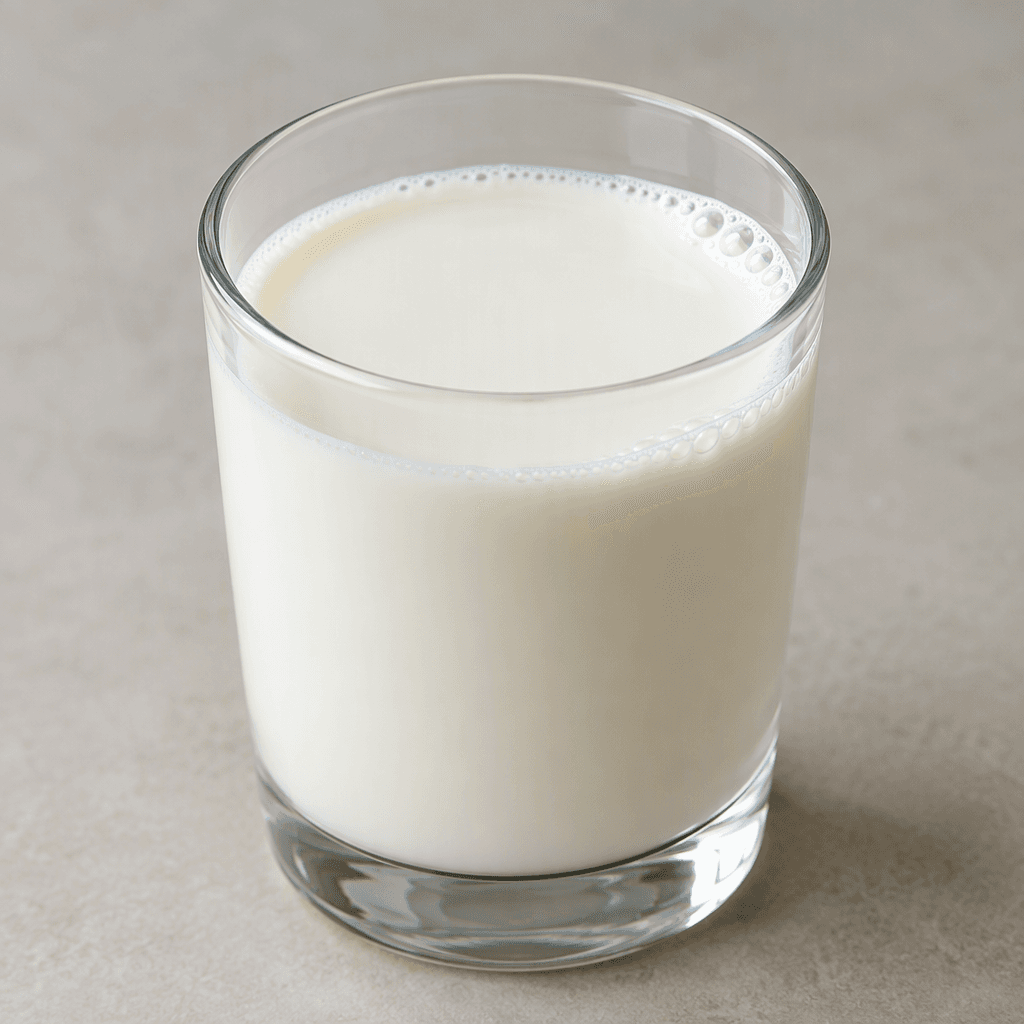
Lactose-free semi-skimmed milk Calories
Lactose-free, semi-skimmed, milk
In season: Spring · Summer · Autumn · Winter
CALORIES
GI
POTASSIUM
FIBER
Quick answer
1 cup (medium) of Lactose-free semi-skimmed milk (240 g) has 110 calories. That works out to 46 calories per 100 g. It contains 11.5 g of carbs, 8.2 g of protein, 3.8 g of fat and 0 g of fiber. Its 1.1 µg of B12 covers 45% of the Daily Value. Its glycemic index is 46 (low), so it raises blood sugar slowly.
What is Lactose-free semi-skimmed milk?
Lactose-free semi-skimmed milk is cow’s milk with some of its fat removed and its lactose broken down, usually with the lactase enzyme. It pours and feels much like regular milk, though the simpler sugars can give it a subtly sweeter taste.
It works in cereal, porridge, coffee and tea, and can be used in sauces, soups or baking just like ordinary milk. With 3.4 g of protein per 100 g, it provides useful protein while being lower in fat than whole milk. It’s a practical choice for people avoiding lactose; use it as a direct substitute in most recipes.
Lactose-free semi-skimmed milk Nutrition Facts
Selected: 100 g
46
KCAL / 100G
Carbs
4.8g
· 2% DV
Protein
3.4g
· 7% DV
Fat
1.6g
· 2% DV
Fiber
0g
· 0% DV
DV is the share of the daily value covered, on a 2,000 kcal reference diet.
Calories come from: Carbs 41% · Protein 29% · Fat 30%

Log this food in EatBetter
100,000+ people use it
- Get your daily calorie target
- Snap your meal, log it in seconds
- See every vitamin and mineral

📸 Scan the code to get the app free.

Lactose-free semi-skimmed milk Vitamins & Minerals
Vitamins
B12
0.45µg · 19% DV
B2
0.18mg · 14% DV
Biotin
3.5µg · 12% DV
B5
0.36mg · 7% DV
Minerals
Phosphorus
95mg · 14% DV
Calcium
120mg · 12% DV
Iodine
16µg · 11% DV
Selenium
2.5µg · 5% DV
Potassium ⭐
150mg · 4% DV
How Nutritious Is Lactose-free semi-skimmed milk?
Nutrient density
High
How many vitamins, minerals and how much fiber this food carries per calorie. A high score means a lot of nutrition for few calories.
Satiety score
Medium
An EatBetter score computed from fiber, protein and calorie density. A high score means staying full longer on the same calories.
Both scores are calculated per 100 g and do not change with the selected portion. The satiety score is EatBetter's own calculation, not a clinical measure.
Lactose-free semi-skimmed milk Glycemic Index
GLYCEMIC INDEX
GLYCEMIC LOAD
Accounts for portion size — a more realistic measure than GI alone.
How to Burn Off Lactose-free semi-skimmed milk
To burn the 46 calories in 100 g:
🚶
Walking (5 km/h)
🏃
Running (8 km/h)
🚴
Cycling
🏊
Swimming
Times are calculated with the MET equation for a 70 kg adult. Actual burn varies with your weight, age and pace.
Is Lactose-free semi-skimmed milk Processed?
NOVA 3
Processed
1. Unprocessed
2. Minimally Processed
3. Processed
4. Ultra-Processed
NOVA classifies foods into 4 groups by industrial processing. NOVA 1 (unprocessed) is the healthiest.
Does Lactose-free semi-skimmed milk Contain Allergens?
Contains these allergens:
Which Diets Is Lactose-free semi-skimmed milk Good For?
Vegan
— Not suitable
Vegetarian
✓ Suitable
Gluten-Free
✓ Suitable
Dairy-Free
— Not suitable
Mediterranean
✓ Suitable
Paleo
— Not suitable
Whole30
— Not suitable
DASH
— Not suitable
Keto
— Not suitable
Low FODMAP
— Not suitable
Lactose-free semi-skimmed milk Fat Profile
SATURATED
1g
MONOUNSATURATED
0.4g
POLYUNSATURATED
0.1g
Omega 6:3 ratio 2:1
Below the ideal 4:1 — a good omega balance.
Compare Lactose-free semi-skimmed milk
Foods Similar to Lactose-free semi-skimmed milk
Frequently Asked Questions About Lactose-free semi-skimmed milk
Does lactose-free semi-skimmed milk taste different from regular milk?
Yes, lactose-free semi-skimmed milk often tastes sweeter than regular milk. The enzyme used to break lactose into simpler sugars makes the sweetness more noticeable, even when no sugar has been added.
How is lactose-free semi-skimmed milk made?
Lactose-free semi-skimmed milk is made by adding the enzyme lactase, which splits milk lactose into glucose and galactose. This removes the lactose-digestion issue for many people without changing what “semi-skimmed” means about its fat content.
Can you froth lactose-free semi-skimmed milk for coffee?
Yes, lactose-free semi-skimmed milk can be steamed or frothed for coffee. It may foam a little differently from whole milk, and its sweeter taste can come through in espresso drinks; avoid overheating it for a smoother result.
Can you bake with lactose-free semi-skimmed milk?
Yes, lactose-free semi-skimmed milk works in most baking recipes that call for regular milk. It can make the finished bake taste slightly sweeter, so consider that when a recipe relies on milk for a delicate, unsweetened flavour.
Can lactose-free semi-skimmed milk be frozen?
Yes, lactose-free semi-skimmed milk can be frozen, though it may separate or become grainy after thawing. Leave room in the container for expansion, thaw it in the refrigerator, then shake well; it is usually better for cooking than drinking afterward.
Can people with lactose intolerance drink lactose-free semi-skimmed milk?
Yes, many people with lactose intolerance can drink lactose-free semi-skimmed milk because its lactose has been broken down. It still contains cow’s-milk proteins, so it is not a safe substitute for anyone with a milk allergy.
Is lactose-free semi-skimmed milk safe for someone with a milk allergy?
No, lactose-free semi-skimmed milk is not safe for someone with a cow’s-milk allergy. Removing or breaking down lactose does not remove milk proteins, which are what trigger the allergy.
Does lactose-free semi-skimmed milk raise blood sugar?
Yes, lactose-free semi-skimmed milk still contains carbohydrates and can affect blood sugar. Breaking lactose into simpler sugars does not make the milk carbohydrate-free, so people managing diabetes should include it in their meal plan.
Does lactose-free semi-skimmed milk need to be refrigerated after opening?
Yes, refrigerate lactose-free semi-skimmed milk after opening and follow the carton’s storage and use-by instructions. Leaving it out for extended periods can allow bacteria to grow, even though the milk is lactose-free.
Can babies drink lactose-free semi-skimmed milk?
Lactose-free semi-skimmed milk should not replace breast milk or infant formula for babies under 12 months. Being lactose-free does not make it nutritionally equivalent to formula; ask a healthcare professional before changing an infant’s milk.
Have another question about Lactose-free semi-skimmed milk?
Ask the AI nutrition coach — calories, portions, alternatives and more, answered in seconds in the app.

Scan calories with your camera
Instant AI nutrition analysis

Nutrition data compiled from USDA FoodData Central and scientific sources.