

Ready & Packaged Foods
All →Vegetables & Legumes
All →Desserts & Confectionery
All →Meat & Protein
All →Grains & Bakery
All →Beverages
All →Milk & Dairy
All →

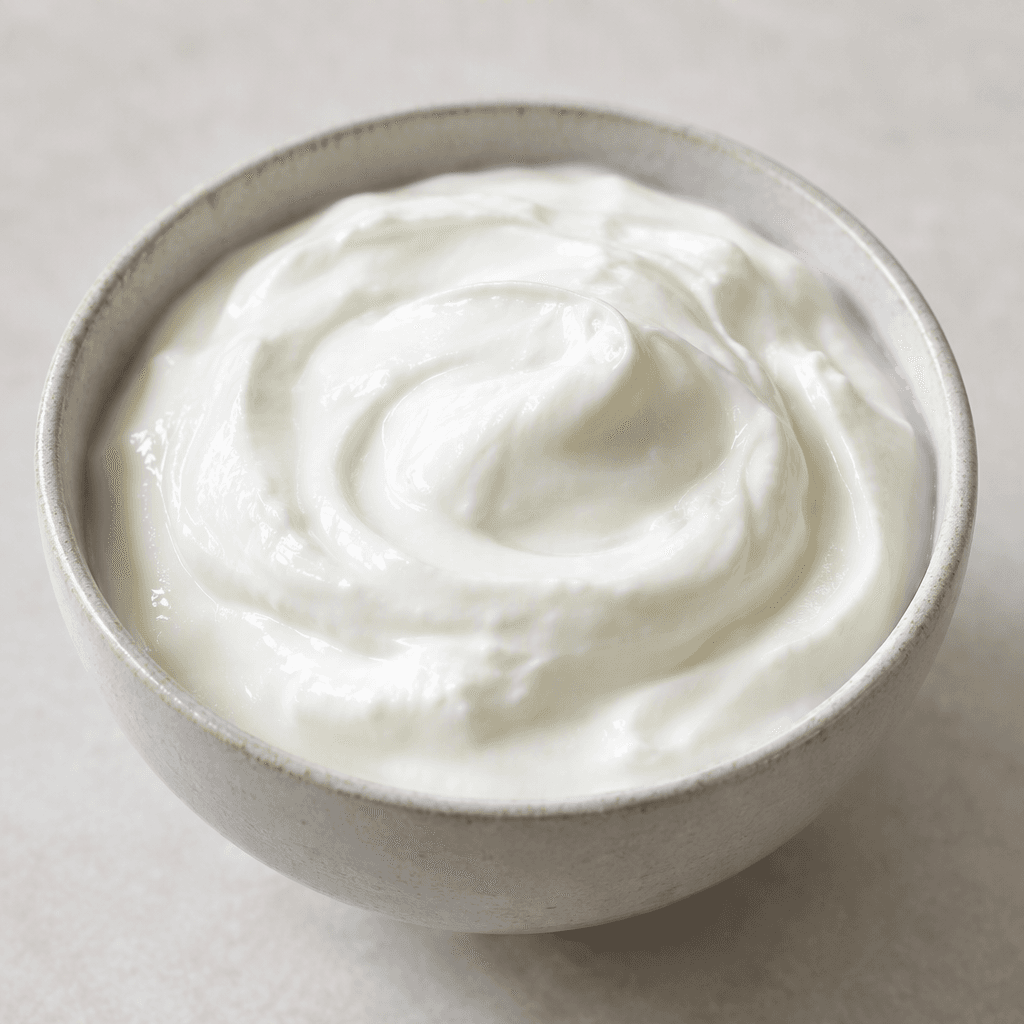
Lactose-free probiotic yogurt Calories
Lactose-free, probiotic, easy to digest, protein source
In season: Spring · Summer · Autumn · Winter
CALORIES
GI
POTASSIUM
FIBER
Quick answer
1 cup (medium) of Lactose-free probiotic yogurt (150 g) has 90 calories. That works out to 60 calories per 100 g. It contains 8.3 g of carbs, 6.8 g of protein, 3 g of fat and 0 g of fiber. Its 0.6 µg of B12 covers 25% of the Daily Value. Its glycemic index is 30 (low), so it raises blood sugar slowly.
What is Lactose-free probiotic yogurt?
Lactose-free probiotic yogurt is made from milk in which the lactose has been broken down, then fermented with yogurt cultures. It has a smooth, spoonable texture and a gently tangy taste; the specific cultures can vary by product. You’ll find it eaten plain or with fruit and cereal at breakfast, as a snack, or alongside meals in many places.
It provides protein, with 4.5 grams per 100 grams, and works well with berries, oats or nuts. Choose an unsweetened version if you want to keep added sugar low, and enjoy it cold or use it in dips and dressings.
Lactose-free probiotic yogurt Nutrition Facts
Selected: 100 g
60
KCAL / 100G
Carbs
5.5g
· 2% DV
Protein
4.5g
· 9% DV
Fat
2g
· 3% DV
Fiber
0g
· 0% DV
DV is the share of the daily value covered, on a 2,000 kcal reference diet.
Calories come from: Carbs 38% · Protein 31% · Fat 31%
Lactose-free probiotic yogurt Vitamins & Minerals
Vitamins
B12
0.4µg · 17% DV
B2
0.18mg · 14% DV
Biotin
2.5µg · 8% DV
B5
0.35mg · 7% DV
Minerals
Phosphorus
95mg · 14% DV
Calcium
120mg · 12% DV
Zinc
1mg · 9% DV
Iodine
10µg · 7% DV
How Nutritious Is Lactose-free probiotic yogurt?
Nutrient density
High
How many vitamins, minerals and how much fiber this food carries per calorie. A high score means a lot of nutrition for few calories.
Satiety score
Medium
An EatBetter score computed from fiber, protein and calorie density. A high score means staying full longer on the same calories.
Both scores are calculated per 100 g and do not change with the selected portion. The satiety score is EatBetter's own calculation, not a clinical measure.
Lactose-free probiotic yogurt Glycemic Index
GLYCEMIC INDEX
GLYCEMIC LOAD
Accounts for portion size — a more realistic measure than GI alone.
How to Burn Off Lactose-free probiotic yogurt
To burn the 60 calories in 100 g:
🚶
Walking (5 km/h)
🏃
Running (8 km/h)
🚴
Cycling
🏊
Swimming
Times are calculated with the MET equation for a 70 kg adult. Actual burn varies with your weight, age and pace.
Is Lactose-free probiotic yogurt Processed?
NOVA 2
Minimally Processed
1. Unprocessed
2. Minimally Processed
3. Processed
4. Ultra-Processed
NOVA classifies foods into 4 groups by industrial processing. NOVA 1 (unprocessed) is the healthiest.
Does Lactose-free probiotic yogurt Contain Allergens?
Contains these allergens:
Which Diets Is Lactose-free probiotic yogurt Good For?
Vegan
— Not suitable
Vegetarian
✓ Suitable
Gluten-Free
✓ Suitable
Dairy-Free
— Not suitable
Mediterranean
✓ Suitable
Paleo
— Not suitable
Whole30
— Not suitable
DASH
— Not suitable
Keto
— Not suitable
Low FODMAP
— Not suitable
Lactose-free probiotic yogurt Fat Profile
SATURATED
1.2g
MONOUNSATURATED
0.5g
POLYUNSATURATED
0.1g
Omega 6:3 ratio 1.5:1
Below the ideal 4:1 — a good omega balance.
Compare Lactose-free probiotic yogurt
Foods Similar to Lactose-free probiotic yogurt
Frequently Asked Questions About Lactose-free probiotic yogurt
Can people with lactose intolerance eat lactose-free probiotic yogurt?
Usually, yes: lactose-free probiotic yogurt has had its lactose removed or broken down, so many people with lactose intolerance find it easier to digest than regular yogurt. Tolerance varies, so start with a small serving if you have not tried it before.
Does lactose-free probiotic yogurt contain live cultures?
It can, but the word “probiotic” alone does not tell you whether cultures are still alive when you eat it. Look for a statement about live and active cultures, and remember that heating the yogurt can reduce their numbers.
Why does lactose-free probiotic yogurt taste sweeter than regular yogurt?
It often tastes slightly sweeter because the lactose is commonly broken down into glucose and galactose, which taste sweeter than lactose. That sweetness does not necessarily mean sugar has been added; check the ingredient list if that matters to you.
Can you cook with lactose-free probiotic yogurt?
Yes. It works in dips, marinades, and sauces, and can be stirred into soups or curries. For a smoother result, temper it with a little warm liquid first; add it off the heat if you want to preserve more live cultures.
Does heating lactose-free probiotic yogurt kill the probiotics?
High heat can kill or reduce live probiotic cultures. If keeping the cultures alive matters, stir lactose-free probiotic yogurt into a dish after cooking rather than boiling or simmering it.
How long does lactose-free probiotic yogurt last after opening?
Keep it covered and refrigerated, use a clean spoon, and follow the storage instructions and use-by guidance on the package. Do not leave lactose-free probiotic yogurt at room temperature for extended periods, as warmth encourages bacterial growth.
Can lactose-free probiotic yogurt be used as a starter to make yogurt at home?
Yes, if it contains live cultures, you can use a spoonful to inoculate warm milk. For a lactose-free result, use lactose-free milk too; the finished texture and fermentation may vary, and the cultures may weaken with repeated batches.
Can lactose-free probiotic yogurt help with bloating?
It may be easier to tolerate than regular yogurt if lactose triggers your symptoms, but it is not a guaranteed fix for bloating. Other ingredients or digestive issues can also cause symptoms, even when a yogurt is lactose-free.
Can lactose-free probiotic yogurt be frozen?
Yes, but thawed yogurt often separates and becomes grainy, so it may not be pleasant to eat on its own. Freezing can also affect live cultures; use thawed lactose-free probiotic yogurt in smoothies or cooked dishes instead.
Is lactose-free probiotic yogurt safe during pregnancy?
Yes, when it is made with pasteurized milk and kept properly refrigerated, lactose-free probiotic yogurt is generally a suitable food during pregnancy. Check that the product is pasteurized, and ask your healthcare professional if you have a specific pregnancy-related concern.
Have another question about Lactose-free probiotic yogurt?
Ask the AI nutrition coach — calories, portions, alternatives and more, answered in seconds in the app.

Scan calories with your camera
Instant AI nutrition analysis

Nutrition data compiled from USDA FoodData Central and scientific sources.