

Ready & Packaged Foods
All →Vegetables & Legumes
All →Desserts & Confectionery
All →Meat & Protein
All →Grains & Bakery
All →Beverages
All →Milk & Dairy
All →

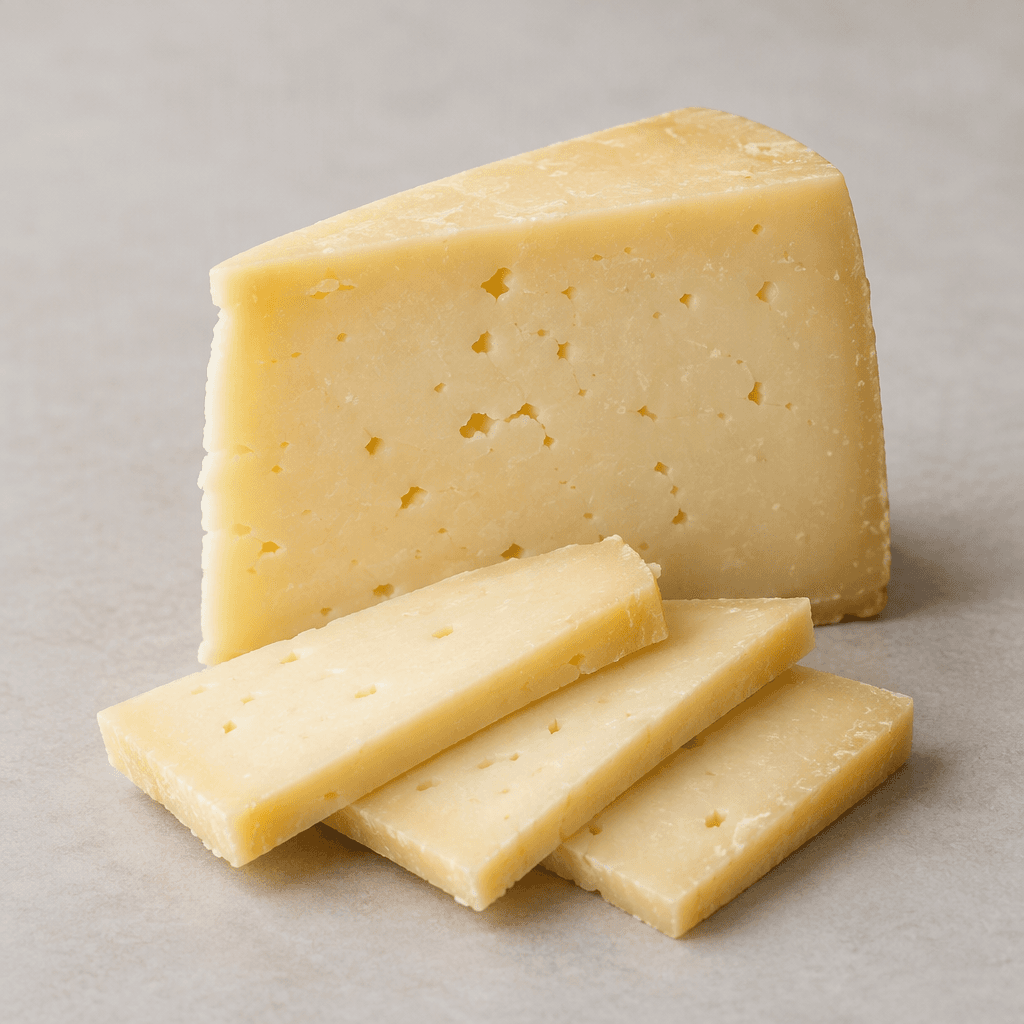
Lactose-Free Cheese Calories
Lactose-free, protein source, rich in calcium
In season: Spring · Summer · Autumn · Winter
CALORIES
GI
POTASSIUM
FIBER
Quick answer
1 slice (medium) of Lactose-Free Cheese (25 g) has 80 calories. That works out to 320 calories per 100 g. It contains 0.5 g of carbs, 6 g of protein, 6.3 g of fat and 0 g of fiber. Its 175 mg of Calcium covers 18% of the Daily Value. Its glycemic index is 0 (low), so it raises blood sugar slowly.
What is Lactose-Free Cheese?
Lactose-free cheese is made from milk that has had its lactose removed or broken down. It comes in many styles; a firm, sliceable version has a smooth texture and a mild, milky flavour, sometimes with a little saltiness.
It works much like other cheeses: serve it with bread and fruit, melt it into a toastie or sandwich, or add it to cooked dishes. In Turkey, it may appear at breakfast alongside olives and tomatoes; elsewhere, it is an easy addition to everyday meals. It provides protein and calcium, with relatively little carbohydrate. Pair it with vegetables or whole-grain bread for a balanced plate.
Lactose-Free Cheese Nutrition Facts
Selected: 100 g
320
KCAL / 100G
Carbs
2g
· 1% DV
Protein
24g
· 48% DV
Fat
25g
· 32% DV
Fiber
0g
· 0% DV
DV is the share of the daily value covered, on a 2,000 kcal reference diet.
Calories come from: Carbs 2% · Protein 29% · Fat 69%
Lactose-Free Cheese Vitamins & Minerals
Vitamins
B12
1.5µg · 63% DV
B2
0.35mg · 27% DV
Vitamin A
220µg · 24% DV
B5
0.5mg · 10% DV
Minerals
Phosphorus
500mg · 71% DV
Calcium
700mg · 70% DV
Sodium
800mg · 35% DV
Zinc
3mg · 27% DV
How Nutritious Is Lactose-Free Cheese?
Nutrient density
High
How many vitamins, minerals and how much fiber this food carries per calorie. A high score means a lot of nutrition for few calories.
Satiety score
Medium
An EatBetter score computed from fiber, protein and calorie density. A high score means staying full longer on the same calories.
Both scores are calculated per 100 g and do not change with the selected portion. The satiety score is EatBetter's own calculation, not a clinical measure.
Lactose-Free Cheese Glycemic Index
GLYCEMIC INDEX
GLYCEMIC LOAD
Accounts for portion size — a more realistic measure than GI alone.
How to Burn Off Lactose-Free Cheese
To burn the 320 calories in 100 g:
🚶
Walking (5 km/h)
🏃
Running (8 km/h)
🚴
Cycling
🏊
Swimming
Times are calculated with the MET equation for a 70 kg adult. Actual burn varies with your weight, age and pace.
Is Lactose-Free Cheese Processed?
NOVA 3
Processed
1. Unprocessed
2. Minimally Processed
3. Processed
4. Ultra-Processed
NOVA classifies foods into 4 groups by industrial processing. NOVA 1 (unprocessed) is the healthiest.
Does Lactose-Free Cheese Contain Allergens?
Contains these allergens:
Which Diets Is Lactose-Free Cheese Good For?
Vegan
— Not suitable
Vegetarian
✓ Suitable
Gluten-Free
✓ Suitable
Dairy-Free
— Not suitable
Mediterranean
✓ Suitable
Paleo
— Not suitable
Whole30
— Not suitable
DASH
— Not suitable
Keto
— Not suitable
Low FODMAP
— Not suitable
Lactose-Free Cheese Fat Profile
SATURATED
16g
MONOUNSATURATED
7g
POLYUNSATURATED
0.4g
Omega 6:3 ratio 4.3:1
Above the ideal 4:1 (4.3:1).
Compare Lactose-Free Cheese
Foods Similar to Lactose-Free Cheese
Frequently Asked Questions About Lactose-Free Cheese
What is lactose-free cheese?
Lactose-free cheese is cheese in which the milk sugar lactose has been broken down or removed to a very low level. It is still made from dairy milk, so it retains milk proteins and the characteristic qualities of its cheese type.
How is lactose-free cheese made?
Lactose-free cheese is usually made by adding the enzyme lactase to milk, which splits lactose into simpler sugars. Some products use other processing methods to reduce lactose; the exact approach can vary by cheese and manufacturer.
Does lactose-free cheese taste different from regular cheese?
Yes, lactose-free cheese can taste slightly sweeter than its regular counterpart. Lactase breaks lactose into simpler sugars that taste sweeter, though the cheese variety, salt level, and aging have a bigger influence on its overall flavor.
Can people with lactose intolerance eat lactose-free cheese?
Usually, yes. Lactose-free cheese is designed to contain little or no lactose, so many people with lactose intolerance tolerate it well. The amount remaining can vary by product, so check its lactose statement if even small amounts trigger symptoms.
Is lactose-free cheese safe for people with a milk allergy?
No. Lactose-free cheese is still dairy cheese and generally contains milk proteins, which can trigger a milk allergy. Removing or breaking down lactose does not make the product suitable for someone allergic to milk.
Which types of lactose-free cheese are available?
Lactose-free options include varieties such as cheddar, mozzarella, cream cheese, and some soft or hard cheeses. Availability varies by region, and lactose levels can differ between products, so choose one specifically labeled lactose-free.
Does lactose-free cheese melt?
Yes, lactose-free cheese can melt, but its melting and stretching depend on the cheese variety rather than the absence of lactose. Mozzarella and many young cheeses melt well, while aged, crumbly varieties may soften without becoming stretchy.
Can you use lactose-free cheese in cooking?
Yes, you can use lactose-free cheese in recipes much like the corresponding regular cheese. It works in sandwiches, pasta, and baked dishes; choose a variety suited to the recipe because texture and flavor still vary.
How should lactose-free cheese be stored after opening?
Keep lactose-free cheese refrigerated after opening and wrap it tightly or place it in a sealed container. This helps prevent drying and odor absorption. Follow the package’s storage instructions and discard the cheese if it shows signs of spoilage.
Can you make lactose-free cheese at home?
You can make a simple lactose-free cheese at home by treating milk with lactase before making the cheese. However, cheesemaking also requires careful culturing, handling, and storage, and it can be difficult to verify the final lactose level at home.
Have another question about Lactose-Free Cheese?
Ask the AI nutrition coach — calories, portions, alternatives and more, answered in seconds in the app.

Scan calories with your camera
Instant AI nutrition analysis

Nutrition data compiled from USDA FoodData Central and scientific sources.