

Ready & Packaged Foods
All →Vegetables & Legumes
All →Desserts & Confectionery
All →Meat & Protein
All →Grains & Bakery
All →Beverages
All →Milk & Dairy
All →

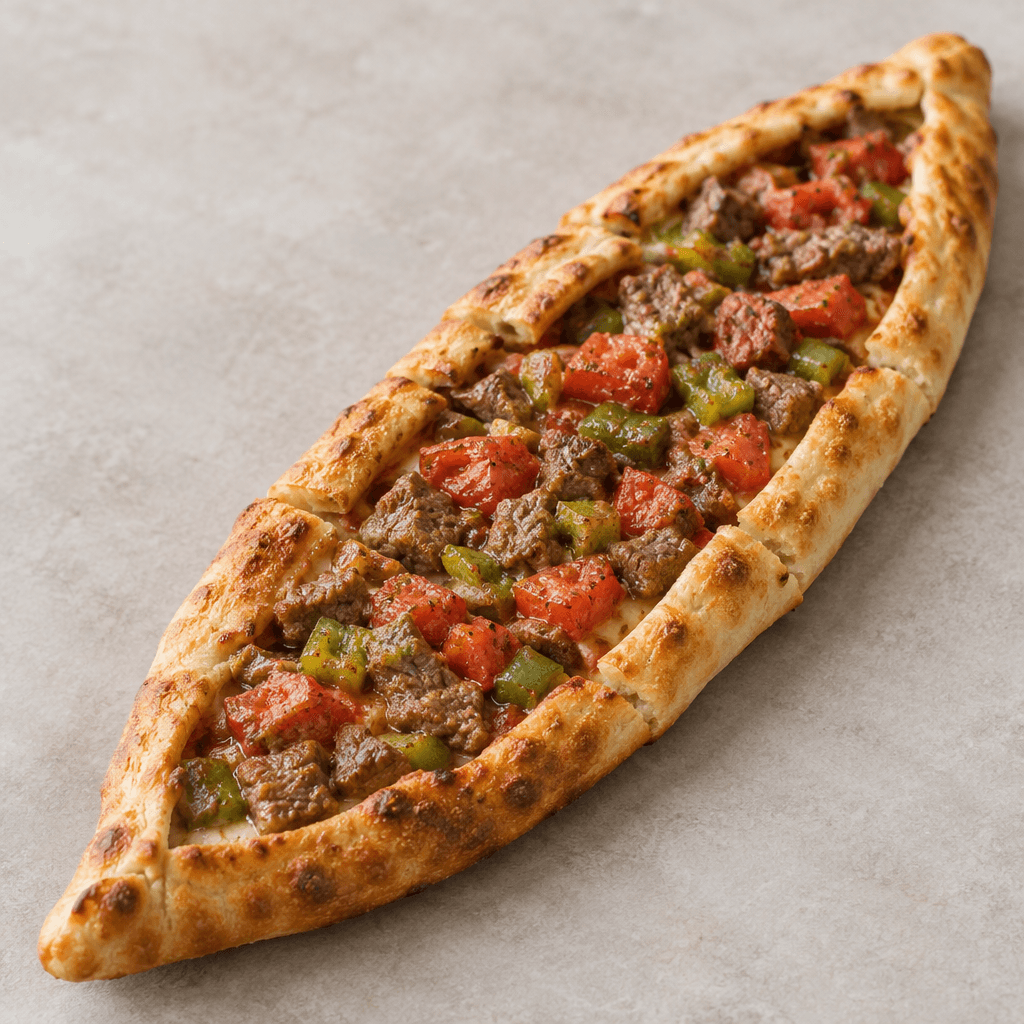
Kuşbaşılı Pide Calories
Turkish flatbread with diced beef, baked in stone oven
In season: Spring · Summer · Autumn · Winter
CALORIES
GI
POTASSIUM
FIBER
Quick answer
1 piece (medium) of Kuşbaşılı Pide (220 g) has 506 calories. That works out to 230 calories per 100 g. It contains 61.6 g of carbs, 23.1 g of protein, 18.7 g of fat and 4.8 g of fiber. Its 1 µg of B12 covers 41% of the Daily Value. Its glycemic index is 65 (medium), so it raises blood sugar at a moderate pace.
What is Kuşbaşılı Pide?
Kuşbaşılı Pide is a Turkish oven-baked flatbread shaped like a long boat and topped with diced beef, tomato and green pepper. The dough is left open around the filling, then baked until the edges are golden and the meat is cooked through. It is a familiar choice at pide shops across Turkey.
Served hot and cut into portions, it has a tender centre, crisp edges and a savoury, juicy topping. In Turkey it is commonly eaten as a lunch or dinner, often with ayran or a simple salad; it also works well as a filling takeaway meal. The bread and beef make it satisfying and provide protein, with 10.5 g per 100 g. Pair it with fresh vegetables for a lighter-feeling plate.
Kuşbaşılı Pide Nutrition Facts
Selected: 100 g
230
KCAL / 100G
Carbs
28g
· 10% DV
Protein
10.5g
· 21% DV
Fat
8.5g
· 11% DV
Fiber
2.2g
· 8% DV
DV is the share of the daily value covered, on a 2,000 kcal reference diet.
Calories come from: Carbs 49% · Protein 18% · Fat 33%
Kuşbaşılı Pide Vitamins & Minerals
Vitamins
B12
0.45µg · 19% DV
B3
2.3mg · 14% DV
B1
0.13mg · 11% DV
B6
0.18mg · 11% DV
Minerals
Sodium
420mg · 18% DV
Phosphorus
110mg · 16% DV
Selenium
8.5µg · 15% DV
Iron
2mg · 11% DV
How Nutritious Is Kuşbaşılı Pide?
Nutrient density
Medium
How many vitamins, minerals and how much fiber this food carries per calorie. A high score means a lot of nutrition for few calories.
Satiety score
Medium
An EatBetter score computed from fiber, protein and calorie density. A high score means staying full longer on the same calories.
Both scores are calculated per 100 g and do not change with the selected portion. The satiety score is EatBetter's own calculation, not a clinical measure.
Kuşbaşılı Pide Glycemic Index
GLYCEMIC INDEX
GLYCEMIC LOAD
Accounts for portion size — a more realistic measure than GI alone.
How to Burn Off Kuşbaşılı Pide
To burn the 230 calories in 100 g:
🚶
Walking (5 km/h)
🏃
Running (8 km/h)
🚴
Cycling
🏊
Swimming
Times are calculated with the MET equation for a 70 kg adult. Actual burn varies with your weight, age and pace.
Is Kuşbaşılı Pide Processed?
NOVA 3
Processed
1. Unprocessed
2. Minimally Processed
3. Processed
4. Ultra-Processed
NOVA classifies foods into 4 groups by industrial processing. NOVA 1 (unprocessed) is the healthiest.
Does Kuşbaşılı Pide Contain Allergens?
Contains these allergens:
Which Diets Is Kuşbaşılı Pide Good For?
Vegan
— Not suitable
Vegetarian
— Not suitable
Gluten-Free
— Not suitable
Dairy-Free
— Not suitable
Mediterranean
✓ Suitable
Paleo
— Not suitable
Whole30
— Not suitable
DASH
— Not suitable
Keto
— Not suitable
Low FODMAP
— Not suitable
Kuşbaşılı Pide Fat Profile
SATURATED
2.7g
MONOUNSATURATED
3.2g
POLYUNSATURATED
1.1g
Omega 6:3 ratio 4.5:1
Above the ideal 4:1 (4.5:1).
Compare Kuşbaşılı Pide
Foods Similar to Kuşbaşılı Pide
Frequently Asked Questions About Kuşbaşılı Pide
What is Kuşbaşılı Pide?
Kuşbaşılı Pide is a Turkish boat-shaped flatbread topped with small pieces of meat, usually beef, along with vegetables such as tomato and green pepper. It is baked until the dough is golden and served hot, typically cut into portions.
What is Kuşbaşılı Pide made of?
Kuşbaşılı Pide is made with pide dough and a topping of diced meat, commonly beef, plus tomato and pepper. Some recipes add onion, spices, or cheese, but the defining feature is the pieces of meat rather than ground meat.
How is Kuşbaşılı Pide different from kıymalı pide?
Kuşbaşılı Pide has diced meat pieces, while kıymalı pide is topped with minced meat. That difference gives Kuşbaşılı Pide a chunkier texture and more distinct bites of meat, though toppings and dough can vary by bakery.
How is Kuşbaşılı Pide traditionally served?
Kuşbaşılı Pide is served hot, usually cut into strips or portions for sharing. It pairs well with ayran, a yogurt drink, or a simple salad; lemon wedges and pickled peppers may also be offered alongside it.
How do you make Kuşbaşılı Pide at home?
To make Kuşbaşılı Pide, shape pide dough into an open boat, then top it with diced meat, tomato, and pepper. Fold the edges slightly inward and bake in a hot oven until the crust is browned and the meat is cooked through.
What is the difference between Kuşbaşılı Pide and lahmacun?
Kuşbaşılı Pide is an open, boat-shaped flatbread topped with chunks of meat. Lahmacun is a thin, round flatbread spread with a finely minced meat mixture. Their dough, toppings, and usual serving styles are different.
Does Kuşbaşılı Pide contain cheese?
Not necessarily; traditional Kuşbaşılı Pide is defined by its diced-meat topping, not cheese. Some bakeries add cheese as a variation, so ask for a cheese-topped version if you want the richer, melted-cheese finish.
How do you reheat Kuşbaşılı Pide?
Reheat Kuşbaşılı Pide in an oven or covered skillet to keep the crust from becoming soggy. The oven gives a crisper result, while a microwave is quicker but tends to soften the bread. Heat only the portion you plan to eat.
How long does Kuşbaşılı Pide last in the fridge?
Store leftover Kuşbaşılı Pide in a covered container in the refrigerator once it has cooled, and eat it within a few days. Do not leave the meat-topped pide at room temperature for an extended period; reheat leftovers thoroughly.
Can you freeze Kuşbaşılı Pide?
Yes, Kuşbaşılı Pide can be frozen after it has cooled. Wrap individual portions tightly to prevent freezer burn, then thaw them in the refrigerator and reheat in the oven. The crust may be less crisp than when freshly baked.
Have another question about Kuşbaşılı Pide?
Ask the AI nutrition coach — calories, portions, alternatives and more, answered in seconds in the app.

Scan calories with your camera
Instant AI nutrition analysis

Nutrition data compiled from USDA FoodData Central and scientific sources.