

Ready & Packaged Foods
All →Vegetables & Legumes
All →Desserts & Confectionery
All →Meat & Protein
All →Grains & Bakery
All →Beverages
All →Milk & Dairy
All →

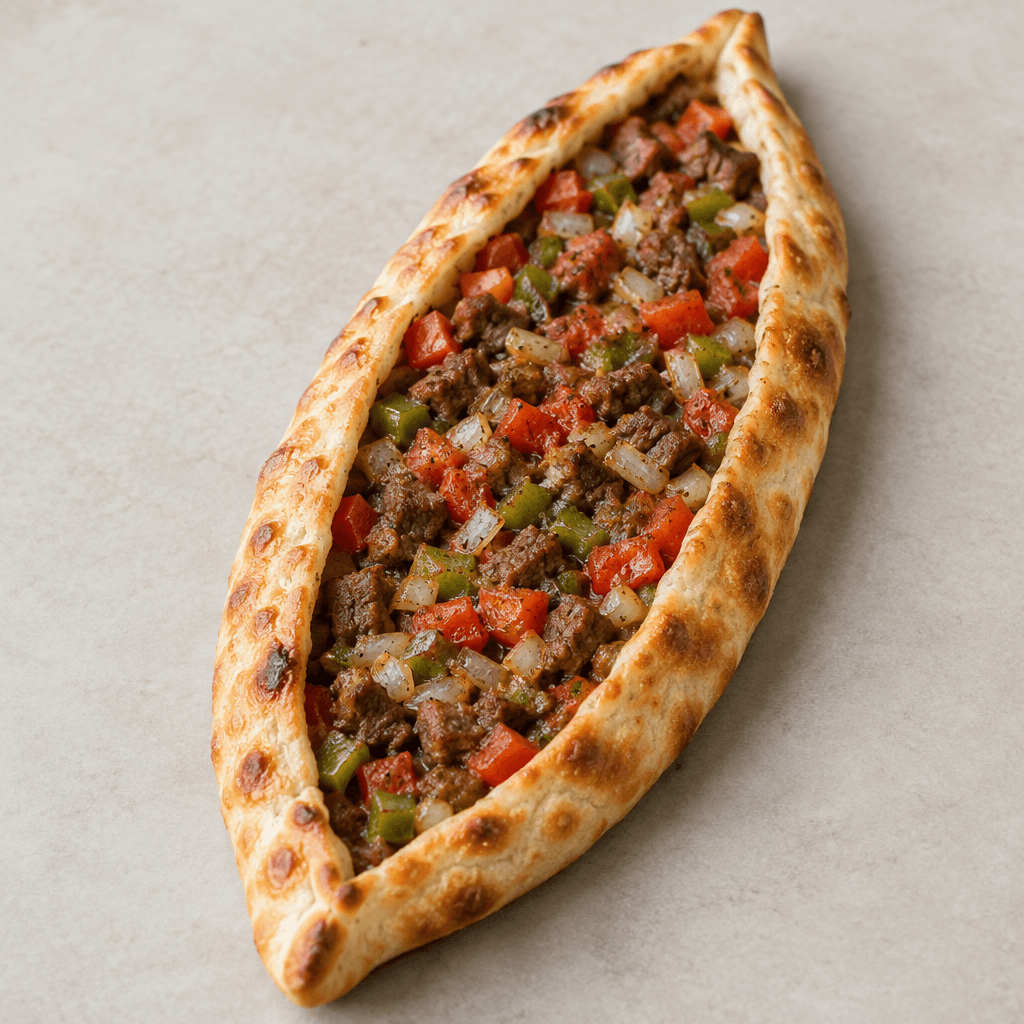
Kuşbaşı Pide Calories
Turkish flatbread with diced meat, source of protein and carbs
In season: Spring · Summer · Autumn · Winter
CALORIES
GI
POTASSIUM
FIBER
Quick answer
1 piece (medium) of Kuşbaşı Pide (180 g) has 414 calories. That works out to 230 calories per 100 g. It contains 50.4 g of carbs, 18.9 g of protein, 15.3 g of fat and 3.8 g of fiber. Its 702 mg of Sodium covers 31% of the Daily Value. Its glycemic index is 65 (medium), so it raises blood sugar at a moderate pace.
What is Kuşbaşı Pide?
Kuşbaşı pide is a Turkish oven-baked flatbread topped with small pieces of meat—usually beef—along with tomato, green pepper and onion. The dough is shaped into an open boat, with the edges turned up to hold the filling, and baked until the crust is golden. It is a familiar choice at pide shops and bakeries across Türkiye, with the exact topping varying by cook and region.
Best eaten hot, it makes a filling lunch or dinner, often served with ayran, salad or pickles. The meat contributes protein, while the bread supplies much of the carbohydrates. Add a fresh salad for balance, or share a pide if you want a lighter meal.
Kuşbaşı Pide Nutrition Facts
Selected: 100 g
230
KCAL / 100G
Carbs
28g
· 10% DV
Protein
10.5g
· 21% DV
Fat
8.5g
· 11% DV
Fiber
2.1g
· 8% DV
DV is the share of the daily value covered, on a 2,000 kcal reference diet.
Calories come from: Carbs 49% · Protein 18% · Fat 33%
Kuşbaşı Pide Vitamins & Minerals
Vitamins
B3
2.1mg · 13% DV
B12
0.32µg · 13% DV
B5
0.6mg · 12% DV
B1
0.13mg · 11% DV
Minerals
Sodium
390mg · 17% DV
Selenium
7.5µg · 14% DV
Phosphorus
95mg · 14% DV
Zinc
1mg · 9% DV
How Nutritious Is Kuşbaşı Pide?
Nutrient density
Medium
How many vitamins, minerals and how much fiber this food carries per calorie. A high score means a lot of nutrition for few calories.
Satiety score
Medium
An EatBetter score computed from fiber, protein and calorie density. A high score means staying full longer on the same calories.
Both scores are calculated per 100 g and do not change with the selected portion. The satiety score is EatBetter's own calculation, not a clinical measure.
Kuşbaşı Pide Glycemic Index
GLYCEMIC INDEX
GLYCEMIC LOAD
Accounts for portion size — a more realistic measure than GI alone.
How to Burn Off Kuşbaşı Pide
To burn the 230 calories in 100 g:
🚶
Walking (5 km/h)
🏃
Running (8 km/h)
🚴
Cycling
🏊
Swimming
Times are calculated with the MET equation for a 70 kg adult. Actual burn varies with your weight, age and pace.
Is Kuşbaşı Pide Processed?
NOVA 3
Processed
1. Unprocessed
2. Minimally Processed
3. Processed
4. Ultra-Processed
NOVA classifies foods into 4 groups by industrial processing. NOVA 1 (unprocessed) is the healthiest.
Does Kuşbaşı Pide Contain Allergens?
Contains these allergens:
Which Diets Is Kuşbaşı Pide Good For?
Vegan
— Not suitable
Vegetarian
— Not suitable
Gluten-Free
— Not suitable
Dairy-Free
— Not suitable
Mediterranean
✓ Suitable
Paleo
— Not suitable
Whole30
— Not suitable
DASH
— Not suitable
Keto
— Not suitable
Low FODMAP
— Not suitable
Kuşbaşı Pide Fat Profile
SATURATED
2.7g
MONOUNSATURATED
2.9g
POLYUNSATURATED
0.6g
Omega 6:3 ratio 5.4:1
Above the ideal 4:1 (5.4:1).
Compare Kuşbaşı Pide
Foods Similar to Kuşbaşı Pide
Frequently Asked Questions About Kuşbaşı Pide
What is Kuşbaşı Pide?
Kuşbaşı pide is a Turkish open-faced flatbread topped with small pieces of meat, commonly served with tomato, green pepper and onion. Its dough is shaped into an elongated boat, with the edges folded up around the filling.
How is Kuşbaşı Pide different from kıymalı pide?
Kuşbaşı pide has diced meat, while kıymalı pide is topped with minced meat. The diced pieces give Kuşbaşı pide a chunkier texture and distinct bites of meat rather than the evenly spread, finely textured filling of kıymalı pide.
What meat is used in Kuşbaşı Pide?
Kuşbaşı pide is commonly made with diced beef, though some versions use lamb. The meat is cut into small, evenly sized pieces so it cooks through on the pide and is easy to eat with each slice.
What goes into Kuşbaşı Pide filling?
A typical Kuşbaşı pide filling combines diced meat with tomato, green pepper and onion. Recipes vary by region and cook, but cutting the vegetables and meat small helps the topping spread evenly across the dough.
How do you make Kuşbaşı Pide at home?
To make Kuşbaşı pide at home, shape bread dough into a long oval, spread diced meat and vegetables down the middle, and fold the edges inward. Bake in a thoroughly preheated oven until the crust is browned and the meat is cooked.
Why is my Kuşbaşı Pide soggy in the middle?
Kuşbaşı pide can turn soggy when the vegetable filling releases too much liquid or the oven is not hot enough. Drain excess tomato juice, avoid piling the topping too thickly, and bake the pide on a hot tray or baking stone.
What do you serve with Kuşbaşı Pide?
Kuşbaşı pide is often served with ayran, salad or pickled vegetables. Since the pide already includes meat and bread, a crisp, refreshing side works well without making the meal feel too heavy.
How do you reheat Kuşbaşı Pide?
Reheat Kuşbaşı pide in a preheated oven until the center is hot and the crust has crisped again. An oven or toaster oven preserves the bread’s texture better than a microwave, which can make it chewy.
Can you freeze Kuşbaşı Pide?
Yes, you can freeze cooked Kuşbaşı pide. Let it cool completely, wrap individual portions airtight, and freeze; thaw in the refrigerator before reheating in the oven to bring back some of the crust’s crispness.
Is Kuşbaşı Pide traditionally cooked in a wood-fired oven?
Yes, many pide shops bake Kuşbaşı pide in a very hot wood-fired oven, which browns the crust quickly and adds a lightly smoky flavor. A home oven can also cook it well when fully preheated.
Have another question about Kuşbaşı Pide?
Ask the AI nutrition coach — calories, portions, alternatives and more, answered in seconds in the app.

Scan calories with your camera
Instant AI nutrition analysis

Nutrition data compiled from USDA FoodData Central and scientific sources.