

Ready & Packaged Foods
All →Vegetables & Legumes
All →Desserts & Confectionery
All →Meat & Protein
All →Grains & Bakery
All →Beverages
All →Milk & Dairy
All →

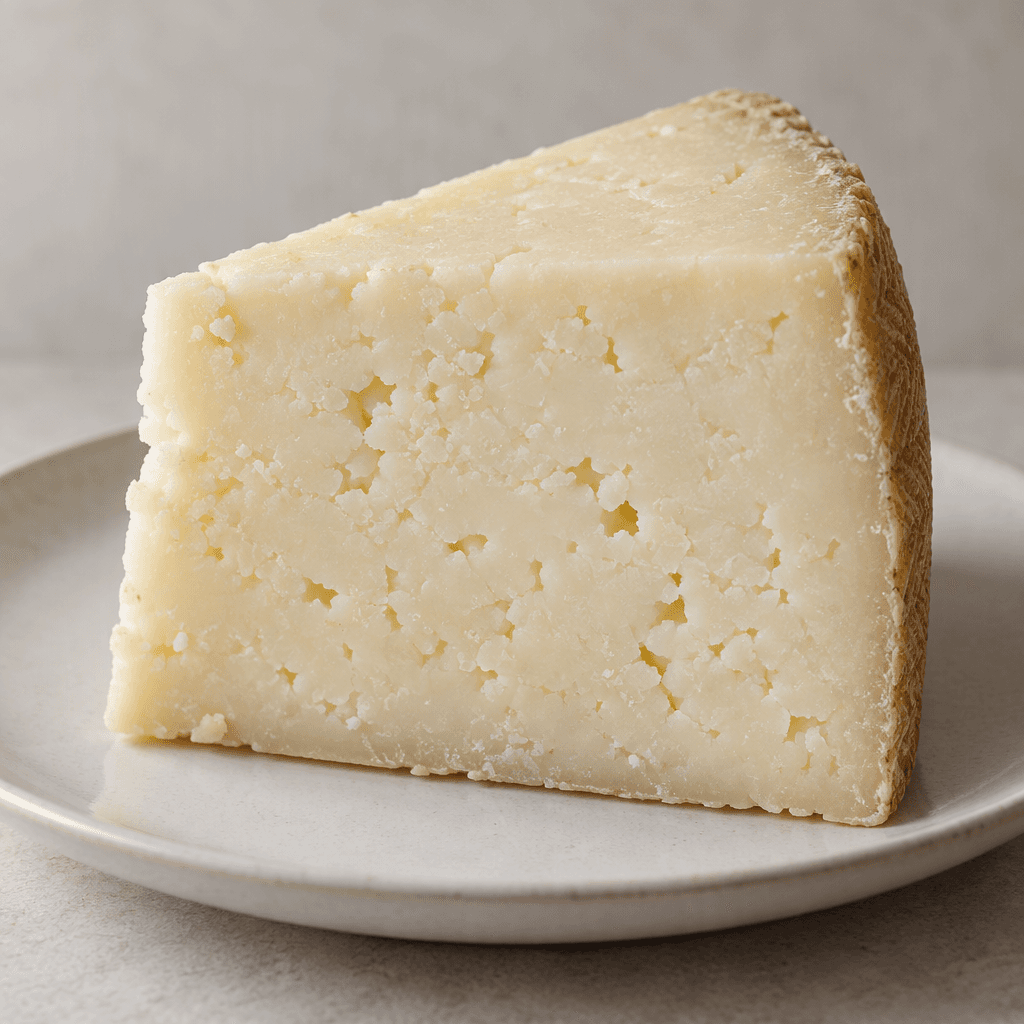
Full-fat sheep cheese Calories
High in protein and calcium
CALORIES · 100 G
GI
POTASSIUM · 100 G
FIBER · 100 G
Quick answer
1 slice (thin) of Full-fat sheep cheese (30 g) has 109 calories. That works out to 364 calories per 100 g. It contains 1.1 g of carbs, 6.3 g of protein, 8.9 g of fat and 0 g of fiber. Its 0.5 µg of B12 covers 19% of the Daily Value. Its glycemic index is 0 (low), so it raises blood sugar slowly.
Full-fat sheep cheese Nutrition Facts
Selected: 1 slice (thin) · 30 g
109
KCAL / 30G
Carbs
1.1g
· 0% DV
Protein
6.3g
· 13% DV
Fat
8.9g
· 11% DV
Fiber
0g
· 0% DV
DV is the share of the daily value covered, on a 2,000 kcal reference diet.
Calories come from: Carbs 4% · Protein 23% · Fat 73%
Full-fat sheep cheese nutrition facts table · 1 slice (thin) (30 g)
| Nutrient | Amount | % DV |
|---|---|---|
| Calories | 109 kcal | |
| Total fat | 8.9 g | 11% |
| Saturated fat | 5.67 g | 28% |
| Trans fat | 0.27 g | |
| Sodium | 270 mg | 12% |
| Total carbohydrate | 1.1 g | 0% |
| Fiber | 0 g | 0% |
| Protein | 6.3 g | 13% |
Calories: Calories measure energy. Average daily need is 2,000 kcal. Excess calories are stored as fat, too few cause weight loss.
Carbs: Your body's primary energy source. The brain runs exclusively on carbs. Daily need: 275g.
Protein: Essential for muscle repair and cell growth. Daily need: 50g. Keeps you full and boosts metabolism.
Fat: Needed for hormone production and vitamin absorption. Daily need: 78g. Limit saturated fats, choose unsaturated.
Fiber: Critical for digestive health and satiety. Daily need: 28g. Stabilizes blood sugar, lowers cholesterol.

Log this food in EatBetter
100,000+ people use it
- Get your daily calorie target
- Snap your meal, log it in seconds
- See every vitamin and mineral

📸 Scan the code to get the app free.

How Many Calories in 1 Thin Slice of Full-fat sheep cheese?
| Serving | Amount | Calories |
|---|---|---|
| 1 slice (thin) | 30 g | 109 kcal |
| 1 slice (thin) | 20 g | 73 kcal |
| 1 piece (small) | 25 g | 91 kcal |
| 1 slice (medium) | 30 g | 109 kcal |
| 1 serving (small) | 40 g | 146 kcal |
| 1 slice (thick) | 45 g | 164 kcal |
| 1 piece (medium) | 50 g | 182 kcal |
| 1 serving (medium) | 60 g | 218 kcal |
| 1 piece (large) | 90 g | 328 kcal |
| 100 g | 100 g | 364 kcal |
| 1 serving (large) | 100 g | 364 kcal |
Calculated from 364 calories per 100 g.
Frequently Asked Questions About Full-fat sheep cheese
What does full-fat sheep cheese taste like?
Full-fat sheep cheese usually tastes rich, tangy and more pronounced than mild cow’s-milk cheese. Its texture can range from soft and creamy to firm and crumbly, depending on how it is made and aged.
How is full-fat sheep cheese different from feta?
Full-fat sheep cheese is a broad description, while feta is a specific brined cheese traditionally made from sheep’s milk or a sheep-and-goat milk blend. Not every sheep cheese is brined or crumbly, so the two names are not interchangeable.
Can you cook with full-fat sheep cheese?
Yes, full-fat sheep cheese works well crumbled into savory pastries, salads, pasta and baked dishes. Its strong flavor can stand up to herbs and vegetables; taste it before adding salt, since some varieties are already quite salty.
Does full-fat sheep cheese melt well?
Full-fat sheep cheese softens when heated, but it does not always melt into a smooth, stretchy layer. Fresh, moist varieties may become creamy, while aged or drier ones tend to hold their shape or turn crumbly.
How should you store full-fat sheep cheese after opening?
Keep full-fat sheep cheese refrigerated in its original wrapping or a clean, tightly covered container. If it is sold in brine, keep it submerged in the brine; follow the package’s storage guidance and use clean utensils when serving.
Can you freeze full-fat sheep cheese?
Yes, you can freeze full-fat sheep cheese, though thawing may make it drier or more crumbly. Divide it into meal-sized portions, wrap it airtight and thaw it in the refrigerator; the changed texture is usually less noticeable in cooked dishes.
Is the rind on full-fat sheep cheese edible?
Sometimes; it depends on the cheese. Natural rinds on many aged cheeses are edible, though they can taste strong, while wax or other protective coatings should be removed. Check the packaging or ask the cheesemonger if the rind is unclear.
Why does full-fat sheep cheese taste stronger than cow’s-milk cheese?
Full-fat sheep cheese can taste stronger because sheep’s milk has a distinct flavor, and aging concentrates the cheese’s aroma. The difference is not universal: a young sheep cheese can be mild, while a well-aged one is often sharper and more savory.
Is full-fat sheep cheese safe to eat during pregnancy?
Yes, full-fat sheep cheese is generally suitable during pregnancy when it is made with pasteurized milk and kept properly refrigerated. Avoid cheese made from unpasteurized milk; if the milk treatment is not clear, choose a clearly labeled pasteurized option.
Can people with lactose intolerance eat full-fat sheep cheese?
Some people with lactose intolerance tolerate aged full-fat sheep cheese better because aging reduces lactose, but fresh varieties may contain more. Sheep’s milk is not automatically lactose-free, so start with a small amount or choose a product specifically labeled lactose-free.
Full-fat sheep cheese Vitamins & Minerals
Vitamins
B12
0.45µg · 19% DV
Vitamin A
96µg · 11% DV
B2
0.14mg · 11% DV
B5
0.18mg · 4% DV
Minerals
Calcium
150mg · 15% DV
Phosphorus
105mg · 15% DV
Sodium
270mg · 12% DV
Zinc
1.05mg · 10% DV
Potassium ⭐
24mg · 1% DV
Full-fat sheep cheese Glycemic Index
GLYCEMIC INDEX
GLYCEMIC LOAD
Accounts for portion size — a more realistic measure than GI alone.
How to Burn Off Full-fat sheep cheese
To burn the 109 calories in 1 slice (thin) (30 g):
🚶
Walking (5 km/h)
🏃
Running (8 km/h)
🚴
Cycling
🏊
Swimming
Times are calculated with the MET equation for a 70 kg adult. Actual burn varies with your weight, age and pace.
What is Full-fat sheep cheese?
Full-fat sheep cheese is made from sheep’s milk; its texture can range from soft to firm depending on how it is made and aged. It often has a rich, milky taste with a pleasant tang. In Turkey and across parts of the Mediterranean, it is served at breakfast with bread, olives and fresh vegetables, or alongside salads and mezze. It also works well crumbled into savoury pastries.
Its high fat content gives it a satisfying richness, while it also provides protein. A modest slice with vegetables or fruit makes an easy snack; for a lighter meal, pair it with plenty of fresh produce rather than adding more rich foods.
How Nutritious Is Full-fat sheep cheese?
Nutrient density
High
How many vitamins, minerals and how much fiber this food carries per calorie. A high score means a lot of nutrition for few calories.
Satiety score
Low
An EatBetter score computed from fiber, protein and calorie density. A high score means staying full longer on the same calories.
Both scores are calculated per 100 g and do not change with the selected portion. The satiety score is EatBetter's own calculation, not a clinical measure.
Is Full-fat sheep cheese Processed?
NOVA 3
Processed
1. Unprocessed
2. Minimally Processed
3. Processed
4. Ultra-Processed
NOVA classifies foods into 4 groups by industrial processing. NOVA 1 (unprocessed) is the healthiest.
Does Full-fat sheep cheese Contain Allergens?
Contains these allergens:
Which Diets Is Full-fat sheep cheese Good For?
Vegan
— Not suitable
Vegetarian
✓ Suitable
Gluten-Free
✓ Suitable
Dairy-Free
— Not suitable
Mediterranean
— Not suitable
Paleo
— Not suitable
Whole30
— Not suitable
DASH
— Not suitable
Keto
✓ Suitable
Low FODMAP
— Not suitable
Full-fat sheep cheese Fat Profile
SATURATED
5.67g
MONOUNSATURATED
2.28g
POLYUNSATURATED
0.39g
Omega 6:3 ratio 1.7:1
Below the ideal 4:1 — a good omega balance.
Compare Full-fat sheep cheese
Foods Similar to Full-fat sheep cheese
Have another question about Full-fat sheep cheese?
Ask the AI nutrition coach — calories, portions, alternatives and more, answered in seconds in the app.

Scan calories with your camera
Instant AI nutrition analysis

Nutrition data compiled from USDA FoodData Central and scientific sources.