

Ready & Packaged Foods
All →Vegetables & Legumes
All →Desserts & Confectionery
All →Meat & Protein
All →Grains & Bakery
All →Beverages
All →Milk & Dairy
All →

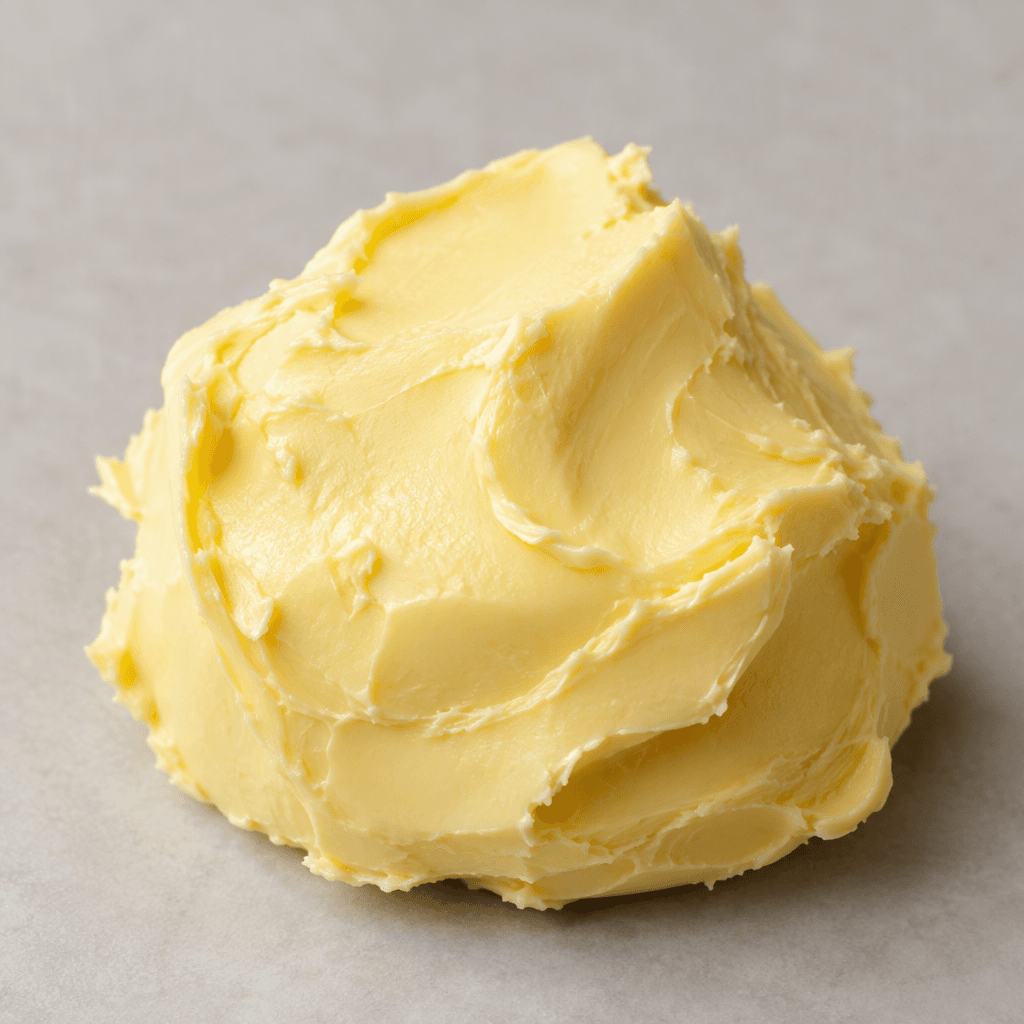
Village butter Calories
Traditional village butter, rich flavor, natural ingredients
In season: Spring · Summer · Autumn · Winter
CALORIES
GI
POTASSIUM
FIBER
Quick answer
1 tablespoon (medium) of Village butter (15 g) has 108 calories. That works out to 720 calories per 100 g. It contains 0.1 g of carbs, 0.1 g of protein, 12.2 g of fat and 0 g of fiber. Its 105 µg of Vitamin A covers 12% of the Daily Value. Its glycemic index is 0 (low), so it raises blood sugar slowly.
What is Village butter?
Village butter is traditional butter made by churning cream, often in small-scale or home production. Its colour and flavour can vary with the milk and the maker’s method, but it is generally rich, creamy and easy to spread.
In Turkey, it is commonly served at breakfast on fresh bread, sometimes with honey or pekmez, and used to finish pilaf, soups and vegetables. For English-speaking cooks elsewhere, it works much like other unsalted or cultured butters: spread it on toast or use a little to enrich a dish. It is mostly fat, with very little protein or carbohydrate, so its flavour goes a long way. Use a modest amount when you want the buttery taste without making a meal too rich.
Village butter Nutrition Facts
Selected: 100 g
720
KCAL / 100G
Carbs
0.7g
· 0% DV
Protein
0.5g
· 1% DV
Fat
81g
· 104% DV
Fiber
0g
· 0% DV
DV is the share of the daily value covered, on a 2,000 kcal reference diet.
Calories come from: Carbs 0% · Protein 0% · Fat 100%
Village butter Vitamins & Minerals
Vitamins
Vitamin A
700µg · 78% DV
Vitamin E
2.2mg · 15% DV
Vitamin D
1.5µg · 8% DV
B5
0.35mg · 7% DV
Minerals
Phosphorus
24mg · 3% DV
Calcium
24mg · 2% DV
Selenium
1µg · 2% DV
Iodine
2µg · 1% DV
How Nutritious Is Village butter?
Nutrient density
Medium
How many vitamins, minerals and how much fiber this food carries per calorie. A high score means a lot of nutrition for few calories.
Satiety score
Low
An EatBetter score computed from fiber, protein and calorie density. A high score means staying full longer on the same calories.
Both scores are calculated per 100 g and do not change with the selected portion. The satiety score is EatBetter's own calculation, not a clinical measure.
Village butter Glycemic Index
GLYCEMIC INDEX
GLYCEMIC LOAD
Accounts for portion size — a more realistic measure than GI alone.
How to Burn Off Village butter
To burn the 720 calories in 100 g:
🚶
Walking (5 km/h)
🏃
Running (8 km/h)
🚴
Cycling
🏊
Swimming
Times are calculated with the MET equation for a 70 kg adult. Actual burn varies with your weight, age and pace.
Is Village butter Processed?
NOVA 2
Minimally Processed
1. Unprocessed
2. Minimally Processed
3. Processed
4. Ultra-Processed
NOVA classifies foods into 4 groups by industrial processing. NOVA 1 (unprocessed) is the healthiest.
Does Village butter Contain Allergens?
Contains these allergens:
Which Diets Is Village butter Good For?
Vegan
— Not suitable
Vegetarian
✓ Suitable
Gluten-Free
✓ Suitable
Dairy-Free
— Not suitable
Mediterranean
✓ Suitable
Paleo
✓ Suitable
Whole30
— Not suitable
DASH
— Not suitable
Keto
✓ Suitable
Low FODMAP
— Not suitable
Village butter Fat Profile
SATURATED
51g
MONOUNSATURATED
21g
POLYUNSATURATED
2.5g
Omega 6:3 ratio 5:1
Above the ideal 4:1 (5:1).
Compare Village butter
Foods Similar to Village butter
Frequently Asked Questions About Village butter
How is village butter made?
Village butter is usually made by churning cream until the butterfat separates from the liquid buttermilk. The butter is then worked together, and some producers add salt. Methods and flavor vary with the cream and local tradition.
How can you tell if village butter is authentic?
Color alone cannot prove that village butter is authentic; its shade can vary with the animals’ feed and season. Buy from a producer you trust, ask how it was made and stored, and avoid butter with mold or an unpleasant sour or rancid smell.
Does village butter need to be refrigerated?
Yes, keep village butter covered in the refrigerator to slow spoilage and prevent it from absorbing other food odors. Use a clean knife each time and return it promptly; leave only the portion you plan to use at room temperature.
Can you freeze village butter?
Yes, village butter freezes well when tightly wrapped or sealed against air. Divide it into portions before freezing, then thaw only what you need in the refrigerator. Its texture may become slightly less smooth after thawing, but it still works in cooking.
What is the difference between village butter and store-bought butter?
Village butter is commonly made in smaller batches using traditional churning, while factory-made butter tends to have a more consistent texture and flavor. Village butter can vary more in saltiness and aroma, so taste it before seasoning a dish.
Can you use village butter for frying?
You can use village butter for gentle frying, but its milk solids can brown and burn over high heat. Cook over low to medium heat, or use clarified butter when a recipe calls for stronger heat.
Why is village butter yellow?
Village butter may look yellow because of natural pigments, especially beta-carotene, in the animals’ feed. The shade can change with diet and season, so a deeper yellow color does not by itself prove better quality or authenticity.
How do you make clarified butter from village butter?
Melt village butter gently and let the milk solids settle to the bottom while foam rises to the surface. Skim the foam, then pour the clear fat through a fine strainer into a clean, dry container, leaving the solids behind.
Can village butter be left out on the counter?
A small amount of village butter can be kept covered at room temperature for short-term spreading, but the rest should stay refrigerated. Because homemade or small-batch butter may differ in handling and salt, avoid leaving it out for extended periods.
How can you tell if village butter has gone bad?
Discard village butter if it develops mold, an unusually sour or rancid odor, or a distinctly bitter taste. Do not scrape off mold and eat the rest; visible growth can indicate contamination beyond the spot you can see.
Have another question about Village butter?
Ask the AI nutrition coach — calories, portions, alternatives and more, answered in seconds in the app.

Scan calories with your camera
Instant AI nutrition analysis

Nutrition data compiled from USDA FoodData Central and scientific sources.