

Ready & Packaged Foods
All →Vegetables & Legumes
All →Desserts & Confectionery
All →Meat & Protein
All →Grains & Bakery
All →Beverages
All →Milk & Dairy
All →

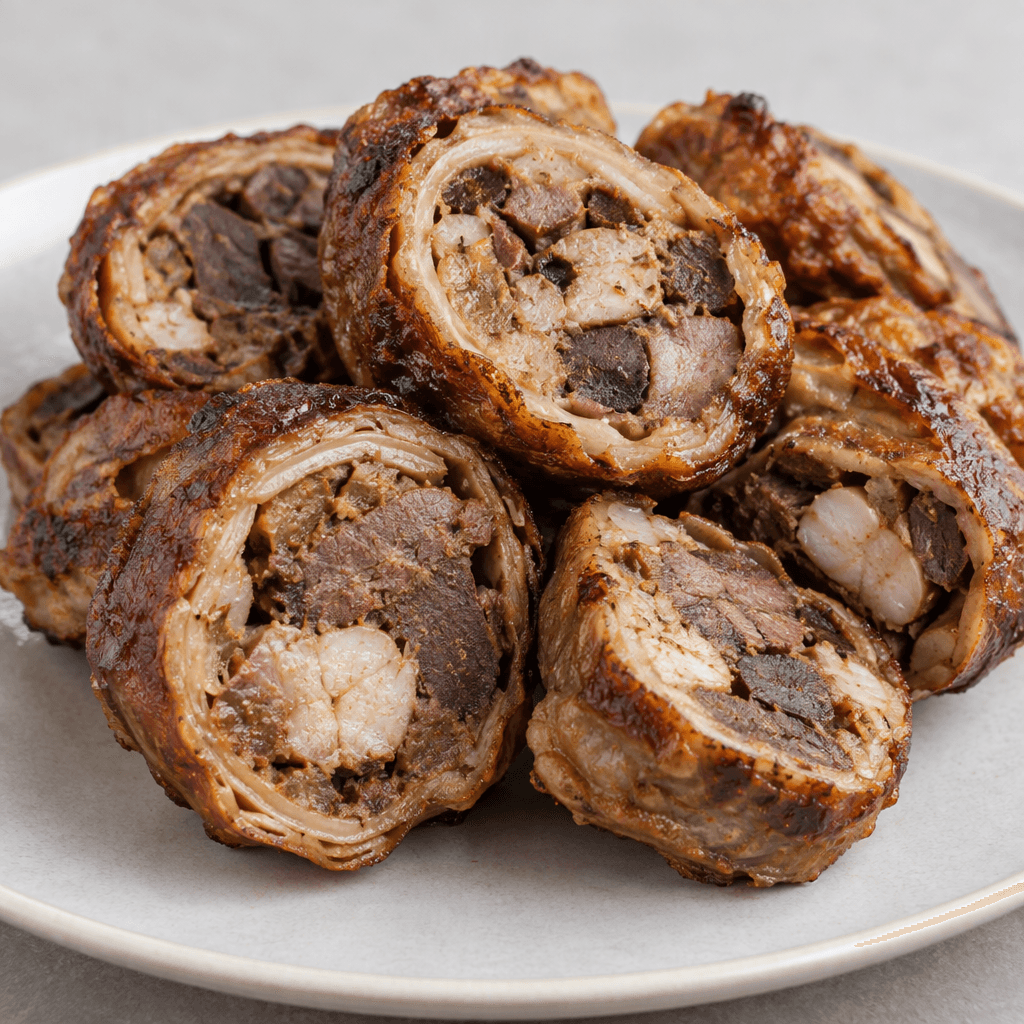
Kokoretsi Calories
Traditional street food, high in protein, iron and vitamin B12
In season: Spring · Summer · Autumn · Winter
CALORIES
GI
POTASSIUM
FIBER
Quick answer
1 piece (medium) of Kokoretsi (120 g) has 336 calories. That works out to 280 calories per 100 g. It contains 1.2 g of carbs, 21.6 g of protein, 26.4 g of fat and 0 g of fiber. Its 3.4 µg of B12 covers 140% of the Daily Value. Its glycemic index is 0 (low), so it raises blood sugar slowly.
What is Kokoretsi?
Kokoreç is a Turkish street-food dish made by wrapping lamb intestines around pieces of lamb offal, then cooking the coil on a spit until browned. It is finely chopped and often tossed with oregano, cumin and chilli before serving. The outside is crisp and savoury, while the chopped filling stays tender and rich. In Turkey, it is commonly eaten in a bread roll or served as a plate, often with pickles or ayran; it also makes a popular late-night bite. It is protein-rich but also high in fat, so a smaller portion with salad is a good choice if you want a lighter meal. This Turkish preparation is distinct from Greek kokoretsi.
Kokoretsi Nutrition Facts
Selected: 100 g
280
KCAL / 100G
Carbs
1g
· 0% DV
Protein
18g
· 36% DV
Fat
22g
· 28% DV
Fiber
0g
· 0% DV
DV is the share of the daily value covered, on a 2,000 kcal reference diet.
Calories come from: Carbs 1% · Protein 26% · Fat 73%
Kokoretsi Vitamins & Minerals
Vitamins
B12
2.8µg · 117% DV
B2
0.35mg · 27% DV
B5
1.2mg · 24% DV
B3
3.5mg · 22% DV
Minerals
Phosphorus
180mg · 26% DV
Selenium
12µg · 22% DV
Zinc
2mg · 18% DV
Iron
3mg · 17% DV
How Nutritious Is Kokoretsi?
Nutrient density
High
How many vitamins, minerals and how much fiber this food carries per calorie. A high score means a lot of nutrition for few calories.
Satiety score
Medium
An EatBetter score computed from fiber, protein and calorie density. A high score means staying full longer on the same calories.
Both scores are calculated per 100 g and do not change with the selected portion. The satiety score is EatBetter's own calculation, not a clinical measure.
Kokoretsi Glycemic Index
GLYCEMIC INDEX
GLYCEMIC LOAD
Accounts for portion size — a more realistic measure than GI alone.
How to Burn Off Kokoretsi
To burn the 280 calories in 100 g:
🚶
Walking (5 km/h)
🏃
Running (8 km/h)
🚴
Cycling
🏊
Swimming
Times are calculated with the MET equation for a 70 kg adult. Actual burn varies with your weight, age and pace.
Is Kokoretsi Processed?
NOVA 2
Minimally Processed
1. Unprocessed
2. Minimally Processed
3. Processed
4. Ultra-Processed
NOVA classifies foods into 4 groups by industrial processing. NOVA 1 (unprocessed) is the healthiest.
Does Kokoretsi Contain Allergens?
No known major allergens
Which Diets Is Kokoretsi Good For?
Vegan
— Not suitable
Vegetarian
— Not suitable
Gluten-Free
✓ Suitable
Dairy-Free
— Not suitable
Mediterranean
✓ Suitable
Paleo
✓ Suitable
Whole30
— Not suitable
DASH
— Not suitable
Keto
✓ Suitable
Low FODMAP
— Not suitable
Kokoretsi Fat Profile
SATURATED
9.5g
MONOUNSATURATED
8.2g
POLYUNSATURATED
1.2g
Omega 6:3 ratio 2.9:1
Below the ideal 4:1 — a good omega balance.
Compare Kokoretsi
Foods Similar to Kokoretsi
Frequently Asked Questions About Kokoretsi
What is kokoreç?
Kokoreç is a Turkish street food made by wrapping lamb intestines around lamb fat and sometimes offal, then roasting the coil on a spit. This page’s English label, Kokoretsi, refers to Turkish kokoreç; Greek kokoretsi is a related but distinct dish.
What is kokoreç made of?
Kokoreç is made mainly from cleaned lamb intestines wrapped around lamb fat, and recipes may include other lamb offal. The exact mix varies by cook, so ask the vendor which parts are included if you want to know what is in a serving.
How is kokoreç cooked?
Kokoreç is wrapped tightly around a spit and slowly turned over heat until browned and cooked through. The cooked coil is usually removed from the spit, finely chopped, seasoned, and served hot.
What is the difference between Turkish kokoreç and Greek kokoretsi?
They are related grilled offal dishes, but they are not identical. Turkish kokoreç is commonly chopped after cooking and served in bread or on a plate, while Greek kokoretsi is often roasted as a larger coil or wrapped roast for a meal.
What does kokoreç taste like?
Kokoreç has a rich, savory lamb flavor, with a browned, crisp exterior and a tender, chewy texture inside. Its seasoning and the amount of offal can change the taste, so versions from different vendors may taste noticeably different.
How is kokoreç usually served?
Kokoreç is usually served hot, finely chopped and seasoned, either in bread or on a plate. Turkish vendors often offer it with spices such as cumin, oregano, or chili; tomatoes, peppers, and pickles may accompany it.
Can you make kokoreç at home?
Yes, kokoreç can be made at home, but cleaning the intestines thoroughly and cooking the meat completely are essential. Using properly cleaned intestines from a trusted butcher makes preparation more manageable; roast the tightly wrapped coil over steady heat.
How can you tell whether kokoreç is fully cooked?
Fully cooked kokoreç should be hot throughout, with a browned exterior and no raw-looking or cold sections inside. Choose a vendor who cooks it to order and handles the intestines hygienically, since thorough cooking matters for food safety.
How should leftover kokoreç be stored and reheated?
Refrigerate leftover kokoreç promptly in a covered container, then reheat it until steaming hot throughout before eating. Do not eat kokoreç that has been left at room temperature for an extended period.
Can you eat kokoreç during pregnancy?
During pregnancy, avoid kokoreç that is undercooked or prepared in questionable conditions; it should be thoroughly cooked and served hot. If you have a pregnancy-related dietary restriction or health concern, ask your clinician for advice.
Have another question about Kokoretsi?
Ask the AI nutrition coach — calories, portions, alternatives and more, answered in seconds in the app.

Scan calories with your camera
Instant AI nutrition analysis

Nutrition data compiled from USDA FoodData Central and scientific sources.