

Ready & Packaged Foods
All →Vegetables & Legumes
All →Desserts & Confectionery
All →Meat & Protein
All →Grains & Bakery
All →Beverages
All →Milk & Dairy
All →

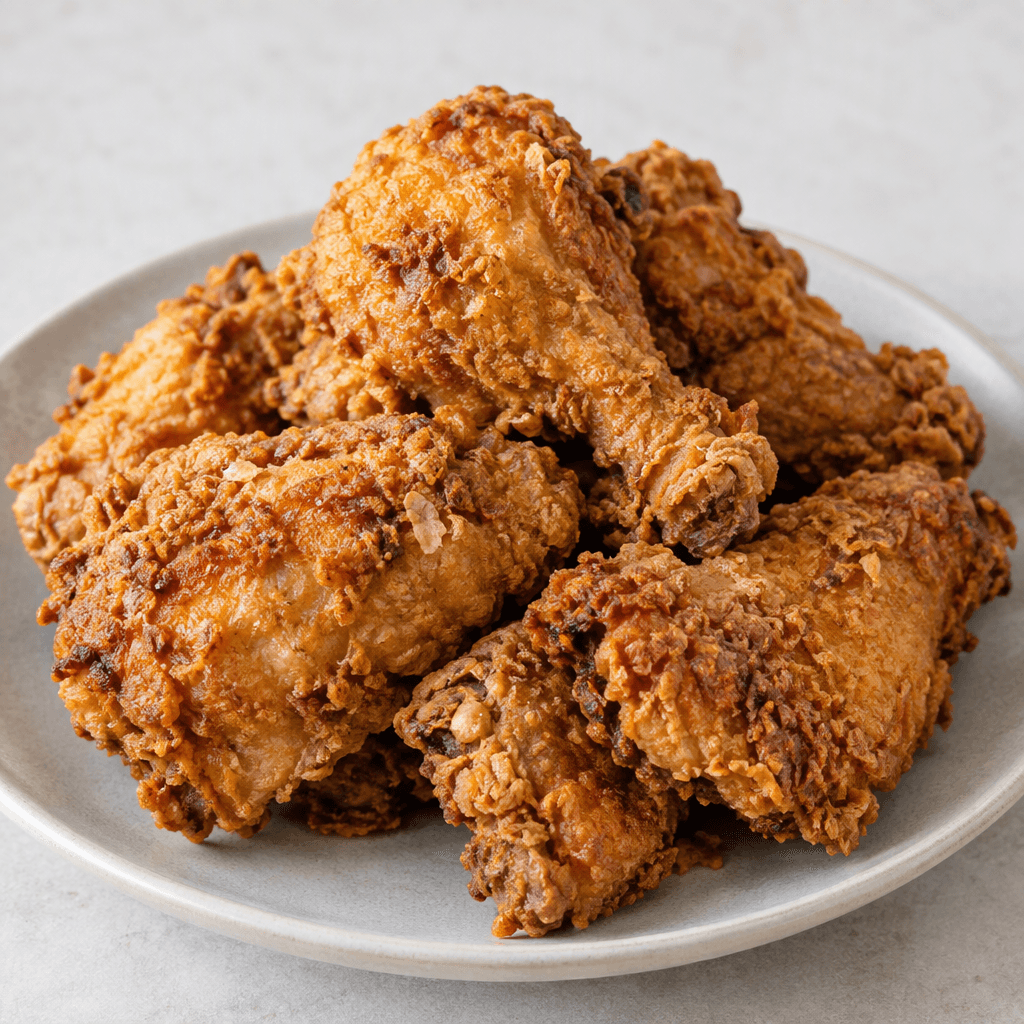
Fried Chicken Calories
Crispy outside, tender inside; rich in protein and fat
In season: Spring · Summer · Autumn · Winter
CALORIES
GI
POTASSIUM
FIBER
Quick answer
1 piece (medium) of Fried Chicken (120 g) has 294 calories. That works out to 245 calories per 100 g. It contains 10.2 g of carbs, 23.4 g of protein, 18.2 g of fat and 0.7 g of fiber. Its 7.4 mg of B3 covers 47% of the Daily Value. Its glycemic index is 50 (low), so it raises blood sugar slowly.
What is Fried Chicken?
Fried chicken is made by coating chicken pieces—often bone-in—in seasoned flour or batter, then frying them until the outside is crisp and the meat stays tender. This craggy, golden style is especially associated with the American South, though fried chicken has many variations around the world.
It is usually served hot as a main or casual meal, with sides such as fries, slaw, biscuits or a fresh salad. The chicken provides protein, while the coating and frying oil make the dish relatively rich in fat. For a less heavy meal, pair it with vegetables and keep the sides simple; at home, you can also use an oven or air fryer for a crisp finish with less oil.
Fried Chicken Nutrition Facts
Selected: 100 g
245
KCAL / 100G
Carbs
8.5g
· 3% DV
Protein
19.5g
· 39% DV
Fat
15.2g
· 19% DV
Fiber
0.6g
· 2% DV
DV is the share of the daily value covered, on a 2,000 kcal reference diet.
Calories come from: Carbs 14% · Protein 31% · Fat 55%
Fried Chicken Vitamins & Minerals
Vitamins
B3
6.2mg · 39% DV
B6
0.38mg · 22% DV
B5
0.8mg · 16% DV
Biotin
4.5µg · 15% DV
Minerals
Selenium
13µg · 24% DV
Phosphorus
170mg · 24% DV
Sodium
480mg · 21% DV
Zinc
1mg · 9% DV
How Nutritious Is Fried Chicken?
Nutrient density
Medium
How many vitamins, minerals and how much fiber this food carries per calorie. A high score means a lot of nutrition for few calories.
Satiety score
Medium
An EatBetter score computed from fiber, protein and calorie density. A high score means staying full longer on the same calories.
Both scores are calculated per 100 g and do not change with the selected portion. The satiety score is EatBetter's own calculation, not a clinical measure.
Fried Chicken Glycemic Index
GLYCEMIC INDEX
GLYCEMIC LOAD
Accounts for portion size — a more realistic measure than GI alone.
How to Burn Off Fried Chicken
To burn the 245 calories in 100 g:
🚶
Walking (5 km/h)
🏃
Running (8 km/h)
🚴
Cycling
🏊
Swimming
Times are calculated with the MET equation for a 70 kg adult. Actual burn varies with your weight, age and pace.
Is Fried Chicken Processed?
NOVA 3
Processed
1. Unprocessed
2. Minimally Processed
3. Processed
4. Ultra-Processed
NOVA classifies foods into 4 groups by industrial processing. NOVA 1 (unprocessed) is the healthiest.
Does Fried Chicken Contain Allergens?
Contains these allergens:
Which Diets Is Fried Chicken Good For?
Vegan
— Not suitable
Vegetarian
— Not suitable
Gluten-Free
— Not suitable
Dairy-Free
— Not suitable
Mediterranean
— Not suitable
Paleo
— Not suitable
Whole30
— Not suitable
DASH
— Not suitable
Keto
— Not suitable
Low FODMAP
— Not suitable
Fried Chicken Fat Profile
SATURATED
3.8g
MONOUNSATURATED
5.6g
POLYUNSATURATED
3.2g
Omega 6:3 ratio 15:1
Above the ideal 4:1 (15:1).
Compare Fried Chicken
Foods Similar to Fried Chicken
Frequently Asked Questions About Fried Chicken
How do you make fried chicken crispy?
For crispy fried chicken, let the coated pieces rest briefly before frying and keep the oil hot without overcrowding the pan. Crowding cools the oil and can make the crust greasy. Drain cooked pieces on a wire rack so steam does not soften the bottom.
Why does the coating fall off fried chicken?
Fried chicken coating often slips off when the chicken is wet, the coating is not pressed on firmly, or the pieces are moved too soon. Pat the chicken dry, coat it thoroughly, let it rest briefly, and turn each piece only after the crust has set.
What is the best oil for frying chicken?
Neutral oils with a high smoke point, such as peanut, canola, or sunflower oil, work well for fried chicken because they tolerate frying heat without adding a strong flavor. Avoid letting the oil smoke; it can make the crust taste burnt.
How do you know when fried chicken is fully cooked?
Fried chicken is safely cooked when the thickest part of the meat reaches 165°F (74°C), measured with a food thermometer without touching the bone. A brown crust alone cannot confirm that bone-in pieces are cooked through.
How long does fried chicken last in the fridge?
Fried chicken keeps for 3–4 days in a covered container in the refrigerator. Refrigerate it within two hours of cooking, and freeze it if you will not eat it in that time; discard it if it has been left out too long.
Can you freeze fried chicken?
Yes, you can freeze fried chicken. Cool the pieces, freeze them spaced apart so they do not stick together, then transfer them to an airtight container. Reheat from frozen in an oven or air fryer for a crisper crust than microwaving provides.
How do you reheat fried chicken without making it soggy?
Reheat fried chicken in an oven or air fryer until it is hot all the way through; these methods help restore the crust. A microwave heats it quickly but traps steam, which softens the coating. Avoid stacking the pieces while reheating.
What is the difference between Southern fried chicken and regular fried chicken?
Southern fried chicken usually refers to a U.S. style of seasoned, flour-coated chicken fried until crisp, often with regional seasoning or a buttermilk marinade. “Fried chicken” is broader and can describe many battered, breaded, or simply seasoned versions from different cuisines.
Is fried chicken healthy to eat regularly?
Fried chicken provides protein, but its coating and absorbed frying oil make it richer than many grilled or baked chicken preparations. Having it occasionally alongside vegetables is a more balanced choice than making it a frequent mainstay.
Can people with diabetes eat fried chicken?
People with diabetes can include fried chicken, but the flour-based crust contributes carbohydrates and the meal’s overall balance matters for blood glucose. Portion and treatment needs vary, so ask your doctor or dietitian for advice suited to your care plan.
Have another question about Fried Chicken?
Ask the AI nutrition coach — calories, portions, alternatives and more, answered in seconds in the app.

Scan calories with your camera
Instant AI nutrition analysis

Nutrition data compiled from USDA FoodData Central and scientific sources.