

Ready & Packaged Foods
All →Vegetables & Legumes
All →Desserts & Confectionery
All →Meat & Protein
All →Grains & Bakery
All →Beverages
All →Milk & Dairy
All →

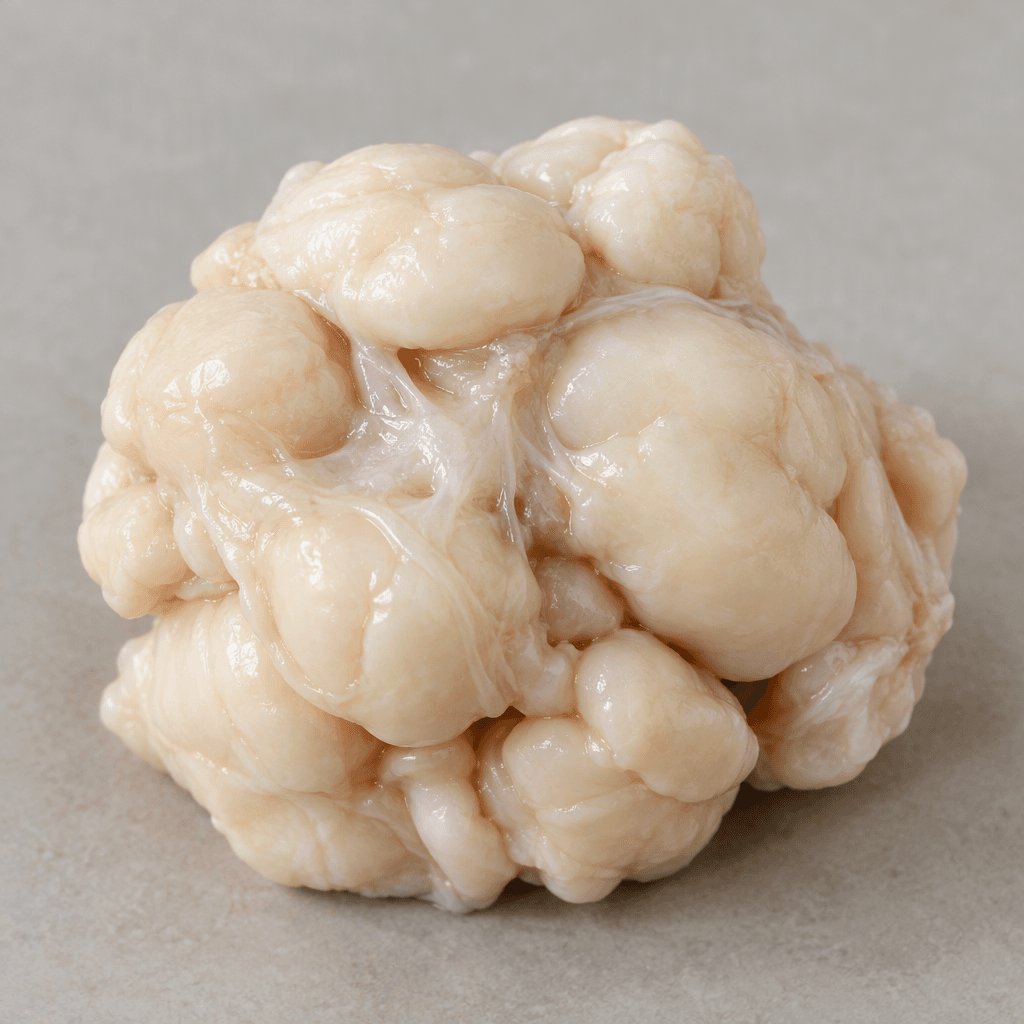
Kidney Fat Calories
Animal-derived saturated fat, energy-dense, contains vitamins A and E
In season: Winter
CALORIES
GI
POTASSIUM
FIBER
Quick answer
1 tablespoon (medium) of Kidney Fat (12 g) has 108 calories. That works out to 900 calories per 100 g. It contains 0 g of carbs, 0 g of protein, 12 g of fat and 0 g of fiber. Its 96 µg of Vitamin A covers 11% of the Daily Value. Its glycemic index is 0 (low), so it raises blood sugar slowly.
What is Kidney Fat?
Kidney fat is the firm fat surrounding the kidneys of animals such as cattle and sheep; it is not the kidney itself. In many cuisines it is cleaned and rendered, and beef kidney fat is often called suet. When cool it feels dense and waxy; once rendered, it becomes a rich cooking fat. It is used in traditional meat dishes, pastries and puddings, though everyday use varies by region. Kidney fat is almost entirely fat and very energy-dense, with a substantial saturated-fat content. Its strong, savory richness means a little can go a long way; use it sparingly or blend it with a milder cooking oil for a less rich result.
Kidney Fat Nutrition Facts
Selected: 100 g
900
KCAL / 100G
Carbs
0g
· 0% DV
Protein
0.2g
· 0% DV
Fat
99.8g
· 128% DV
Fiber
0g
· 0% DV
DV is the share of the daily value covered, on a 2,000 kcal reference diet.
Calories come from: Carbs 0% · Protein 0% · Fat 100%
Kidney Fat Vitamins & Minerals
Vitamins
Vitamin A
800µg · 89% DV
Vitamin E
2mg · 13% DV
Vitamin D
2µg · 10% DV
B12
0.2µg · 8% DV
Minerals
Selenium
1µg · 2% DV
Phosphorus
5mg · 1% DV
Calcium
2mg · 0% DV
Iron
0mg · 0% DV
How Nutritious Is Kidney Fat?
Nutrient density
Low
How many vitamins, minerals and how much fiber this food carries per calorie. A high score means a lot of nutrition for few calories.
Satiety score
Low
An EatBetter score computed from fiber, protein and calorie density. A high score means staying full longer on the same calories.
Both scores are calculated per 100 g and do not change with the selected portion. The satiety score is EatBetter's own calculation, not a clinical measure.
Kidney Fat Glycemic Index
GLYCEMIC INDEX
GLYCEMIC LOAD
Accounts for portion size — a more realistic measure than GI alone.
How to Burn Off Kidney Fat
To burn the 900 calories in 100 g:
🚶
Walking (5 km/h)
🏃
Running (8 km/h)
🚴
Cycling
🏊
Swimming
Times are calculated with the MET equation for a 70 kg adult. Actual burn varies with your weight, age and pace.
Is Kidney Fat Processed?
NOVA 2
Minimally Processed
1. Unprocessed
2. Minimally Processed
3. Processed
4. Ultra-Processed
NOVA classifies foods into 4 groups by industrial processing. NOVA 1 (unprocessed) is the healthiest.
Does Kidney Fat Contain Allergens?
No known major allergens
Which Diets Is Kidney Fat Good For?
Vegan
— Not suitable
Vegetarian
— Not suitable
Gluten-Free
✓ Suitable
Dairy-Free
— Not suitable
Mediterranean
✓ Suitable
Paleo
✓ Suitable
Whole30
— Not suitable
DASH
— Not suitable
Keto
✓ Suitable
Low FODMAP
— Not suitable
Kidney Fat Fat Profile
SATURATED
55g
MONOUNSATURATED
38g
POLYUNSATURATED
4g
Omega 6:3 ratio 2.5:1
Below the ideal 4:1 — a good omega balance.
Compare Kidney Fat
Foods Similar to Kidney Fat
Frequently Asked Questions About Kidney Fat
What is kidney fat, and where does it come from?
Kidney fat is the firm fat found around an animal’s kidneys. It is also called suet when referring to this hard internal fat from animals such as cattle or sheep, and it can be rendered for cooking.
How do you render kidney fat at home?
Cut kidney fat into small pieces and warm it slowly in a heavy pan over low heat. Stir occasionally, then strain the liquid fat once the solid pieces have browned; let it cool before transferring it to a clean, covered container.
How is kidney fat different from tallow?
Kidney fat is the raw fat surrounding the kidneys; tallow is the rendered fat made from animal fat, often including kidney fat. In other words, kidney fat describes where the fat comes from, while tallow describes a rendered product.
What can you cook with kidney fat?
Rendered kidney fat can be used to cook meat, enrich savory dishes, or add richness to some pastries. Its firm texture and distinctive flavor make it useful in recipes that call for suet or another hard cooking fat.
Can kidney fat be used in ground meat?
Yes, small pieces of kidney fat can be mixed into ground meat. They melt as the meat cooks, adding fat and flavor; use less if the meat is already fatty so the finished dish does not become greasy.
How do you clean kidney fat before cooking?
Trim away tough membranes, visible vessels, and any attached meat with a sharp knife. If the surface needs cleaning, wipe it with a paper towel rather than rinsing raw kidney fat under running water, which can splash contamination.
How should kidney fat be stored?
Wrap raw kidney fat airtight and keep it refrigerated until you use it. Store rendered kidney fat separately in a clean, covered container after it has cooled, and discard it if it develops an off smell or signs of spoilage.
Can you freeze kidney fat?
Yes, kidney fat freezes well. Divide it into recipe-sized portions, seal them in freezer-safe packaging, and thaw only what you need in the refrigerator. Avoid refreezing it after thawing, especially if it has been left warm.
What can you use instead of kidney fat?
Suet or another firm animal fat is the closest substitute for kidney fat. Depending on the recipe, butter or shortening may also work, but they have different textures and flavors, so the finished dish will not be identical.
Is kidney fat healthy to eat?
Kidney fat is an energy-dense animal fat high in saturated fat, so using it sparingly is sensible. Frequent large amounts can make it harder to limit saturated fat in your diet; people managing cholesterol should consider their overall intake.
Have another question about Kidney Fat?
Ask the AI nutrition coach — calories, portions, alternatives and more, answered in seconds in the app.

Scan calories with your camera
Instant AI nutrition analysis

Nutrition data compiled from USDA FoodData Central and scientific sources.