

Ready & Packaged Foods
All →Vegetables & Legumes
All →Desserts & Confectionery
All →Meat & Protein
All →Grains & Bakery
All →Beverages
All →Milk & Dairy
All →

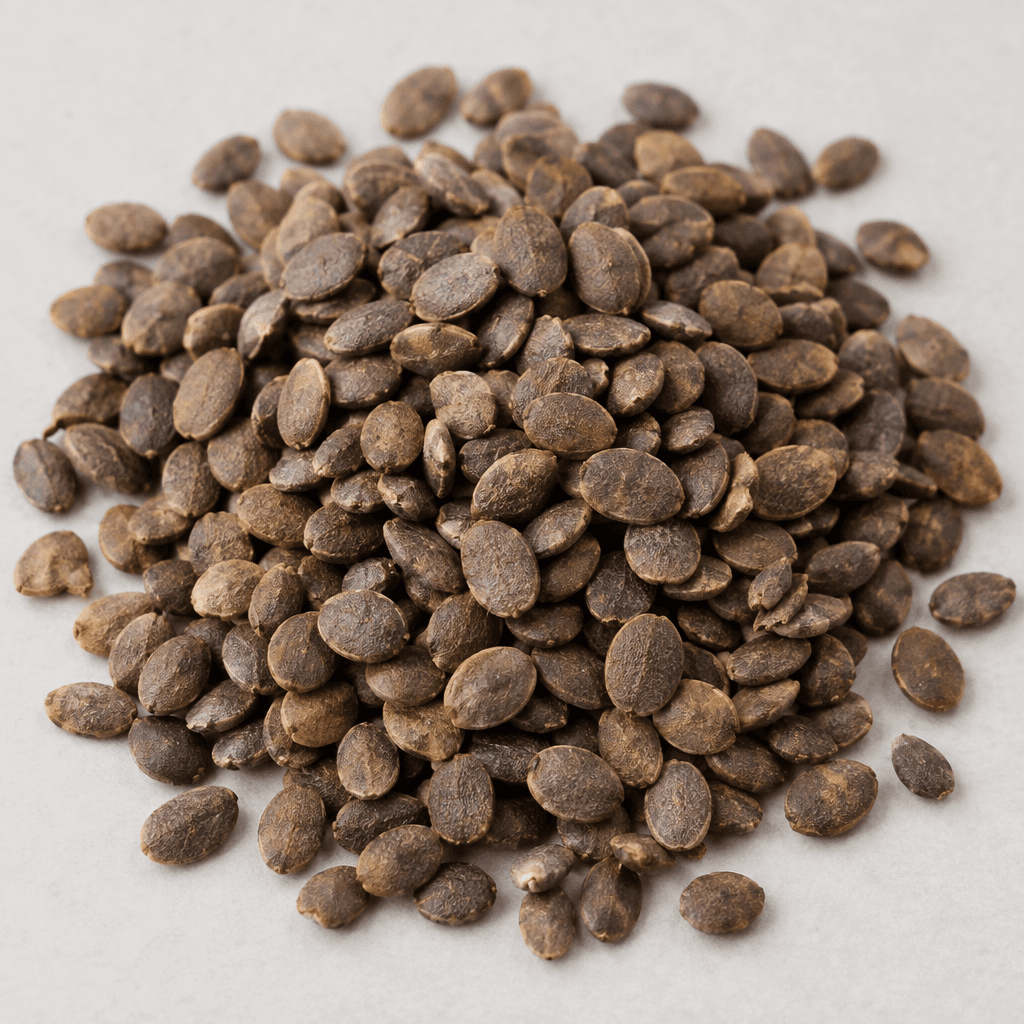
Keteb seed Calories
High fiber, healthy fats, protein source
In season: Spring · Summer · Autumn · Winter
CALORIES · 100 G
GI
POTASSIUM · 100 G
FIBER · 100 G
Quick answer
2 tablespoon (medium) of Keteb seed (20 g) has 96 calories. That works out to 480 calories per 100 g. It contains 5.6 g of carbs, 3.6 g of protein, 6.4 g of fat and 3.6 g of fiber. Its 0.6 mg of Manganese covers 24% of the Daily Value. Its glycemic index is 25 (low), so it raises blood sugar slowly.
Keteb seed Nutrition Facts
Selected: 2 tablespoon (medium) · 20 g
96
KCAL / 20G
Carbs
5.6g
· 2% DV
Protein
3.6g
· 7% DV
Fat
6.4g
· 8% DV
Fiber
3.6g
· 13% DV
DV is the share of the daily value covered, on a 2,000 kcal reference diet.
Calories come from: Carbs 24% · Protein 15% · Fat 61%
Keteb seed nutrition facts table · 2 tablespoon (medium) (20 g)
| Nutrient | Amount | % DV |
|---|---|---|
| Calories | 96 kcal | |
| Total fat | 6.4 g | 8% |
| Saturated fat | 0.84 g | 4% |
| Trans fat | 0 g | |
| Sodium | 2.4 mg | 0% |
| Total carbohydrate | 5.6 g | 2% |
| Fiber | 3.6 g | 13% |
| Protein | 3.6 g | 7% |
Calories: Calories measure energy. Average daily need is 2,000 kcal. Excess calories are stored as fat, too few cause weight loss.
Carbs: Your body's primary energy source. The brain runs exclusively on carbs. Daily need: 275g.
Protein: Essential for muscle repair and cell growth. Daily need: 50g. Keeps you full and boosts metabolism.
Fat: Needed for hormone production and vitamin absorption. Daily need: 78g. Limit saturated fats, choose unsaturated.
Fiber: Critical for digestive health and satiety. Daily need: 28g. Stabilizes blood sugar, lowers cholesterol.

Log this food in EatBetter
100,000+ people use it
- Get your daily calorie target
- Snap your meal, log it in seconds
- See every vitamin and mineral

📸 Scan the code to get the app free.

How Many Calories in 2 Tablespoons of Keteb seed?
| Serving | Amount | Calories |
|---|---|---|
| 2 tablespoon (medium) | 20 g | 96 kcal |
| 1 piece (mini) | 5 g | 24 kcal |
| 1 tablespoon (small) | 10 g | 48 kcal |
| 1 serving (medium) | 25 g | 120 kcal |
| 1 ounce (medium) | 28 g | 134 kcal |
| 3 tablespoon (large) | 30 g | 144 kcal |
| 1 pack (medium) | 50 g | 240 kcal |
| 100 g | 100 g | 480 kcal |
| 1 cup (large) | 120 g | 576 kcal |
Calculated from 480 calories per 100 g.
Frequently Asked Questions About Keteb seed
What is keteb seed?
Keteb seed is an edible seed listed as a source of fibre, fat and protein. The name is not consistently defined in widely used botanical references, so its exact plant species and place of origin cannot be confirmed from the name alone.
What does keteb seed taste like?
There is no widely established flavour description for keteb seed, so a specific taste comparison would be unreliable. Try a small amount plain first; tasting it before adding it to a strongly flavoured dish lets you judge its flavour and texture.
Can you eat keteb seed raw?
Keteb seed is listed as unprocessed, meaning it has not been roasted or refined; that does not by itself confirm raw-eating safety. Choose a food-grade product and follow its preparation directions rather than assuming every unprocessed seed is ready to eat.
How do you use keteb seed in cooking?
You can try keteb seed in porridge, yoghurt, salads or baked goods. Since there is no widely established standard recipe for it, start with a small amount and check how its flavour and texture work in the dish.
Can keteb seed be roasted?
Yes, keteb seed can be dry-roasted if it is sold as a food suitable for cooking. Use low heat and stir frequently to prevent scorching; roasting changes its unprocessed state and may bring out a stronger flavour.
Should keteb seed be ground before eating?
No, grinding keteb seed is not automatically necessary. You can use it whole or grind it for mixing into wet foods and dough; grind only what you plan to use soon, since ground seeds are more exposed to air.
Can keteb seed replace chia or flaxseed in recipes?
Not reliably in a one-for-one swap: keteb seed does not have a widely documented standard cooking behaviour, while chia and flax are known for thickening when hydrated. Test a small batch first, especially in recipes that depend on binding.
How should you store keteb seed?
Store keteb seed in an airtight container in a cool, dry, dark place, away from the stove and direct sunlight. Because seeds contain fat, discard it if it develops an unusual rancid smell or taste.
Can eating too much keteb seed cause side effects?
Yes, a large amount of keteb seed may cause gas, bloating or changes in bowel habits because it is high in fibre. Increase your intake gradually and drink fluids; stop eating it if it causes persistent discomfort.
Is keteb seed good for weight loss?
Keteb seed is not a weight-loss food on its own. Its fibre may help make a meal more filling, but adding large amounts also adds energy, so use it as one ingredient in a balanced meal.
Keteb seed Vitamins & Minerals
Vitamins
B1
0.14mg · 12% DV
Vitamin E
1.4mg · 9% DV
B6
0.08mg · 5% DV
Biotin
1.2µg · 4% DV
Minerals
Manganese
0.56mg · 24% DV
Copper
0.18mg · 20% DV
Magnesium
68mg · 16% DV
Phosphorus
84mg · 12% DV
Potassium ⭐
130mg · 4% DV
Sodium
2.4mg · 0% DV
Keteb seed Glycemic Index
GLYCEMIC INDEX
GLYCEMIC LOAD
Accounts for portion size — a more realistic measure than GI alone.
How to Burn Off Keteb seed
To burn the 96 calories in 2 tablespoon (medium) (20 g):
🚶
Walking (5 km/h)
🏃
Running (8 km/h)
🚴
Cycling
🏊
Swimming
Times are calculated with the MET equation for a 70 kg adult. Actual burn varies with your weight, age and pace.
What is Keteb seed?
Keteb seed is the edible seed of a plant known as keteb. The name is not widely established in English, so it is best not to assign it a particular region or traditional dish without more context. It can be tried whole or ground, added in small amounts to foods such as porridge, yoghurt, salads or homemade bread. Its taste and texture may vary by source, so start with a little and see how it works in your cooking. With fibre, fats and protein, it can make a filling addition to a meal. Pair it with fruit or vegetables, and keep the portion modest if you are using it as a topping.
How Nutritious Is Keteb seed?
Nutrient density
High
How many vitamins, minerals and how much fiber this food carries per calorie. A high score means a lot of nutrition for few calories.
Satiety score
Medium
An EatBetter score computed from fiber, protein and calorie density. A high score means staying full longer on the same calories.
Both scores are calculated per 100 g and do not change with the selected portion. The satiety score is EatBetter's own calculation, not a clinical measure.
Is Keteb seed Processed?
NOVA 1
Unprocessed
1. Unprocessed
2. Minimally Processed
3. Processed
4. Ultra-Processed
NOVA classifies foods into 4 groups by industrial processing. NOVA 1 (unprocessed) is the healthiest.
Does Keteb seed Contain Allergens?
No known major allergens
Which Diets Is Keteb seed Good For?
Vegan
✓ Suitable
Vegetarian
✓ Suitable
Gluten-Free
✓ Suitable
Dairy-Free
— Not suitable
Mediterranean
✓ Suitable
Paleo
✓ Suitable
Whole30
— Not suitable
DASH
— Not suitable
Keto
✓ Suitable
Low FODMAP
— Not suitable
Keteb seed Fat Profile
SATURATED
0.84g
MONOUNSATURATED
1.74g
POLYUNSATURATED
3.38g
Omega 6:3 ratio 3.7:1
Below the ideal 4:1 — a good omega balance.
Compare Keteb seed
Foods Similar to Keteb seed
Have another question about Keteb seed?
Ask the AI nutrition coach — calories, portions, alternatives and more, answered in seconds in the app.

Scan calories with your camera
Instant AI nutrition analysis

Nutrition data compiled from USDA FoodData Central and scientific sources.