

Ready & Packaged Foods
All →Vegetables & Legumes
All →Desserts & Confectionery
All →Meat & Protein
All →Grains & Bakery
All →Beverages
All →Milk & Dairy
All →

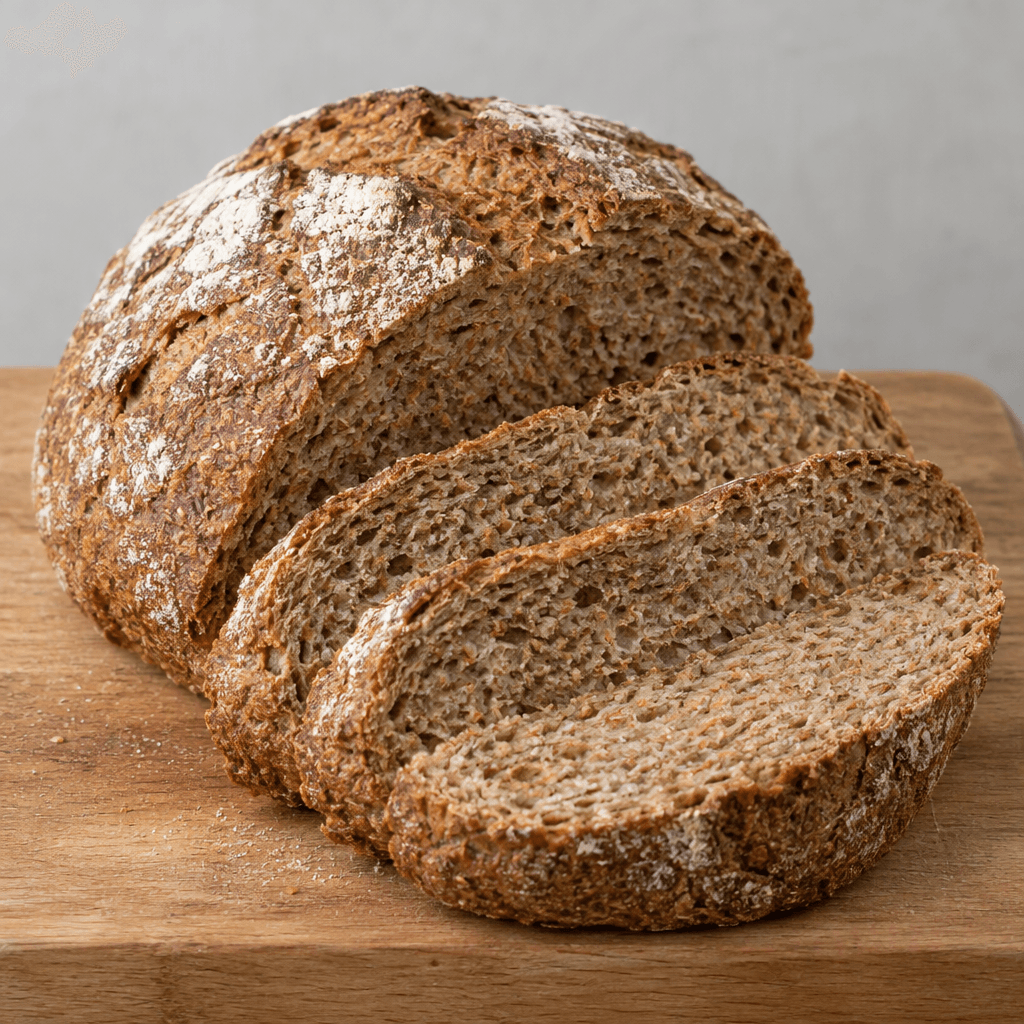
Whole Wheat Bread Calories
High fiber, whole grain bread
In season: Spring · Summer · Autumn · Winter
CALORIES
GI
POTASSIUM
FIBER
Quick answer
1 slice (medium) of Whole Wheat Bread (35 g) has 86 calories. That works out to 247 calories per 100 g. It contains 14.4 g of carbs, 3.9 g of protein, 0.8 g of fat and 2.1 g of fiber. Its 0.4 mg of Manganese covers 17% of the Daily Value. Its glycemic index is 50 (medium), so it raises blood sugar at a moderate pace.
What is Whole Wheat Bread?
Whole Wheat Bread here refers to kepek ekmeği, a Turkish-style wheat loaf made with bran added to the dough. The amount of bran and the flour used can vary between bakeries, so loaves may differ in colour and density. It tends to have a hearty wheat flavour, a coarse crumb and a pleasantly substantial chew.
In Turkey, it is commonly served at breakfast with cheese, olives or eggs, and alongside soup or other home-cooked meals. It also works well for toast and sandwiches. Its bran gives it a notably fibrous profile: a 100 g portion contains 6 g of fibre. For a lighter meal, top a slice with vegetables or a modest amount of cheese and serve with fresh tomatoes or cucumber.
Whole Wheat Bread Nutrition Facts
Selected: 100 g
247
KCAL / 100G
Carbs
41g
· 15% DV
Protein
11.2g
· 22% DV
Fat
2.4g
· 3% DV
Fiber
6g
· 21% DV
DV is the share of the daily value covered, on a 2,000 kcal reference diet.
Calories come from: Carbs 71% · Protein 19% · Fat 10%
Whole Wheat Bread Vitamins & Minerals
Vitamins
B1
0.35mg · 29% DV
B3
3.6mg · 23% DV
B2
0.13mg · 10% DV
Folate
38µg · 10% DV
Minerals
Manganese
1mg · 43% DV
Selenium
22µg · 40% DV
Phosphorus
130mg · 19% DV
Magnesium
74mg · 18% DV
How Nutritious Is Whole Wheat Bread?
Nutrient density
Medium
How many vitamins, minerals and how much fiber this food carries per calorie. A high score means a lot of nutrition for few calories.
Satiety score
High
An EatBetter score computed from fiber, protein and calorie density. A high score means staying full longer on the same calories.
Both scores are calculated per 100 g and do not change with the selected portion. The satiety score is EatBetter's own calculation, not a clinical measure.
Whole Wheat Bread Glycemic Index
GLYCEMIC INDEX
GLYCEMIC LOAD
Accounts for portion size — a more realistic measure than GI alone.
How to Burn Off Whole Wheat Bread
To burn the 247 calories in 100 g:
🚶
Walking (5 km/h)
🏃
Running (8 km/h)
🚴
Cycling
🏊
Swimming
Times are calculated with the MET equation for a 70 kg adult. Actual burn varies with your weight, age and pace.
Is Whole Wheat Bread Processed?
NOVA 3
Processed
1. Unprocessed
2. Minimally Processed
3. Processed
4. Ultra-Processed
NOVA classifies foods into 4 groups by industrial processing. NOVA 1 (unprocessed) is the healthiest.
Does Whole Wheat Bread Contain Allergens?
Contains these allergens:
Which Diets Is Whole Wheat Bread Good For?
Vegan
✓ Suitable
Vegetarian
✓ Suitable
Gluten-Free
— Not suitable
Dairy-Free
— Not suitable
Mediterranean
✓ Suitable
Paleo
— Not suitable
Whole30
— Not suitable
DASH
— Not suitable
Keto
— Not suitable
Low FODMAP
— Not suitable
Whole Wheat Bread Fat Profile
SATURATED
0.4g
MONOUNSATURATED
0.3g
POLYUNSATURATED
1.1g
Omega 6:3 ratio 6.4:1
Above the ideal 4:1 (6.4:1).
Compare Whole Wheat Bread
Foods Similar to Whole Wheat Bread
Frequently Asked Questions About Whole Wheat Bread
Does Whole Wheat Bread help with weight loss?
Whole Wheat Bread can support weight management because its fiber may help you feel full for longer. It does not cause weight loss on its own, and replacing another bread helps only if your overall portions and eating habits also support your goal.
Can people with diabetes eat Whole Wheat Bread?
Yes, many people with diabetes can include Whole Wheat Bread in a meal. Its fiber may slow digestion, but the portion and toppings still affect blood sugar; people using glucose-lowering medication should follow an individualized plan from their clinician or dietitian.
What is the difference between Whole Wheat Bread and whole-grain bread?
Whole Wheat Bread is made with wheat flour that includes the wheat kernel’s bran, germ, and endosperm. Whole-grain bread can use other intact grains too, such as oats or rye, so it is a broader category than whole wheat.
Why is Whole Wheat Bread denser than white bread?
Whole Wheat Bread is often denser because bran particles absorb water and interfere with gluten development, limiting how much the dough rises. A longer rise and adequate hydration can soften the crumb, though it will usually remain less airy than white bread.
How can you tell if Whole Wheat Bread is really whole wheat?
Look for whole wheat flour as the first flour ingredient in Whole Wheat Bread. A dark color or a sprinkling of bran does not prove that the loaf is made mostly from whole wheat; some loaves combine bran with refined white flour.
Can Whole Wheat Bread be frozen?
Yes, Whole Wheat Bread freezes well. Slice it before freezing and seal the slices in an airtight freezer bag so you can take out only what you need. Toast slices straight from frozen, or thaw them at room temperature.
How should you store Whole Wheat Bread to keep it fresh?
Keep Whole Wheat Bread in a cool, dry place in a bread box or paper bag if you will eat it soon. Avoid the refrigerator, which can make bread stale faster; freeze extra slices if you need to keep them longer.
Is Whole Wheat Bread good for constipation?
Whole Wheat Bread may help relieve constipation because its fiber adds bulk to stool and supports regular bowel movements. Drink enough fluids as you increase fiber, since a sudden increase without adequate hydration can cause bloating or discomfort.
Why does homemade Whole Wheat Bread turn out dry or crumbly?
Homemade Whole Wheat Bread can turn dry or crumbly when the bran absorbs more water than expected or the loaf is overbaked. Give the dough time to hydrate, add water gradually as needed, and let the baked loaf cool before slicing.
Is Whole Wheat Bread good for toast and sandwiches?
Yes, Whole Wheat Bread works well for both toast and sandwiches. Its hearty, slightly nutty flavor pairs especially well with eggs, nut butter, cheese, or vegetables; sturdy slices also hold moist fillings better than a very soft loaf.
Have another question about Whole Wheat Bread?
Ask the AI nutrition coach — calories, portions, alternatives and more, answered in seconds in the app.

Scan calories with your camera
Instant AI nutrition analysis

Nutrition data compiled from USDA FoodData Central and scientific sources.