

Ready & Packaged Foods
All →Vegetables & Legumes
All →Desserts & Confectionery
All →Meat & Protein
All →Grains & Bakery
All →Beverages
All →Milk & Dairy
All →

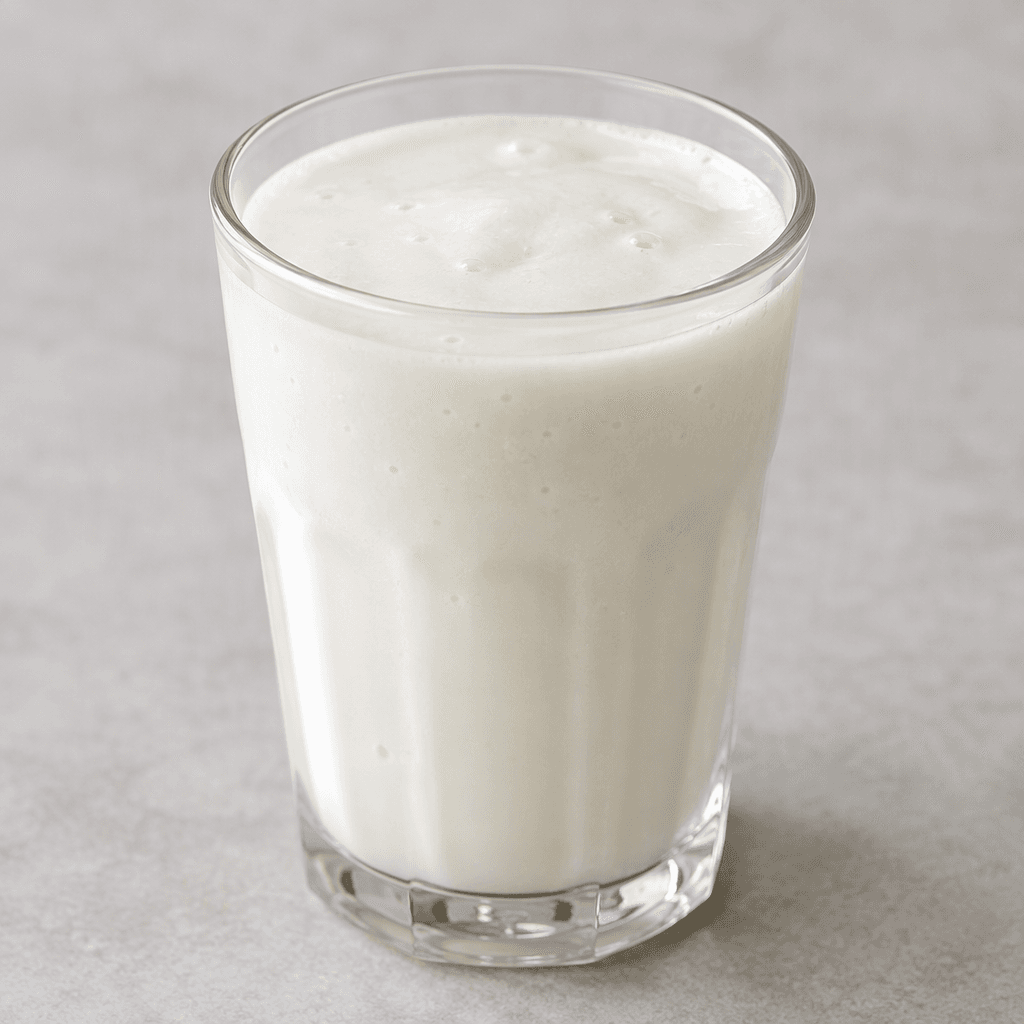
Kefir (Probiotic) Calories
Probiotic, fermented dairy, gut-friendly
In season: Spring · Summer · Autumn · Winter
CALORIES
GI
POTASSIUM
FIBER
Quick answer
1 cup (medium) of Kefir (Probiotic) (200 g) has 110 calories. That works out to 55 calories per 100 g. It contains 8 g of carbs, 6.6 g of protein, 3 g of fat and 0 g of fiber. Its 0.8 µg of B12 covers 33% of the Daily Value. Its glycemic index is 30 (low), so it raises blood sugar slowly.
What is Kefir (Probiotic)?
Kefir is a fermented milk drink traditionally associated with the Caucasus, made by culturing milk with kefir grains. It is pourable, creamy and tangy, often with a faint natural fizz. People drink it plain or blend it with fruit, and it can also be poured over cereal or used in smoothies.
It is enjoyed at breakfast or as a snack in many places, including communities with roots in its region of origin. As a fermented dairy drink, it provides protein and may contain live cultures. For a simple, filling pairing, have it with oats or fruit; choose plain kefir if you want to keep added sugar low.
Kefir (Probiotic) Nutrition Facts
Selected: 100 g
55
KCAL / 100G
Carbs
4g
· 1% DV
Protein
3.3g
· 7% DV
Fat
1.5g
· 2% DV
Fiber
0g
· 0% DV
DV is the share of the daily value covered, on a 2,000 kcal reference diet.
Calories come from: Carbs 37% · Protein 31% · Fat 32%
Kefir (Probiotic) Vitamins & Minerals
Vitamins
B12
0.4µg · 17% DV
B2
0.18mg · 14% DV
Biotin
3.5µg · 12% DV
B5
0.37mg · 7% DV
Minerals
Phosphorus
95mg · 14% DV
Calcium
120mg · 12% DV
Iodine
16µg · 11% DV
Selenium
2.5µg · 5% DV
How Nutritious Is Kefir (Probiotic)?
Nutrient density
High
How many vitamins, minerals and how much fiber this food carries per calorie. A high score means a lot of nutrition for few calories.
Satiety score
Medium
An EatBetter score computed from fiber, protein and calorie density. A high score means staying full longer on the same calories.
Both scores are calculated per 100 g and do not change with the selected portion. The satiety score is EatBetter's own calculation, not a clinical measure.
Kefir (Probiotic) Glycemic Index
GLYCEMIC INDEX
GLYCEMIC LOAD
Accounts for portion size — a more realistic measure than GI alone.
How to Burn Off Kefir (Probiotic)
To burn the 55 calories in 100 g:
🚶
Walking (5 km/h)
🏃
Running (8 km/h)
🚴
Cycling
🏊
Swimming
Times are calculated with the MET equation for a 70 kg adult. Actual burn varies with your weight, age and pace.
Is Kefir (Probiotic) Processed?
NOVA 2
Minimally Processed
1. Unprocessed
2. Minimally Processed
3. Processed
4. Ultra-Processed
NOVA classifies foods into 4 groups by industrial processing. NOVA 1 (unprocessed) is the healthiest.
Does Kefir (Probiotic) Contain Allergens?
Contains these allergens:
Which Diets Is Kefir (Probiotic) Good For?
Vegan
— Not suitable
Vegetarian
✓ Suitable
Gluten-Free
— Not suitable
Dairy-Free
— Not suitable
Mediterranean
✓ Suitable
Paleo
— Not suitable
Whole30
— Not suitable
DASH
— Not suitable
Keto
— Not suitable
Low FODMAP
— Not suitable
Kefir (Probiotic) Fat Profile
SATURATED
1g
MONOUNSATURATED
0.4g
POLYUNSATURATED
0.1g
Omega 6:3 ratio 2:1
Below the ideal 4:1 — a good omega balance.
Compare Kefir (Probiotic)
Foods Similar to Kefir (Probiotic)
Frequently Asked Questions About Kefir (Probiotic)
Is kefir good for gut health?
Kefir can support a varied diet because it is a fermented milk drink that may contain live microorganisms. Its effects vary by product and handling, and it should not be treated as a cure for digestive conditions.
What is the difference between kefir and yogurt?
Kefir is fermented using a community of bacteria and yeasts in kefir grains, while yogurt is made with specific bacterial cultures. Kefir is usually drinkable and tangier; yogurt is generally thicker.
What are kefir grains?
Kefir grains are soft clusters of bacteria and yeasts that ferment milk; they are not cereal grains. Once the finished kefir is strained, the grains can be used to start another batch.
How do you make kefir at home?
To make kefir at home, add live kefir grains to milk in a clean jar and let it ferment at room temperature. Strain out the grains when it tastes right, then refrigerate the kefir and reuse the grains.
Can people with lactose intolerance drink kefir?
Some people with lactose intolerance tolerate kefir better than milk because fermentation breaks down some lactose. Kefir is not necessarily lactose-free, so start with a small amount and stop if it causes symptoms.
Can you drink kefir every day?
Yes, kefir can be part of your daily diet if you tolerate it. If you are new to kefir, begin with a small serving; gas or bloating is a reason to reduce the amount or take a break.
Does kefir contain alcohol?
Kefir can contain small amounts of alcohol because yeasts participate in fermentation. The amount varies with the recipe, fermentation time, and storage, so homemade kefir may differ from a commercially produced drink.
How long does kefir last after opening?
Keep opened kefir refrigerated with the container tightly closed and follow the date and storage instructions on its label. Discard it if you notice mold or an unusual smell, color, or texture.
Can you freeze kefir?
Yes, you can freeze kefir, though thawing may make it separate or turn grainy. Thaw it in the refrigerator and stir or blend it before use; freezing may also reduce the activity of some live cultures.
Is kefir safe to drink during pregnancy?
Yes, kefir made from pasteurized milk is generally a suitable choice during pregnancy. Avoid kefir made with unpasteurized milk, which can carry harmful bacteria, and follow food-safety guidance for refrigerated products.
Have another question about Kefir (Probiotic)?
Ask the AI nutrition coach — calories, portions, alternatives and more, answered in seconds in the app.

Scan calories with your camera
Instant AI nutrition analysis

Nutrition data compiled from USDA FoodData Central and scientific sources.