

Ready & Packaged Foods
All →Vegetables & Legumes
All →Desserts & Confectionery
All →Meat & Protein
All →Grains & Bakery
All →Beverages
All →Milk & Dairy
All →

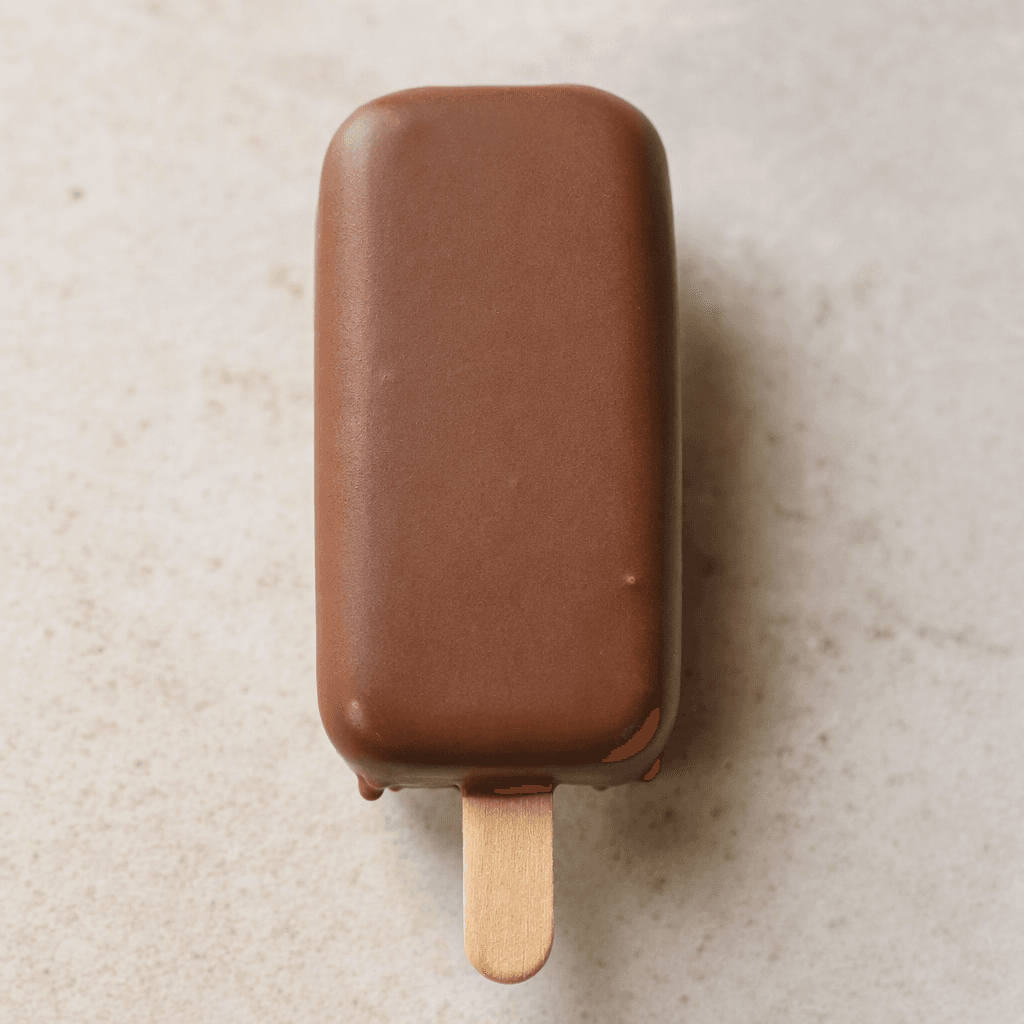
Ice cream bar Calories
Frozen dairy dessert on a stick, sweet and energy-dense
In season: Spring · Summer · Autumn · Winter
CALORIES · 100 G
GI
POTASSIUM · 100 G
FIBER · 100 G
Quick answer
1 piece (medium) of Ice cream bar (70 g) has 161 calories. That works out to 230 calories per 100 g. It contains 18.9 g of carbs, 2.4 g of protein, 8.4 g of fat and 0.4 g of fiber. Its 0.2 µg of B12 covers 10% of the Daily Value. Its glycemic index is 61 (medium), so it raises blood sugar at a moderate pace.
Ice cream bar Nutrition Facts
Selected: 1 piece (medium) · 70 g
161
KCAL / 70G
Carbs
18.9g
· 7% DV
Protein
2.4g
· 5% DV
Fat
8.4g
· 11% DV
Fiber
0.4g
· 1% DV
DV is the share of the daily value covered, on a 2,000 kcal reference diet.
Calories come from: Carbs 47% · Protein 6% · Fat 47%
Ice cream bar nutrition facts table · 1 piece (medium) (70 g)
| Nutrient | Amount | % DV |
|---|---|---|
| Calories | 161 kcal | |
| Total fat | 8.4 g | 11% |
| Saturated fat | 5.18 g | 26% |
| Trans fat | 0.14 g | |
| Sodium | 53 mg | 2% |
| Total carbohydrate | 18.9 g | 7% |
| Fiber | 0.4 g | 1% |
| Protein | 2.4 g | 5% |
Calories: Calories measure energy. Average daily need is 2,000 kcal. Excess calories are stored as fat, too few cause weight loss.
Carbs: Your body's primary energy source. The brain runs exclusively on carbs. Daily need: 275g.
Protein: Essential for muscle repair and cell growth. Daily need: 50g. Keeps you full and boosts metabolism.
Fat: Needed for hormone production and vitamin absorption. Daily need: 78g. Limit saturated fats, choose unsaturated.
Fiber: Critical for digestive health and satiety. Daily need: 28g. Stabilizes blood sugar, lowers cholesterol.

Log this food in EatBetter
100,000+ people use it
- Get your daily calorie target
- Snap your meal, log it in seconds
- See every vitamin and mineral

📸 Scan the code to get the app free.

How Many Calories in 1 Ice cream bar?
| Serving | Amount | Calories |
|---|---|---|
| 1 piece (medium) | 70 g | 161 kcal |
| 1 piece (small) | 45 g | 104 kcal |
| 1 serving (medium) | 70 g | 161 kcal |
| 1 piece (large) | 90 g | 207 kcal |
| 100 g | 100 g | 230 kcal |
| 1 piece (jumbo) | 110 g | 253 kcal |
| 2 piece (double) | 140 g | 322 kcal |
| 1 pack (triple) | 210 g | 483 kcal |
Calculated from 230 calories per 100 g.
Frequently Asked Questions About Ice cream bar
What is an ice cream bar made of?
An ice cream bar is a frozen dairy dessert served on a stick. It is commonly made with milk or other dairy ingredients, sweeteners and fat; chocolate-coated versions have an additional coating. Exact ingredients vary by product.
What is the difference between an ice cream bar and a popsicle?
An ice cream bar is creamy and dairy-based, while a popsicle is usually made from water, fruit juice or fruit purée. Their texture and flavor differ, even though both are frozen and served on a stick.
How should you store an ice cream bar in the freezer?
Keep an ice cream bar wrapped and in the main part of the freezer, where the temperature is more stable than near the door. A steady freeze helps prevent melting, ice crystals and changes in texture.
Can you refreeze a melted ice cream bar?
No, don’t refreeze an ice cream bar that has fully melted, especially if it has been sitting at room temperature. Refreezing can compromise food safety and texture; discard it if you’re unsure how long it was warm.
How do you make an ice cream bar at home?
You can make an ice cream bar at home by pouring a milk, cream and sugar mixture into popsicle molds and freezing it with sticks inserted. For a firmer result, leave the molds in the freezer until fully solid.
Why does the stick come out of an ice cream bar?
The stick can come loose if it was inserted before the mixture had started to freeze or if the ice cream around it has softened. When making bars at home, insert the sticks once the mixture is partly set.
Why does the chocolate coating on an ice cream bar crack?
The coating can crack when it meets very cold ice cream or when the bar goes through temperature changes. Cracking usually affects the coating’s texture; avoid eating a bar that has fully melted and then been refrozen.
How do you keep an ice cream bar from melting while serving it?
Take an ice cream bar out of the freezer just before serving and put it back promptly if it isn’t being eaten. On a warm day, serving it straight from the wrapper can also help limit mess and melting.
Is an ice cream bar unhealthy to eat every day?
An ice cream bar is a sweet treat, so having one every day may add a lot of dessert to your routine. Enjoying it occasionally and choosing a portion that fits your usual eating habits is a more practical approach.
Can people with lactose intolerance eat an ice cream bar?
An ice cream bar made with dairy may contain lactose and trigger symptoms in people with lactose intolerance. Tolerance varies, so if dairy regularly causes you discomfort, ask a dietitian about suitable alternatives.
Ice cream bar Vitamins & Minerals
Vitamins
B12
0.24µg · 10% DV
B2
0.13mg · 10% DV
Vitamin A
66.5µg · 7% DV
B5
0.24mg · 5% DV
Minerals
Phosphorus
67mg · 10% DV
Calcium
84mg · 8% DV
Iodine
5.6µg · 4% DV
Potassium ⭐
126mg · 4% DV
Sodium
53mg · 2% DV
Ice cream bar Glycemic Index
GLYCEMIC INDEX
GLYCEMIC LOAD
Accounts for portion size — a more realistic measure than GI alone.
How to Burn Off Ice cream bar
To burn the 161 calories in 1 piece (medium) (70 g):
🚶
Walking (5 km/h)
🏃
Running (8 km/h)
🚴
Cycling
🏊
Swimming
Times are calculated with the MET equation for a 70 kg adult. Actual burn varies with your weight, age and pace.
What is Ice cream bar?
An ice cream bar is a sweet, frozen dairy dessert made to be eaten from a stick. It is a convenient, individually portioned treat, with no cone or bowl needed; flavours and coatings can vary by product.
It is commonly enjoyed on warm days as a snack or dessert, straight from the freezer, both at home and on the go. For English-speaking readers, it is familiar as a grab-and-go alternative to a scoop of ice cream. It is energy-dense, with most of its calories coming from fat and carbohydrate, and provides little fibre. Enjoy it as a small dessert, or serve it with fresh fruit for a contrasting, lighter accompaniment.
How Nutritious Is Ice cream bar?
Nutrient density
Low
How many vitamins, minerals and how much fiber this food carries per calorie. A high score means a lot of nutrition for few calories.
Satiety score
Low
An EatBetter score computed from fiber, protein and calorie density. A high score means staying full longer on the same calories.
Both scores are calculated per 100 g and do not change with the selected portion. The satiety score is EatBetter's own calculation, not a clinical measure.
Is Ice cream bar Processed?
NOVA 3
Processed
1. Unprocessed
2. Minimally Processed
3. Processed
4. Ultra-Processed
NOVA classifies foods into 4 groups by industrial processing. NOVA 1 (unprocessed) is the healthiest.
Does Ice cream bar Contain Allergens?
Contains these allergens:
Which Diets Is Ice cream bar Good For?
Vegan
— Not suitable
Vegetarian
✓ Suitable
Gluten-Free
✓ Suitable
Dairy-Free
— Not suitable
Mediterranean
— Not suitable
Paleo
— Not suitable
Whole30
— Not suitable
DASH
— Not suitable
Keto
— Not suitable
Low FODMAP
— Not suitable
Ice cream bar Fat Profile
SATURATED
5.18g
MONOUNSATURATED
2.17g
POLYUNSATURATED
0.28g
Omega 6:3 ratio 8:1
Above the ideal 4:1 (8:1).
Compare Ice cream bar
Foods Similar to Ice cream bar
Have another question about Ice cream bar?
Ask the AI nutrition coach — calories, portions, alternatives and more, answered in seconds in the app.

Scan calories with your camera
Instant AI nutrition analysis

Nutrition data compiled from USDA FoodData Central and scientific sources.