

Ready & Packaged Foods
All →Vegetables & Legumes
All →Desserts & Confectionery
All →Meat & Protein
All →Grains & Bakery
All →Beverages
All →Milk & Dairy
All →

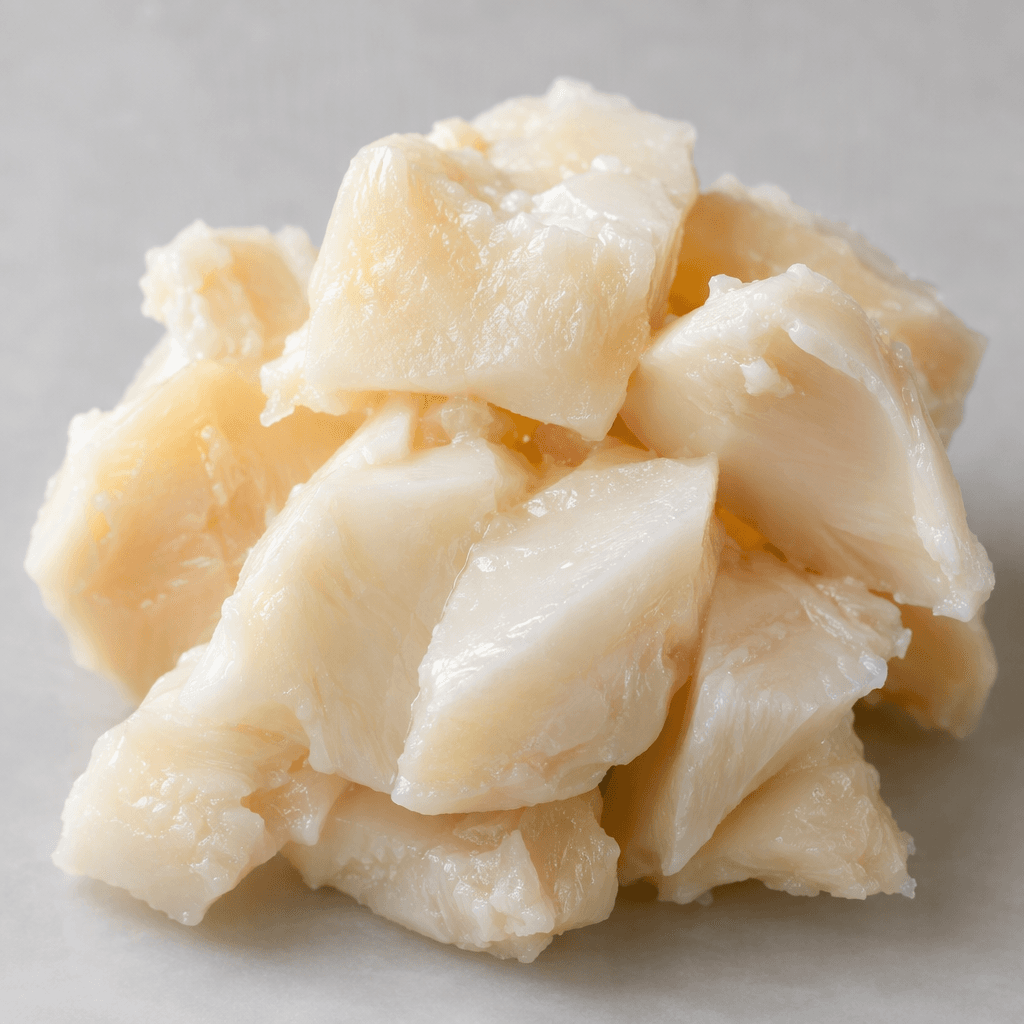
Kebab fat Calories
High-fat, energy-dense animal fat
CALORIES · 100 G
GI
POTASSIUM · 100 G
FIBER · 100 G
Quick answer
1 tablespoon (medium) of Kebab fat (12 g) has 108 calories. That works out to 897 calories per 100 g. It contains 0 g of carbs, 0 g of protein, 12 g of fat and 0 g of fiber. Its glycemic index is 0 (low), so it raises blood sugar slowly.
Kebab fat Nutrition Facts
Selected: 1 tablespoon (medium) · 12 g
108
KCAL / 12G
Carbs
0g
· 0% DV
Protein
0g
· 0% DV
Fat
12g
· 15% DV
Fiber
0g
· 0% DV
DV is the share of the daily value covered, on a 2,000 kcal reference diet.
Calories come from: Carbs 0% · Protein 0% · Fat 100%
Kebab fat nutrition facts table · 1 tablespoon (medium) (12 g)
| Nutrient | Amount | % DV |
|---|---|---|
| Calories | 108 kcal | |
| Total fat | 12 g | 15% |
| Saturated fat | 4.78 g | 24% |
| Trans fat | 0.14 g | |
| Sodium | 3.84 mg | 0% |
| Total carbohydrate | 0 g | 0% |
| Fiber | 0 g | 0% |
| Protein | 0 g | 0% |
Calories: Calories measure energy. Average daily need is 2,000 kcal. Excess calories are stored as fat, too few cause weight loss.
Carbs: Your body's primary energy source. The brain runs exclusively on carbs. Daily need: 275g.
Protein: Essential for muscle repair and cell growth. Daily need: 50g. Keeps you full and boosts metabolism.
Fat: Needed for hormone production and vitamin absorption. Daily need: 78g. Limit saturated fats, choose unsaturated.
Fiber: Critical for digestive health and satiety. Daily need: 28g. Stabilizes blood sugar, lowers cholesterol.

Log this food in EatBetter
100,000+ people use it
- Get your daily calorie target
- Snap your meal, log it in seconds
- See every vitamin and mineral

📸 Scan the code to get the app free.

How Many Calories in 1 Tablespoon of Kebab fat?
| Serving | Amount | Calories |
|---|---|---|
| 1 tablespoon (medium) | 12 g | 108 kcal |
| 1 teaspoon (small) | 4 g | 36 kcal |
| 1 serving (small) | 15 g | 135 kcal |
| 1 piece (small) | 20 g | 179 kcal |
| 2 tablespoon (double) | 24 g | 215 kcal |
| 1 serving (medium) | 30 g | 269 kcal |
| 1 piece (medium) | 40 g | 359 kcal |
| 1 serving (large) | 50 g | 449 kcal |
| 100 g | 100 g | 897 kcal |
Calculated from 897 calories per 100 g.
Frequently Asked Questions About Kebab fat
What is kebab fat?
Kebab fat is animal fat used to cook or season kebabs, commonly from lamb or mutton. It may be rendered and strained before sale, which makes it a processed fat; cooks use it to add richness and help meat stay moist.
Is kebab fat the same as lamb tail fat?
Not always. Kebab fat can come from different cuts of lamb or mutton, while lamb tail fat specifically comes from the animal’s tail. Some kebab recipes use tail fat, but the terms are not interchangeable for every product.
How is kebab fat used when grilling kebabs?
Kebab fat can be finely minced into ground meat or melted and brushed onto food during cooking. In minced kebabs, distribute it evenly through the mixture so the skewers hold together and the fat does not drip excessively onto the fire.
Can you render kebab fat at home?
Yes, you can render kebab fat at home by chopping it small and heating it gently until the fat melts. Strain out the solid pieces and cool the liquid fat in a clean container; avoid high heat, which can scorch it.
What can I use instead of kebab fat?
Lamb fat is the closest substitute for kebab fat, especially in lamb kebab recipes. Beef tallow can work in some dishes but changes the flavor; for a lighter result, use less fat and expect a leaner, less juicy kebab.
How should kebab fat be stored?
Store kebab fat in a clean, sealed container in the refrigerator. Rendered fat keeps better when it has been strained and kept free of water and meat scraps. Discard it if it develops an off smell, mold, or an unusual appearance.
Can kebab fat be frozen?
Yes, kebab fat freezes well. Divide it into small portions and seal them in freezer-safe packaging so you can thaw only what you need. Thaw it in the refrigerator and avoid refreezing fat that has already been thawed.
Can kebab fat be used for frying?
Yes, kebab fat can be used to fry meat or vegetables, adding a distinct lamb-like flavor. Heat it gradually and avoid letting it smoke; its flavor can overpower delicate ingredients, so start with a small amount.
Does kebab fat make kebabs juicier?
Yes, adding kebab fat to lean minced meat can make kebabs taste richer and feel less dry. It does not prevent overcooking, though, and too much fat can cause flare-ups on a grill or make the mixture difficult to shape.
Is kebab fat healthy to eat regularly?
Kebab fat is an energy-dense animal fat, so using large amounts often can add substantial saturated fat to meals. Treat it as a cooking ingredient rather than the main part of a meal, and use modest amounts.
Kebab fat Vitamins & Minerals
Vitamins
Vitamin K
0.9µg · 1% DV
B12
0.01µg · 0% DV
Vitamin E
0.07mg · 0% DV
Vitamin D
0.02µg · 0% DV
Minerals
Sodium
3.84mg · 0% DV
Selenium
0.02µg · 0% DV
Iron
0.01mg · 0% DV
Zinc
0mg · 0% DV
Potassium ⭐
0.6mg · 0% DV
Kebab fat Glycemic Index
GLYCEMIC INDEX
GLYCEMIC LOAD
Accounts for portion size — a more realistic measure than GI alone.
How to Burn Off Kebab fat
To burn the 108 calories in 1 tablespoon (medium) (12 g):
🚶
Walking (5 km/h)
🏃
Running (8 km/h)
🚴
Cycling
🏊
Swimming
Times are calculated with the MET equation for a 70 kg adult. Actual burn varies with your weight, age and pace.
What is Kebab fat?
Kebab fat is animal fat collected from meat as it cooks for kebabs, or fat separated from the meat and used in cooking. It is often associated with lamb or beef kebabs, though its flavour depends on the meat. As the kebab roasts on a skewer or spit, the fat helps keep the meat succulent and carries its seasoning; it can also be used to cook other ingredients.
In Turkey and elsewhere, it may be served with kebab juices or used sparingly to enrich rice and vegetables. It is almost entirely fat, so a little goes a long way. For a lighter meal, use a small amount and pair the kebab with salad or grilled vegetables.
How Nutritious Is Kebab fat?
Nutrient density
Low
How many vitamins, minerals and how much fiber this food carries per calorie. A high score means a lot of nutrition for few calories.
Satiety score
Low
An EatBetter score computed from fiber, protein and calorie density. A high score means staying full longer on the same calories.
Both scores are calculated per 100 g and do not change with the selected portion. The satiety score is EatBetter's own calculation, not a clinical measure.
Is Kebab fat Processed?
NOVA 3
Processed
1. Unprocessed
2. Minimally Processed
3. Processed
4. Ultra-Processed
NOVA classifies foods into 4 groups by industrial processing. NOVA 1 (unprocessed) is the healthiest.
Does Kebab fat Contain Allergens?
No known major allergens
Which Diets Is Kebab fat Good For?
Vegan
— Not suitable
Vegetarian
— Not suitable
Gluten-Free
— Not suitable
Dairy-Free
— Not suitable
Mediterranean
— Not suitable
Paleo
— Not suitable
Whole30
— Not suitable
DASH
— Not suitable
Keto
✓ Suitable
Low FODMAP
— Not suitable
Kebab fat Fat Profile
SATURATED
4.78g
MONOUNSATURATED
5.41g
POLYUNSATURATED
0.35g
Omega 6:3 ratio 4.8:1
Above the ideal 4:1 (4.8:1).
Compare Kebab fat
Foods Similar to Kebab fat
Have another question about Kebab fat?
Ask the AI nutrition coach — calories, portions, alternatives and more, answered in seconds in the app.

Scan calories with your camera
Instant AI nutrition analysis

Nutrition data compiled from USDA FoodData Central and scientific sources.