

Ready & Packaged Foods
All →Vegetables & Legumes
All →Desserts & Confectionery
All →Meat & Protein
All →Grains & Bakery
All →Beverages
All →Milk & Dairy
All →

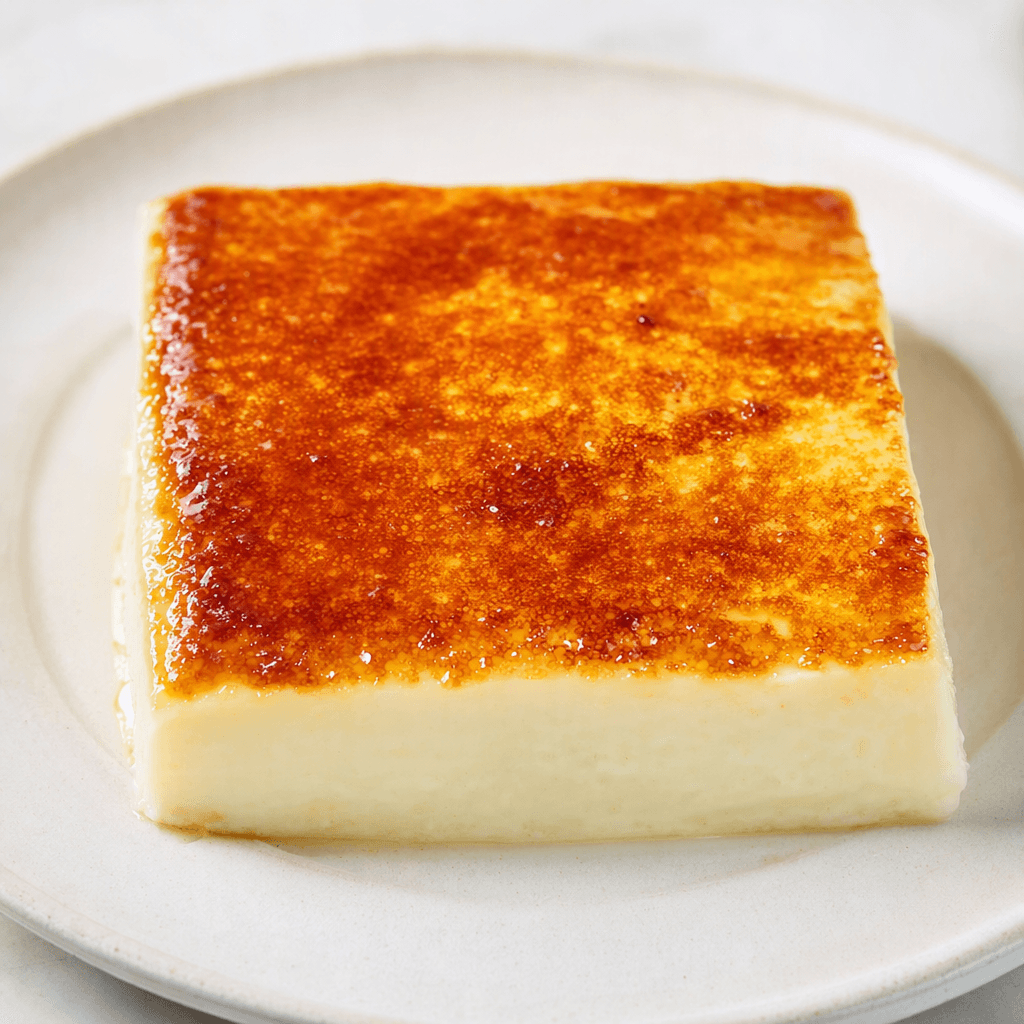
Kazandibi (Milky) Calories
Caramelized-bottom Turkish milk pudding
In season: Spring · Summer · Autumn · Winter
CALORIES · 100 G
GI
POTASSIUM · 100 G
FIBER · 100 G
Quick answer
1 piece (medium) of Kazandibi (Milky) (120 g) has 162 calories. That works out to 135 calories per 100 g. It contains 28.2 g of carbs, 3.8 g of protein, 3.7 g of fat and 0 g of fiber. Its 102 mg of Phosphorus covers 15% of the Daily Value. Its glycemic index is 60 (medium), so it raises blood sugar at a moderate pace.
Kazandibi (Milky) Nutrition Facts
Selected: 1 piece (medium) · 120 g
162
KCAL / 120G
Carbs
28.2g
· 10% DV
Protein
3.8g
· 8% DV
Fat
3.7g
· 5% DV
Fiber
0g
· 0% DV
DV is the share of the daily value covered, on a 2,000 kcal reference diet.
Calories come from: Carbs 70% · Protein 9% · Fat 21%
Kazandibi (Milky) nutrition facts table · 1 piece (medium) (120 g)
| Nutrient | Amount | % DV |
|---|---|---|
| Calories | 162 kcal | |
| Total fat | 3.7 g | 5% |
| Saturated fat | 2.16 g | 11% |
| Trans fat | 0.04 g | |
| Sodium | 66 mg | 3% |
| Total carbohydrate | 28.2 g | 10% |
| Fiber | 0 g | 0% |
| Protein | 3.8 g | 8% |
Calories: Calories measure energy. Average daily need is 2,000 kcal. Excess calories are stored as fat, too few cause weight loss.
Carbs: Your body's primary energy source. The brain runs exclusively on carbs. Daily need: 275g.
Protein: Essential for muscle repair and cell growth. Daily need: 50g. Keeps you full and boosts metabolism.
Fat: Needed for hormone production and vitamin absorption. Daily need: 78g. Limit saturated fats, choose unsaturated.
Fiber: Critical for digestive health and satiety. Daily need: 28g. Stabilizes blood sugar, lowers cholesterol.

Log this food in EatBetter
100,000+ people use it
- Get your daily calorie target
- Snap your meal, log it in seconds
- See every vitamin and mineral

📸 Scan the code to get the app free.

How Many Calories in 1 Medium Kazandibi (Milky)?
| Serving | Amount | Calories |
|---|---|---|
| 1 piece (medium) | 120 g | 162 kcal |
| 1 slice (thin) | 60 g | 81 kcal |
| 1 piece (small) | 80 g | 108 kcal |
| 100 g | 100 g | 135 kcal |
| 1 slice (thick) | 100 g | 135 kcal |
| 1 serving (medium) | 150 g | 203 kcal |
| 1 piece (large) | 180 g | 243 kcal |
| 1 serving (large) | 200 g | 270 kcal |
| 2 piece (double) | 240 g | 324 kcal |
Calculated from 135 calories per 100 g.
Frequently Asked Questions About Kazandibi (Milky)
What is Kazandibi (Milky)?
Kazandibi (Milky) is a Turkish milk pudding with a deliberately caramelized, browned underside. It is chilled, cut into portions, and often turned over so the toasted layer shows on top or around the outside.
Why is the bottom of Kazandibi (Milky) burnt?
The browned underside is intentional: milk and sugar at the pan’s surface caramelize during cooking, giving Kazandibi (Milky) its signature toasted flavor. It should taste caramelized, not blackened or bitter.
How is Kazandibi (Milky) traditionally made?
Kazandibi (Milky) is made by cooking a thick milk pudding, spreading it in a pan with a caramelized base, then chilling it until set. The pudding is sliced and commonly flipped so the browned side is visible.
Does Kazandibi (Milky) contain chicken?
Most modern Kazandibi (Milky) is made with milk, sugar, and a thickener rather than chicken. The dessert is historically linked to tavuk göğsü, a Turkish pudding that can contain finely shredded chicken, so recipes vary.
What is the difference between Kazandibi (Milky) and tavuk göğsü?
Kazandibi (Milky) is defined by its caramelized bottom, while tavuk göğsü is a smooth Turkish milk pudding without that browned layer. Traditional kazandibi can be made from tavuk göğsü pudding, but many current versions are chicken-free.
How do you get the caramelized bottom on Kazandibi (Milky)?
To caramelize the base of Kazandibi (Milky), brown the sugar mixture in the pan before adding the pudding, using controlled heat. Stop when it is deep golden-brown; burning it until black makes the dessert bitter.
Why does Kazandibi (Milky) stick to the pan?
Kazandibi (Milky) can stick if its base has not caramelized evenly or if the pudding is cut before it has fully chilled and set. Let it cool completely, then loosen portions with a thin spatula.
Is Kazandibi (Milky) served hot or cold?
Kazandibi (Milky) is usually served cold, after the milk pudding has set in the refrigerator. It is often cut and flipped so the caramelized surface faces outward, and can be served plain with tea or Turkish coffee.
How long does Kazandibi (Milky) last in the fridge?
Keep Kazandibi (Milky) covered and refrigerated, and eat it within a few days. Because it is a milk pudding, do not leave it at room temperature for extended periods; discard it if its smell or texture changes.
Can you freeze Kazandibi (Milky)?
You can freeze Kazandibi (Milky), but freezing may make the milk pudding watery or grainy after thawing and soften its caramelized layer. For the best texture, refrigerate it and eat it fresh rather than freezing it.
Kazandibi (Milky) Vitamins & Minerals
Vitamins
B12
0.3µg · 13% DV
B2
0.16mg · 12% DV
Biotin
2.4µg · 8% DV
B5
0.36mg · 7% DV
Minerals
Phosphorus
102mg · 15% DV
Calcium
132mg · 13% DV
Iodine
9.6µg · 6% DV
Potassium ⭐
156mg · 5% DV
Sodium
66mg · 3% DV
Kazandibi (Milky) Glycemic Index
GLYCEMIC INDEX
GLYCEMIC LOAD
Accounts for portion size — a more realistic measure than GI alone.
How to Burn Off Kazandibi (Milky)
To burn the 162 calories in 1 piece (medium) (120 g):
🚶
Walking (5 km/h)
🏃
Running (8 km/h)
🚴
Cycling
🏊
Swimming
Times are calculated with the MET equation for a 70 kg adult. Actual burn varies with your weight, age and pace.
What is Kazandibi (Milky)?
Sütlü kazandibi is a traditional Turkish milk pudding made with milk, sugar and a thickener such as starch or rice flour. It is cooked in a shallow pan until the underside browns and caramelizes, then portioned so that the distinctive dark layer remains part of each piece.
The pudding is cool, smooth and softly set, with a pleasantly toasted, slightly chewy base. In Turkey it is commonly served chilled as a dessert, sometimes with a dusting of cinnamon; a small cup of coffee or tea makes a natural accompaniment. It is mostly a source of carbohydrate, with modest amounts of protein and fat. A 100 g portion has 135 calories, so a smaller slice works well when you want something sweet without making dessert too substantial.
How Nutritious Is Kazandibi (Milky)?
Nutrient density
Low
How many vitamins, minerals and how much fiber this food carries per calorie. A high score means a lot of nutrition for few calories.
Satiety score
Low
An EatBetter score computed from fiber, protein and calorie density. A high score means staying full longer on the same calories.
Both scores are calculated per 100 g and do not change with the selected portion. The satiety score is EatBetter's own calculation, not a clinical measure.
Is Kazandibi (Milky) Processed?
NOVA 3
Processed
1. Unprocessed
2. Minimally Processed
3. Processed
4. Ultra-Processed
NOVA classifies foods into 4 groups by industrial processing. NOVA 1 (unprocessed) is the healthiest.
Does Kazandibi (Milky) Contain Allergens?
Contains these allergens:
Which Diets Is Kazandibi (Milky) Good For?
Vegan
— Not suitable
Vegetarian
✓ Suitable
Gluten-Free
— Not suitable
Dairy-Free
— Not suitable
Mediterranean
✓ Suitable
Paleo
— Not suitable
Whole30
— Not suitable
DASH
— Not suitable
Keto
— Not suitable
Low FODMAP
— Not suitable
Kazandibi (Milky) Fat Profile
SATURATED
2.16g
MONOUNSATURATED
0.96g
POLYUNSATURATED
0.12g
Omega 6:3 ratio 6:1
Above the ideal 4:1 (6:1).
Compare Kazandibi (Milky)
Foods Similar to Kazandibi (Milky)
Have another question about Kazandibi (Milky)?
Ask the AI nutrition coach — calories, portions, alternatives and more, answered in seconds in the app.

Scan calories with your camera
Instant AI nutrition analysis

Nutrition data compiled from USDA FoodData Central and scientific sources.