

Ready & Packaged Foods
All →Vegetables & Legumes
All →Desserts & Confectionery
All →Meat & Protein
All →Grains & Bakery
All →Beverages
All →Milk & Dairy
All →

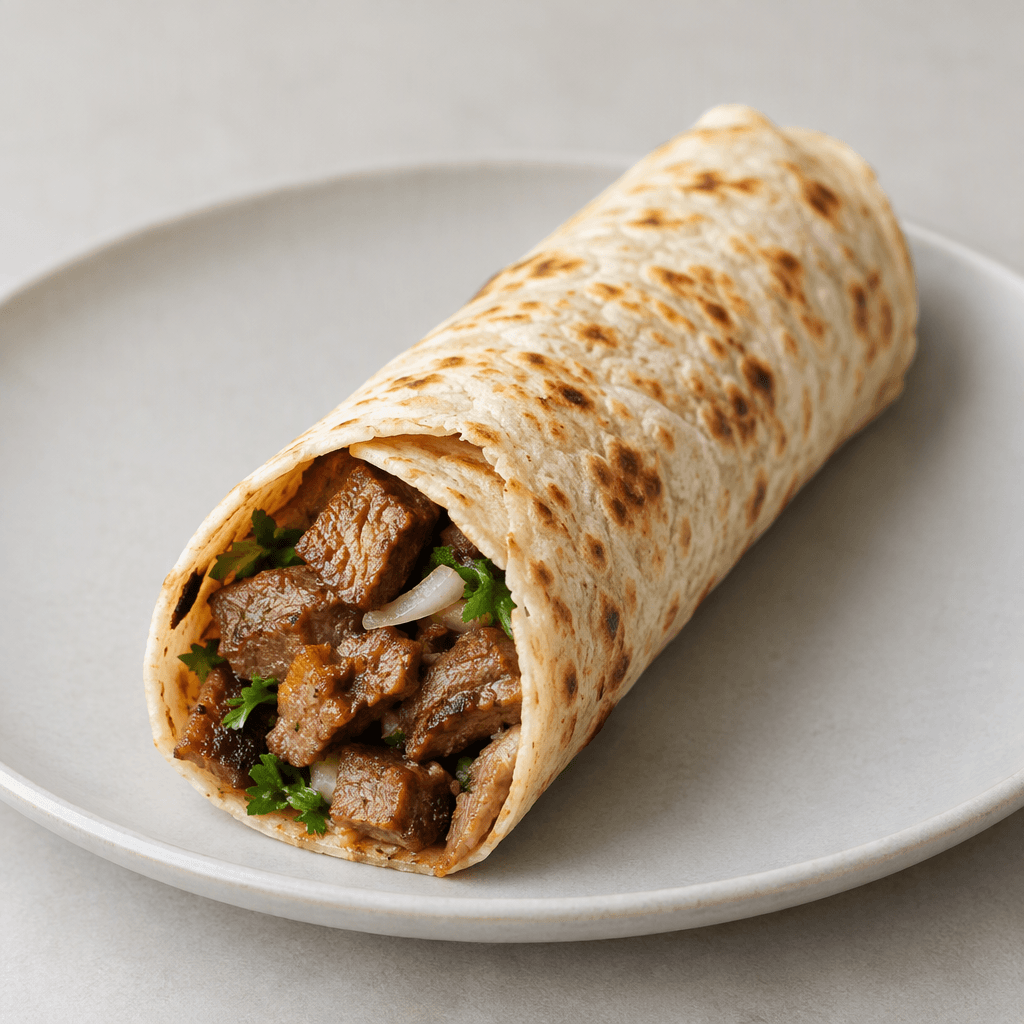
Kavurma Wrap Calories
Traditional Turkish kavurma beef wrapped in flatbread. High in protein and energy.
In season: Spring · Summer · Autumn · Winter
CALORIES
GI
POTASSIUM
FIBER
Quick answer
1 piece (medium) of Kavurma Wrap (180 g) has 468 calories. That works out to 260 calories per 100 g. It contains 39.6 g of carbs, 27 g of protein, 21.6 g of fat and 3.8 g of fiber. Its 2.2 µg of B12 covers 90% of the Daily Value. Its glycemic index is 55 (medium), so it raises blood sugar at a moderate pace.
What is Kavurma Wrap?
A Kavurma Wrap brings Turkish kavurma—meat cooked until tender and browned, often beef—together with thin flatbread. The bread is rolled around the chunky meat and may be warmed or lightly toasted before serving.
Rich and savoury, with tender bites of meat against soft bread, it is commonly eaten as a filling lunch or quick meal in Turkey. For readers elsewhere, it makes an easy takeaway-style meal too; salad, pickles or a yoghurt drink balance its richness. It is substantial, providing protein as well as energy: each 100 g contains 15 g of protein. Choose leaner kavurma or add plenty of fresh greens if you want a lighter wrap.
Kavurma Wrap Nutrition Facts
Selected: 100 g
260
KCAL / 100G
Carbs
22g
· 8% DV
Protein
15g
· 30% DV
Fat
12g
· 15% DV
Fiber
2.1g
· 8% DV
DV is the share of the daily value covered, on a 2,000 kcal reference diet.
Calories come from: Carbs 34% · Protein 23% · Fat 43%
Kavurma Wrap Vitamins & Minerals
Vitamins
B12
1.2µg · 50% DV
B3
3.2mg · 20% DV
B2
0.18mg · 14% DV
B5
0.7mg · 14% DV
Minerals
Phosphorus
145mg · 21% DV
Zinc
2mg · 18% DV
Sodium
420mg · 18% DV
Selenium
7.5µg · 14% DV
How Nutritious Is Kavurma Wrap?
Nutrient density
Medium
How many vitamins, minerals and how much fiber this food carries per calorie. A high score means a lot of nutrition for few calories.
Satiety score
Medium
An EatBetter score computed from fiber, protein and calorie density. A high score means staying full longer on the same calories.
Both scores are calculated per 100 g and do not change with the selected portion. The satiety score is EatBetter's own calculation, not a clinical measure.
Kavurma Wrap Glycemic Index
GLYCEMIC INDEX
GLYCEMIC LOAD
Accounts for portion size — a more realistic measure than GI alone.
How to Burn Off Kavurma Wrap
To burn the 260 calories in 100 g:
🚶
Walking (5 km/h)
🏃
Running (8 km/h)
🚴
Cycling
🏊
Swimming
Times are calculated with the MET equation for a 70 kg adult. Actual burn varies with your weight, age and pace.
Is Kavurma Wrap Processed?
NOVA 3
Processed
1. Unprocessed
2. Minimally Processed
3. Processed
4. Ultra-Processed
NOVA classifies foods into 4 groups by industrial processing. NOVA 1 (unprocessed) is the healthiest.
Does Kavurma Wrap Contain Allergens?
Contains these allergens:
Which Diets Is Kavurma Wrap Good For?
Vegan
— Not suitable
Vegetarian
— Not suitable
Gluten-Free
— Not suitable
Dairy-Free
— Not suitable
Mediterranean
✓ Suitable
Paleo
✓ Suitable
Whole30
— Not suitable
DASH
— Not suitable
Keto
— Not suitable
Low FODMAP
— Not suitable
Kavurma Wrap Fat Profile
SATURATED
4.5g
MONOUNSATURATED
5.2g
POLYUNSATURATED
1.1g
Omega 6:3 ratio 4.5:1
Above the ideal 4:1 (4.5:1).
Compare Kavurma Wrap
Foods Similar to Kavurma Wrap
Frequently Asked Questions About Kavurma Wrap
What is a Kavurma Wrap?
A Kavurma Wrap is a Turkish-style wrap filled with kavurma, meat cooked by browning or simmering, usually in a thin flatbread. It is commonly served warm, with optional additions such as onion, tomato, or herbs.
How is a Kavurma Wrap different from a doner wrap?
A Kavurma Wrap is filled with meat cooked in a pan or pot, while a doner wrap uses meat cooked on a rotating vertical spit and sliced off. The cooking method gives the two wraps different textures and flavors.
What goes inside a Kavurma Wrap?
The essential filling is cooked kavurma meat and flatbread. Depending on the recipe, a Kavurma Wrap may also contain onion, tomato, peppers, parsley, or seasonings; there is no single required set of extras.
Is a Kavurma Wrap served hot or cold?
A Kavurma Wrap is usually served warm, with the freshly cooked meat tucked into flatbread. Some versions are wrapped and briefly toasted on a griddle, which warms the bread and helps hold the filling together.
How do you keep the meat in a Kavurma Wrap tender?
Cook the meat in small pieces over controlled heat and stop once it is tender; prolonged cooking can make it dry or chewy. Using a cut with some fat can also help keep the filling moist.
Can you make a Kavurma Wrap at home?
Yes, you can make a Kavurma Wrap at home by browning bite-size pieces of meat, seasoning them, and wrapping them in warmed flatbread. Add sliced vegetables or herbs if you like, then toast the wrap briefly for a crisp exterior.
What sauces go well with a Kavurma Wrap?
Yogurt-based sauces, garlic yogurt, or a little pepper paste can complement a Kavurma Wrap without covering up the meat’s flavor. Add sauce sparingly so the flatbread does not become soggy.
How should you store leftover Kavurma Wrap?
Refrigerate leftover Kavurma Wrap in a covered container once it has cooled, rather than leaving it out for an extended time. For better texture, store the cooked meat separately from the flatbread when possible.
Can you freeze a Kavurma Wrap?
You can freeze the cooked kavurma meat, but freezing the assembled Kavurma Wrap may leave the flatbread soft or crumbly after thawing. Freeze the filling separately, then thaw and warm it before assembling a fresh wrap.
How can you make a Kavurma Wrap less greasy?
To make a Kavurma Wrap less greasy, choose a leaner cut, trim visible fat, and avoid adding extra oil while cooking. Drain excess rendered fat before filling the flatbread, and add fresh vegetables for contrast.
Have another question about Kavurma Wrap?
Ask the AI nutrition coach — calories, portions, alternatives and more, answered in seconds in the app.

Scan calories with your camera
Instant AI nutrition analysis

Nutrition data compiled from USDA FoodData Central and scientific sources.