

Ready & Packaged Foods
All →Vegetables & Legumes
All →Desserts & Confectionery
All →Meat & Protein
All →Grains & Bakery
All →Beverages
All →Milk & Dairy
All →

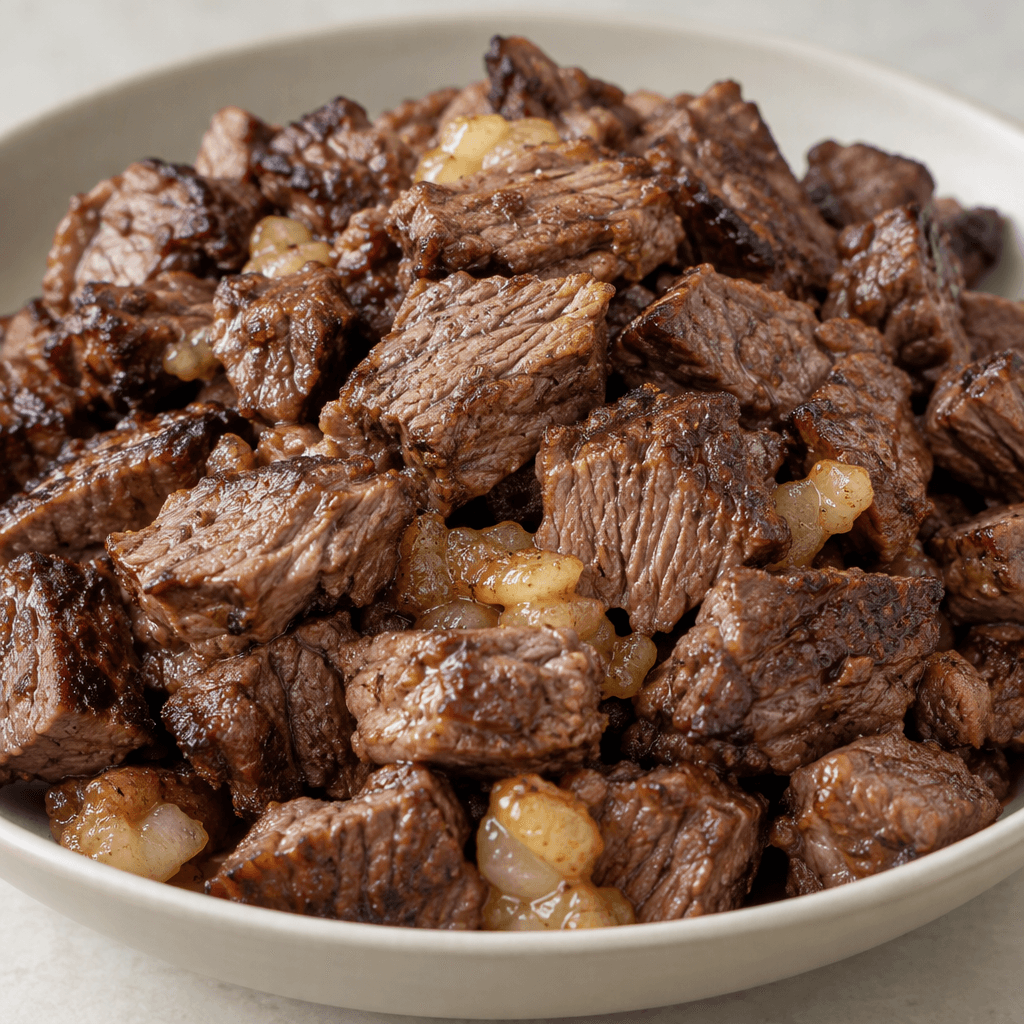
Kavurma Calories
Traditional Turkish meat dish, high in protein, iron, and B vitamins
In season: Autumn · Winter
CALORIES
GI
POTASSIUM
FIBER
Quick answer
1 piece (medium) of Kavurma (120 g) has 312 calories. That works out to 260 calories per 100 g. It contains 0.6 g of carbs, 26.4 g of protein, 21.6 g of fat and 0 g of fiber. Its 2.6 µg of B12 covers 110% of the Daily Value. Its glycemic index is 0 (low), so it raises blood sugar slowly.
What is Kavurma?
Kavurma is a traditional Turkish meat dish made by cutting beef into small pieces and cooking it slowly in its own fat, sometimes with added fat, until tender and browned. It is often prepared at home after Eid al-Adha, when families cook and share fresh meat; simple versions are seasoned mainly with salt.
Rich and savoury, with soft pieces and browned edges, kavurma is served hot with rice or bread, or cooked with eggs for a substantial breakfast. Leftovers can be reheated for another meal. It is high in protein and also fairly rich in fat, depending on the cut and how much fat is used. For a lighter result, choose leaner beef and use little or no extra fat.
Kavurma Nutrition Facts
Selected: 100 g
260
KCAL / 100G
Carbs
0.5g
· 0% DV
Protein
22g
· 44% DV
Fat
18g
· 23% DV
Fiber
0g
· 0% DV
DV is the share of the daily value covered, on a 2,000 kcal reference diet.
Calories come from: Carbs 1% · Protein 35% · Fat 64%

Log this food in EatBetter
100,000+ people use it
- Get your daily calorie target
- Snap your meal, log it in seconds
- See every vitamin and mineral

📸 Scan the code to get the app free.

Kavurma Vitamins & Minerals
Vitamins
B12
2.2µg · 92% DV
B3
4.5mg · 28% DV
B6
0.35mg · 21% DV
B2
0.22mg · 17% DV
Minerals
Zinc
5mg · 45% DV
Phosphorus
185mg · 26% DV
Iron
3mg · 17% DV
Selenium
8µg · 15% DV
Potassium ⭐
320mg · 9% DV
How Nutritious Is Kavurma?
Nutrient density
High
How many vitamins, minerals and how much fiber this food carries per calorie. A high score means a lot of nutrition for few calories.
Satiety score
Medium
An EatBetter score computed from fiber, protein and calorie density. A high score means staying full longer on the same calories.
Both scores are calculated per 100 g and do not change with the selected portion. The satiety score is EatBetter's own calculation, not a clinical measure.
Kavurma Glycemic Index
GLYCEMIC INDEX
GLYCEMIC LOAD
Accounts for portion size — a more realistic measure than GI alone.
How to Burn Off Kavurma
To burn the 260 calories in 100 g:
🚶
Walking (5 km/h)
🏃
Running (8 km/h)
🚴
Cycling
🏊
Swimming
Times are calculated with the MET equation for a 70 kg adult. Actual burn varies with your weight, age and pace.
Is Kavurma Processed?
NOVA 2
Minimally Processed
1. Unprocessed
2. Minimally Processed
3. Processed
4. Ultra-Processed
NOVA classifies foods into 4 groups by industrial processing. NOVA 1 (unprocessed) is the healthiest.
Does Kavurma Contain Allergens?
No known major allergens
Which Diets Is Kavurma Good For?
Vegan
— Not suitable
Vegetarian
— Not suitable
Gluten-Free
✓ Suitable
Dairy-Free
— Not suitable
Mediterranean
✓ Suitable
Paleo
✓ Suitable
Whole30
— Not suitable
DASH
— Not suitable
Keto
✓ Suitable
Low FODMAP
— Not suitable
Kavurma Fat Profile
SATURATED
7.5g
MONOUNSATURATED
7.2g
POLYUNSATURATED
1.2g
Omega 6:3 ratio 1.9:1
Below the ideal 4:1 — a good omega balance.
Compare Kavurma
Foods Similar to Kavurma
Frequently Asked Questions About Kavurma
What is kavurma?
Kavurma is a traditional Turkish meat dish made by slowly cooking pieces of meat, often in their own fat. It is commonly prepared with beef or lamb and can be served hot or kept for later meals.
How is traditional kavurma cooked?
Traditional kavurma is cooked slowly until the meat releases and then reabsorbs much of its liquid, becoming tender in rendered fat. Cooks may add extra animal fat when the meat is lean; seasoning and cooking details vary by household.
What cut of meat is best for kavurma?
Cuts with some connective tissue and fat, such as beef chuck, work well for kavurma because slow cooking helps them become tender. Lean meat can turn dry, so some traditional recipes add rendered fat during cooking.
What is the difference between kavurma and sac kavurma?
Kavurma is generally slow-cooked meat preserved or served in its rendered fat, while sac kavurma is quickly cooked on a broad metal griddle. Sac kavurma often includes vegetables such as peppers and tomatoes, which are not essential to kavurma.
Can you eat kavurma cold?
Yes, kavurma can be eaten cold, especially when it has been stored safely and the fat has set around the meat. Many people prefer to warm it gently in a pan, but it can also be served cold with bread.
How should you store leftover kavurma?
Refrigerate leftover kavurma promptly in a clean, covered container rather than leaving it out. Keep it separate from raw meat, take out only the portion you plan to eat, and reheat leftovers thoroughly before serving.
Can kavurma be frozen?
Yes, kavurma freezes well when divided into meal-sized portions and sealed in airtight containers or freezer bags. Thaw it in the refrigerator, then reheat it thoroughly; avoid refreezing kavurma once it has thawed.
How do you reheat kavurma without drying it out?
Reheat kavurma gently in a covered pan over low heat so the meat warms without losing too much moisture. Its set fat will melt as it heats; if the meat seems dry, add a small splash of water.
How is kavurma traditionally served in Turkey?
Kavurma is often served hot with rice, bread, or other simple accompaniments, and it may also be eaten at breakfast with eggs. Its rich, savory taste is commonly balanced with fresh salad or yogurt.
Why does kavurma become tough?
Kavurma usually becomes tough when it is cooked too quickly over high heat or taken off the heat before the meat softens. Use a covered pot and gentle heat, allowing connective tissue in suitable cuts to break down gradually.
Have another question about Kavurma?
Ask the AI nutrition coach — calories, portions, alternatives and more, answered in seconds in the app.

Scan calories with your camera
Instant AI nutrition analysis

Nutrition data compiled from USDA FoodData Central and scientific sources.