

Ready & Packaged Foods
All →Vegetables & Legumes
All →Desserts & Confectionery
All →Meat & Protein
All →Grains & Bakery
All →Beverages
All →Milk & Dairy
All →

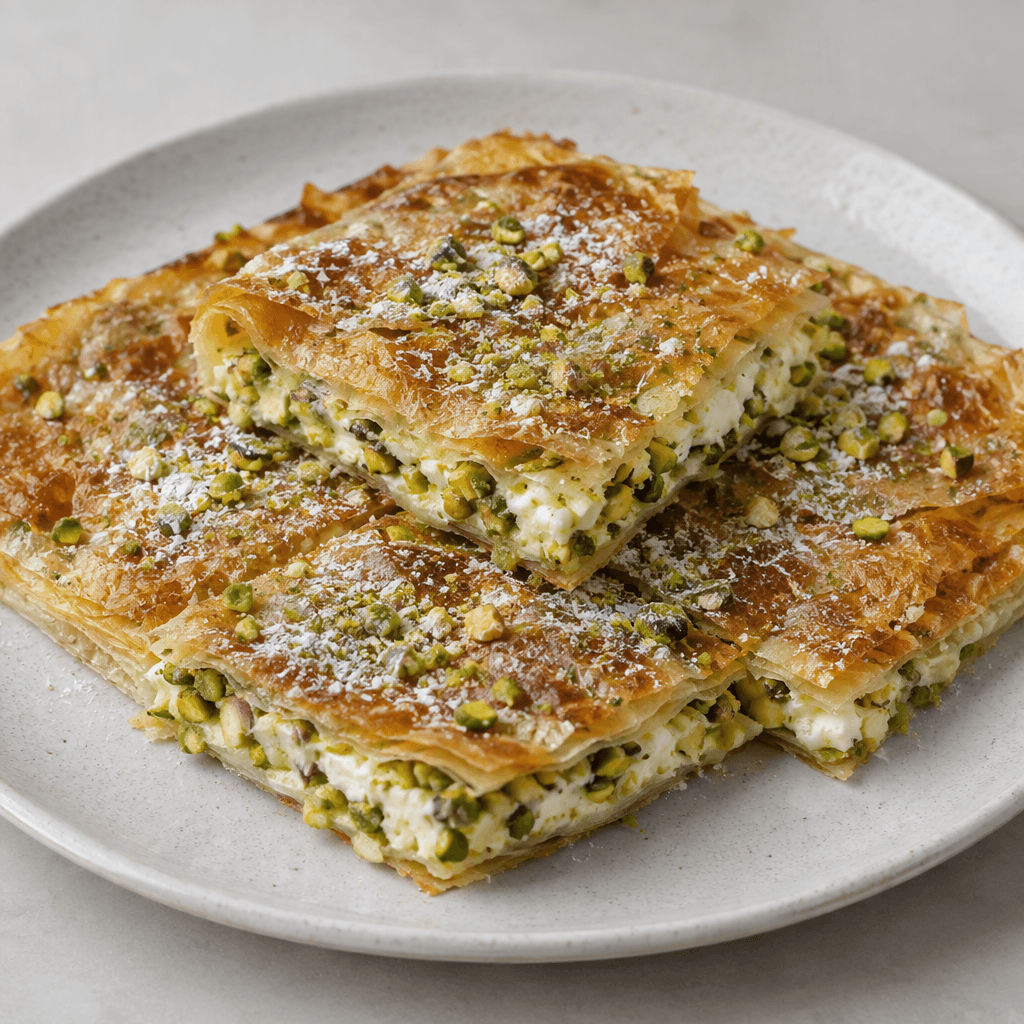
Katmer Calories
Traditional Turkish dessert pastry with pistachio and clotted cream
In season: Spring · Summer · Autumn · Winter
CALORIES
GI
POTASSIUM
FIBER
Quick answer
1 piece (medium) of Katmer (120 g) has 492 calories. That works out to 410 calories per 100 g. It contains 62.4 g of carbs, 8.6 g of protein, 22.8 g of fat and 3.2 g of fiber. Its 0.3 mg of Copper covers 28% of the Daily Value. Its glycemic index is 65 (high), so it raises blood sugar quickly.
What is Katmer?
Katmer is a Turkish pastry especially associated with Gaziantep. Thinly stretched dough is filled with clotted cream, pistachios and sugar, folded into layers and baked until golden. The pastry turns crisp and flaky around a soft, creamy centre, with the pistachios adding a nutty contrast.
In Gaziantep, katmer is often enjoyed warm for breakfast as well as served as a dessert; elsewhere in Turkey and at Turkish bakeries abroad, it is more commonly treated as a sweet pastry. It is rich and filling, with much of its energy coming from the pastry and cream. A smaller portion alongside unsweetened tea makes a good way to enjoy its sweetness.
Katmer Nutrition Facts
Selected: 100 g
410
KCAL / 100G
Carbs
52g
· 19% DV
Protein
7.2g
· 14% DV
Fat
19g
· 24% DV
Fiber
2.7g
· 10% DV
DV is the share of the daily value covered, on a 2,000 kcal reference diet.
Calories come from: Carbs 51% · Protein 7% · Fat 42%
Katmer Vitamins & Minerals
Vitamins
B1
0.13mg · 11% DV
Vitamin A
80µg · 9% DV
B5
0.45mg · 9% DV
Vitamin E
1.3mg · 9% DV
Minerals
Selenium
7.2µg · 13% DV
Iron
2mg · 11% DV
Phosphorus
78mg · 11% DV
Magnesium
38mg · 9% DV
How Nutritious Is Katmer?
Nutrient density
Low
How many vitamins, minerals and how much fiber this food carries per calorie. A high score means a lot of nutrition for few calories.
Satiety score
Low
An EatBetter score computed from fiber, protein and calorie density. A high score means staying full longer on the same calories.
Both scores are calculated per 100 g and do not change with the selected portion. The satiety score is EatBetter's own calculation, not a clinical measure.
Katmer Glycemic Index
GLYCEMIC INDEX
GLYCEMIC LOAD
Accounts for portion size — a more realistic measure than GI alone.
How to Burn Off Katmer
To burn the 410 calories in 100 g:
🚶
Walking (5 km/h)
🏃
Running (8 km/h)
🚴
Cycling
🏊
Swimming
Times are calculated with the MET equation for a 70 kg adult. Actual burn varies with your weight, age and pace.
Is Katmer Processed?
NOVA 3
Processed
1. Unprocessed
2. Minimally Processed
3. Processed
4. Ultra-Processed
NOVA classifies foods into 4 groups by industrial processing. NOVA 1 (unprocessed) is the healthiest.
Does Katmer Contain Allergens?
Contains these allergens:
Which Diets Is Katmer Good For?
Vegan
— Not suitable
Vegetarian
— Not suitable
Gluten-Free
— Not suitable
Dairy-Free
— Not suitable
Mediterranean
✓ Suitable
Paleo
— Not suitable
Whole30
— Not suitable
DASH
— Not suitable
Keto
— Not suitable
Low FODMAP
— Not suitable
Katmer Fat Profile
SATURATED
7.8g
MONOUNSATURATED
7.1g
POLYUNSATURATED
2.2g
Omega 6:3 ratio 17.1:1
Above the ideal 4:1 (17.1:1).
Compare Katmer
Foods Similar to Katmer
Frequently Asked Questions About Katmer
What is Katmer?
Katmer is a Turkish layered pastry, best known in its Gaziantep dessert form, with kaymak, pistachios and sugar folded inside thin dough. It is cooked until the outside turns crisp while the filling stays soft.
Where does Katmer come from?
Gaziantep is especially famous for its sweet Katmer, a regional specialty often eaten at breakfast as well as served as dessert. Other Turkish regions have their own katmer styles, so the name can refer to different pastries.
How is Katmer different from baklava?
Gaziantep Katmer is made from a thin sheet of dough folded around a kaymak and pistachio filling. Baklava is built from multiple layers of pastry and is typically finished with syrup, giving it a different texture and sweetness.
Is Katmer eaten for breakfast?
Yes, sweet Gaziantep Katmer is commonly enjoyed at breakfast in its home region, even though it is also a dessert. It is usually served warm, often with tea.
What is inside traditional Katmer?
Traditional Gaziantep Katmer is filled with kaymak, pistachios and sugar. The filling is enclosed by thin dough before cooking; recipes vary in how much of each ingredient they use.
Can you make Katmer with store-bought phyllo?
You can use phyllo for a quicker home version, but it will not have the same texture as traditional Katmer. The classic pastry uses dough stretched very thin and folded around its filling rather than stacked like baklava.
Why is Katmer folded into a square?
Katmer is folded into a square to enclose its filling and create crisp layers as it cooks. Fold the edges over the kaymak and pistachios so the filling stays inside while the pastry browns.
What is the best way to reheat Katmer?
Reheat Katmer briefly in a low oven or in a pan to bring back some crispness. A microwave may soften the pastry, so use it only when speed matters and check that the kaymak filling is warm.
How should you store leftover Katmer?
Keep leftover Katmer covered in the refrigerator and eat it preferably the next day. Its kaymak filling can soften the pastry as it sits; warm it briefly in an oven or pan before serving.
Can you freeze Katmer?
Yes, Katmer can be frozen in an airtight wrap, although thawing may affect its crisp layers and the texture of the kaymak. Thaw it before reheating in the oven, and do not refreeze it.
Have another question about Katmer?
Ask the AI nutrition coach — calories, portions, alternatives and more, answered in seconds in the app.

Scan calories with your camera
Instant AI nutrition analysis

Nutrition data compiled from USDA FoodData Central and scientific sources.